
Macropipus
Macropipus
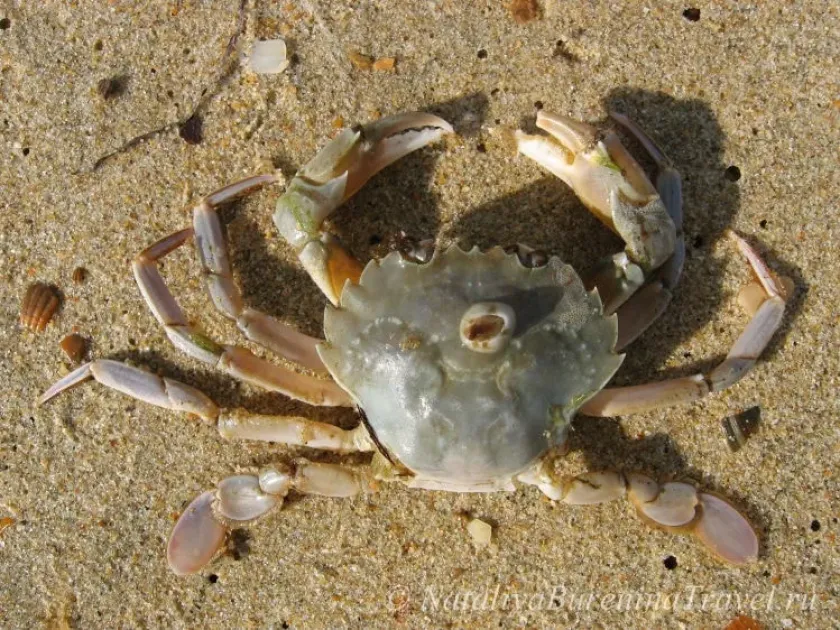
Description
How to identify
The genus Macropipus belongs to the Portunidae family, commonly known as swimming crabs. These are marine crustaceans adapted strictly for aquatic habitats.
They possess specialized flattened posterior legs that serve as paddles for swimming, which is a key identifying morphological feature.
Systematically, they are classified within the order Decapoda, comprising various marine species inhabiting sandy and muddy ocean floors.
These organisms are entirely distinct from the insects or mites that typically damage cultivated agricultural crops.
Understanding that Macropipus is a marine organism helps to correctly classify them outside the scope of terrestrial agricultural pests.
What it damages
The genus Macropipus causes absolutely no damage to agricultural crops. They are not known to consume any parts of terrestrial plants.
Their ecological niche is strictly marine, and their feeding habits involve predation on small marine invertebrates or scavenging on organic marine matter.
They lack the physical capacity and environmental requirements to interact with crops, soil, or agricultural systems in any negative way.
Agricultural reports incorrectly identifying Macropipus as a pest should be disregarded as misinformation or clerical errors.
There are no recorded instances of these crustaceans affecting crop yields, plant health, or soil nutrient quality in agricultural settings.
Control measures
No protection or control measures are necessary for Macropipus as they do not pose any threat to agriculture or plant health.
Farmers and agronomists do not need to implement any pesticide treatments or management strategies to address this marine genus.
Any observation of these animals near coastal farms is purely an environmental event and does not require agronomic intervention.
The focus of agricultural pest management should always be directed towards verified threats that exhibit feeding damage on crops.
Maintaining a clear distinction between aquatic fauna and agricultural pests is essential for effective farm management practices.
Taxonomy
- Latin name
- Macropipus
- Family
- Portunidae
- EPPO code
- MCPPSP
Discussion
No discussions yet — be the first.