
Blue crab
Callinectes sapidus
Description
How to identify
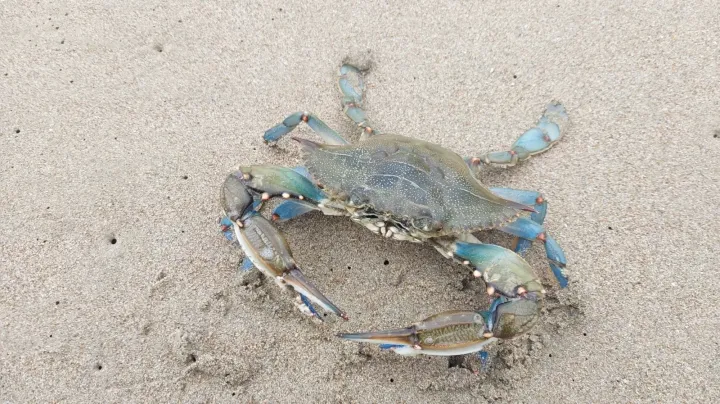
The blue crab (Callinectes sapidus) is a decapod crustacean belonging to the family Portunidae. Adults are easily recognized by their vibrant blue claws and olive-green or brown carapace.
The species features a wide, spiny carapace and specialized paddle-like hind legs, which make it an excellent swimmer capable of rapid movement across coastal habitats.
Its life cycle involves complex larval stages, starting from zoea to megalopa, which rely on the dynamic salinity conditions of estuarine and coastal waters for survival.
This crab is highly adaptive, allowing it to colonize diverse environments, including man-made irrigation canals and agricultural waterways connected to the sea.
Blue crabs exhibit high reproductive rates, enabling rapid population growth and the potential for large-scale colonisation of new territories in a relatively short time.
What it damages
The most significant agricultural impact occurs when blue crabs burrow into irrigation canals and embankments, compromising structural integrity and leading to water leakage.
In aquaculture, blue crabs are highly destructive as they prey upon juvenile bivalves and other valuable species, often causing severe economic losses for farmers.
Within flooded field environments, such as rice paddies, blue crabs can damage crops by feeding on the young roots and stems of plants, reducing overall field yield.
The constant digging activity of these crustaceans accelerates bank erosion, necessitating frequent and expensive maintenance for irrigation systems and water management structures.
By outcompeting local species, blue crabs alter the ecological balance of water bodies, which can degrade the quality of water used for crop irrigation.
Control measures
Commercial harvesting using baited crab traps is the most effective method for suppressing local populations and mitigating damage in controlled irrigation systems.
Mechanical reinforcement of canal embankments using stone riprap or synthetic liners creates physical barriers that prevent crabs from burrowing into the infrastructure.
Installing fine-mesh screens and physical barriers at water intake points helps prevent the influx of juvenile crabs into agricultural water distribution networks.
Regular maintenance and cleaning of irrigation channels reduce available habitats and hiding spots for juvenile crabs, thereby suppressing their reproductive success.
Integrated pest management strategies focusing on a combination of regulated harvesting and infrastructure protection provide the most sustainable control of blue crab populations.
Taxonomy
- Latin name
- Callinectes sapidus
- Family
- Portunidae
- EPPO code
- CAINSA
Discussion
No discussions yet — be the first.