
Blue crab
Callinectes
Description
How to identify
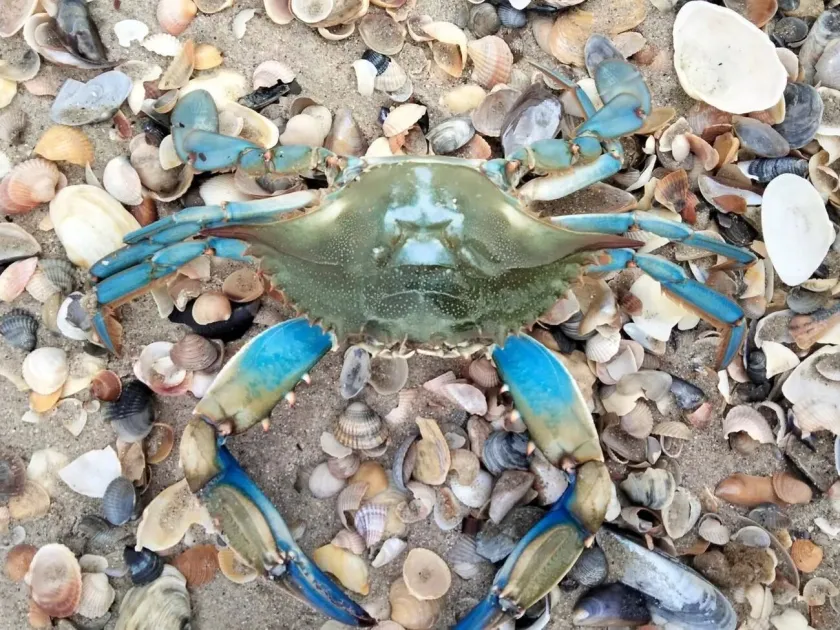
The blue crab (Callinectes sapidus) belongs to the family Portunidae within the order Decapoda. It is identified by its greenish carapace and distinctive blue-tinted claws.
These crustaceans are highly resilient, capable of thriving in varying salinities from coastal bays to fresh water rivers, making them a concern for diverse farming zones.
Adult blue crabs possess powerful chelae (claws) that can easily crush shells, crustaceans, and the stems of various aquatic or semi-aquatic plants.
Their biological lifecycle is tied to seasonal cycles. During warmer months, they migrate toward shallower waters to forage and reproduce, leading to increased population density.
The female blue crab is highly fecund, capable of releasing millions of eggs, which facilitates rapid colonization of new habitats and increases the pressure on local ecosystems.
What it damages
The primary agricultural impact of the blue crab involves the physical destruction of crops in flooded fields, particularly rice paddies located in coastal estuaries.
Blue crabs feed on young shoots and roots, frequently severing the stems of seedlings. This selective feeding behavior can lead to total crop failure in affected sections.
Infrastructure damage is a major economic burden, as blue crabs burrow extensively into irrigation dams and embankments, resulting in severe water leaks and soil erosion.
By consuming aquatic vegetation, they remove natural protection for the soil, leading to sedimentation and destabilization of the land around agricultural water channels.
In high concentrations, the foraging habits of blue crabs can destabilize the entire micro-ecosystem of a farm, preventing sustainable growth of diverse plant species.
Control measures
Management of blue crab populations requires a multi-faceted strategy. Trapping remains the most effective way to remove individuals from critical irrigation zones.
Installing high-quality mesh barriers at irrigation intakes is essential to physically block the ingress of juvenile and adult crabs into cultivated areas.
Maintenance of embankments and dams is crucial; routine inspections to identify and backfill crab burrows prevent long-term structural damage and water loss.
Commercial harvesting is encouraged in many regions as a way to regulate density, turning a potential pest into a manageable resource for local markets.
Ongoing monitoring of environmental triggers, such as water salinity and temperature, allows farmers to predict peak activity periods and deploy preventive measures earlier.
Taxonomy
- Latin name
- Callinectes
- Family
- Portunidae
- EPPO code
- CAINSP
Discussion
No discussions yet — be the first.