
Hogweed gall midge
Macrolabis heraclei
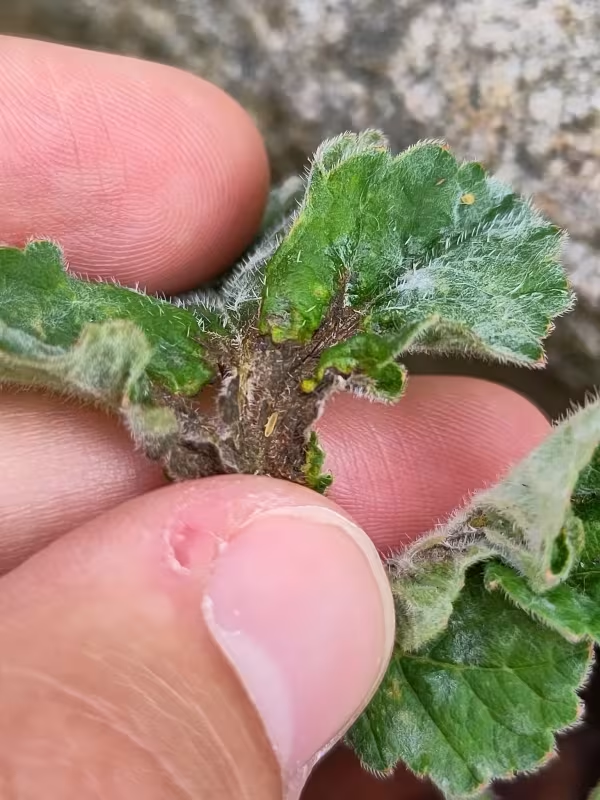
Description
How to identify
The Hogweed gall midge, Macrolabis heraclei, is a small dipteran insect belonging to the family Cecidomyiidae. It is primarily known for the gall formations it induces on various species of the Apiaceae family.
The adult midge is a tiny, delicate fly with long antennae and fragile legs. They are rarely seen in the field due to their small size and short lifespan.
The immature stages are larvae, which are typically whitish or yellowish in color, legless, and found inside the characteristic galls on the host plant.
The species is highly specialized, and its presence is almost exclusively linked to the host plants of the genus Heracleum and related Apiaceae.
Correct identification often requires botanical examination of the galls to distinguish between the damage caused by Macrolabis and other gall-forming arthropods.
What it damages
The damage is caused by the larval feeding process within the plant tissues. The larvae induce the development of galls, which serve as their protective shelter and nutritional source.
Infected plants exhibit severe malformations of leaves, buds, and inflorescences. This disruption of plant growth can lead to significant physiological stress.
Severe infestations often prevent the plant from producing viable seeds, as the floral structures are heavily damaged or distorted by the midge's activity.
The stunted growth of the affected organs reduces the plant's overall competitive ability in the ecosystem and may lead to reduced biomass production.
Secondary infections by bacteria or fungi are common at the sites of larval damage, which further accelerates the degradation of the plant tissue.
When it appears
Adult midges emerge from their overwintering sites in the spring when host plants start their active growth phase.
Eggs are deposited into the buds or developing leaf tissues, and the larvae emerge shortly thereafter to begin feeding and initiating gall formation.
Depending on environmental conditions, the midge can complete multiple generations within a single season, allowing for continuous pressure on the host plants.
The overwintering stage consists of larvae pupating in the soil or within the leaf litter, providing a high level of resilience against winter temperatures.
The pest activity typically peaks during the mid-summer months when environmental conditions are optimal for both the plant development and the midge reproduction.
Signs of infestation
The most prominent sign of infestation is the presence of irregular swellings, leaf curling, or twisted inflorescences on the host plant.
Upon opening these galls, one can find the small, white, active larvae of the midge hidden within the enclosed tissue pockets.
- Distortion of leaf petioles and midribs.
- Development of localized galls on floral buds.
- Premature yellowing and desiccation of plant parts.
- Reduction in the number of viable flowers or seeds.
- General plant stunting in case of severe infestations.
Symptoms are often localized, meaning that only specific parts of the plant may show the signs of larval damage while the rest appears healthy.
Control measures
Cultural control is the most practical approach, primarily focusing on the removal and destruction of infested plant tissues before the larvae can complete their development.
Autumn soil cultivation can help destroy the pupating larvae residing in the top layer of the ground, effectively reducing the next season's population.
While chemical control is generally not recommended for wild hogweed, systemic insecticides might be considered in extreme cases for valuable agricultural Apiaceae.
Biological control, facilitated by the presence of natural predators and parasitoids, plays a significant role in limiting the midge population in natural habitats.
Maintaining spatial distance from wild reservoirs of the pest is highly recommended to protect cultivated areas from potential gall midge outbreaks.
Taxonomy
- Latin name
- Macrolabis heraclei
- Order
- Diptera (flies)
- Family
- Cecidomyiidae
- EPPO code
- MACACO
Discussion
No discussions yet — be the first.