
Beech leaf gall midge
Macrolabis fagicola
Description
How to identify
The beech leaf gall midge, scientifically known as Macrolabis fagicola, belongs to the family Cecidomyiidae within the order Diptera. These are tiny insects that cause specialized physiological responses in the leaves of their host plant.
Adult midges are delicate flies with long legs and antennae, typical of gall midges. However, they are rarely seen by field observers due to their short lifespan and small size.
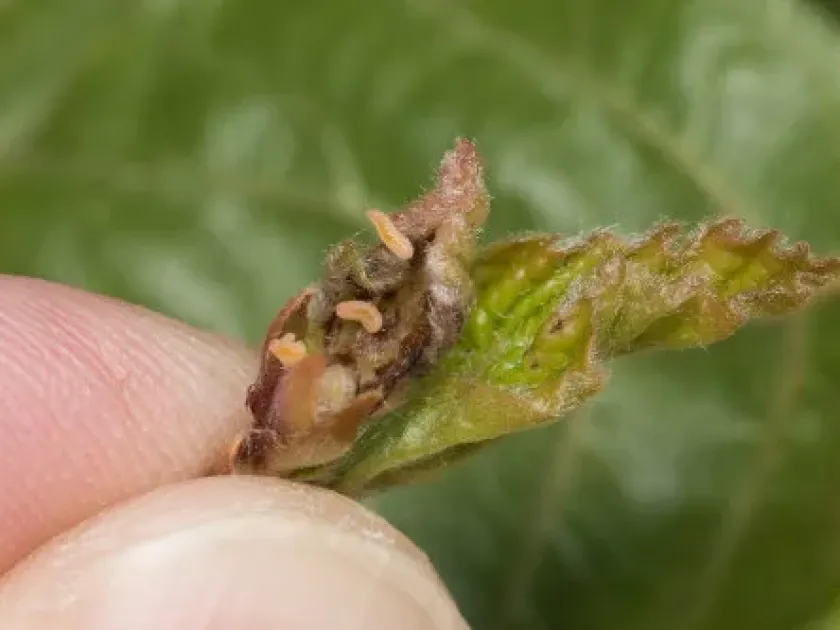
The identification of this species is primarily based on the unique structure of the galls they induce on European beech trees. These galls are distinct from those created by other insect species.
Larval stages are the main focus for entomological studies, as they possess distinct anatomical features that confirm their identity under magnification.
Being an obligate specialist, Macrolabis fagicola is restricted to Fagus sylvatica, meaning its evolutionary history is entirely tied to the beech tree host.
What it damages
The primary host of this pest is the European beech (Fagus sylvatica). The midges specifically target the young, developing leaves of the tree.
By feeding within the leaf tissue, the larvae stimulate abnormal cell growth, resulting in the formation of galls. These galls interfere with the normal development and photosynthetic capacity of the foliage.
In forest nurseries, high infestations can significantly retard the growth of saplings, leading to weakened plant health and reduced competitive ability in the forest stand.
Frequent or severe attacks may lead to premature leaf drop, which can stress the tree and potentially make it more susceptible to environmental stressors.
Damaged leaves are often structurally compromised, making them easier targets for opportunistic fungal infections that can exacerbate the injury caused by the midges.
When it appears
The lifecycle of the beech leaf gall midge is strictly synchronized with the bud burst of beech trees in the spring. This timing ensures that larvae have access to the most tender tissues.
Adult females deposit eggs into the opening buds. The timing of egg-laying is critical for the survival of the offspring, as it must match the host's phenology perfectly.
Larvae develop within the galls throughout the spring and early summer. The growth of the gall provides both physical shelter and a nutrient-rich food source.
By mid-summer, the larvae reach maturity, exit the galls, and descend into the soil. They overwinter in the soil profile as pupae or in a state of diapause.
Environmental factors such as temperature and rainfall during the spring can influence the emergence time and overall population density of the midges.
Signs of infestation
The most prominent sign of infestation is the appearance of rolled or swollen margins on the beech leaves. These galls are easy to distinguish upon close inspection.
- Curled or folded leaf margins that resemble small tubes or pockets.
- Color changes in the leaf tissue, often manifesting as yellowing or reddish streaks.
- Presence of tiny, legless, white-to-orange larvae hidden inside the gall structure.
- Deformed, stunted, or crinkled appearance of new leaf growth.
- Small exit holes on the galls after larvae have vacated the site.
Affected trees often display an irregular crown structure if the infestation is heavy, as many of the season's new leaves become distorted.
While the aesthetic impact is noticeable, the physiological impact on the tree's health depends largely on the severity and intensity of the leaf damage.
Control measures
In large-scale forestry, managing Macrolabis fagicola is rarely feasible or necessary; however, in specialized nurseries, intervention may be required.
Systemic insecticides are the most effective method for controlling larvae protected within the leaf tissue, as they are translocated throughout the plant.
Cultural control practices, such as the removal and destruction of heavily infested plant material, can help reduce the local pest population in a contained environment.
Maintaining optimal nursery conditions, including proper spacing and soil health, helps young beech trees withstand the stress of gall midge attacks.
Biological control remains a natural regulatory mechanism, with various parasitic wasps and predators helping to keep midge populations in check under natural conditions.
Taxonomy
- Latin name
- Macrolabis fagicola
- Order
- Diptera (flies)
- Family
- Cecidomyiidae
- EPPO code
- DASYFA
Discussion
No discussions yet — be the first.