
Macrolabis
Macrolabis
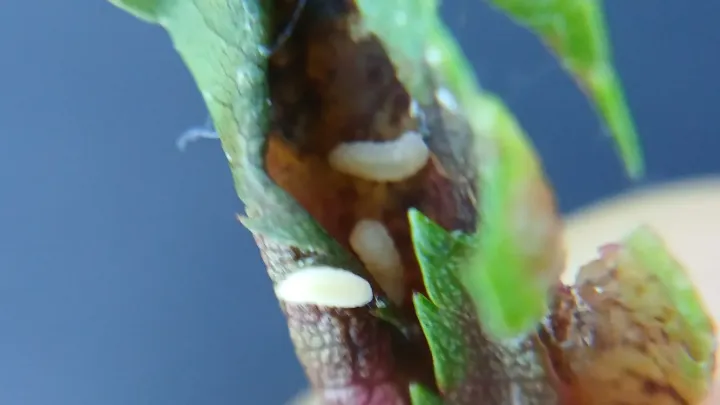
Description
How to identify
Macrolabis is a genus of insects belonging to the family Cecidomyiidae, commonly known as gall midges, within the order Diptera.
These are tiny, delicate flies with a wingspan of only a few millimeters, making them extremely difficult to identify in the field.
The larval stage is the primary cause of concern, as these legless, white-to-yellowish larvae inhabit the tissues of host plants.
Unlike many other pests, adults have a very short lifespan, primarily focusing on reproduction shortly after emerging from the soil.
Identification is largely based on the morphological deformations they induce on plant parts rather than the appearance of the insects themselves.
What it damages
One of the most notable species, Macrolabis lamii, is a common pest of raspberries, significantly affecting young foliage growth.
The larvae feed on the developing leaves of apical shoots, causing the leaves to curl, thicken, and stop growing properly.
This feeding behavior disrupts the hormonal balance of the plant shoot, leading to severe twisting and eventual stunting of the growth point.
Severe infestations can render the terminal shoots unproductive, forcing the plant to develop lateral shoots which may also be affected.
Some species within the genus are known for forming characteristic galls on various herbaceous plants, altering the host's normal structure.
When it appears
The life cycle of Macrolabis typically begins in the spring, synchronized with the emergence of new plant growth on host species.
Adult midges emerge from the soil to mate and lay eggs in the crevices of unopened leaf buds, providing protection for the offspring.
Depending on the climatic conditions and moisture availability, the pest can produce multiple generations throughout the growing season.
The highest level of activity and damage is usually observed during the late spring and early summer when plants are growing most vigorously.
As the season draws to a close, mature larvae drop to the ground to pupate or enter a dormant state in the soil to survive the winter.
Signs of infestation
The primary visual sign of infestation is the tight curling and yellowing of the leaves located at the very tips of the plant shoots.
By carefully uncurling these distorted leaves, one can often find small, whitish larvae clustered inside the damaged plant tissue.
Shoots affected by Macrolabis often display a characteristic rosette appearance, where the terminal growth is permanently stunted.
In cases where the pest causes gall formation, abnormal tumor-like growths are visible on the leaves or stems of the plant.
If the infestation is left unmanaged, the tips of the shoots may eventually turn brown, wither, and die back completely.
Control measures
Cultural control is the most effective approach, involving the manual removal and destruction of infested leaf tips at the first sign of damage.
Maintaining a clean garden by removing weeds and plant debris reduces the overwintering sites for the larvae and minimizes future generations.
Chemical control can be considered for severe infestations using systemic insecticides, applied during the peak flight of the adults.
Encouraging natural predators such as parasitic wasps and predatory mites can help maintain the Macrolabis population below economic damage thresholds.
Proper plant nutrition and irrigation assist the crops in recovering from minor infestations, preventing long-term impacts on total yields.
Taxonomy
- Latin name
- Macrolabis
- Order
- Diptera (flies)
- Family
- Cecidomyiidae
- EPPO code
- MACASP
Discussion
No discussions yet — be the first.