
Pear grass aphid
Longiunguis pyrarius
Description
How to identify
The pear grass aphid (Longiunguis pyrarius) belongs to the family Aphididae. This small insect is a common pest that migrates between fruit trees and various grass species.
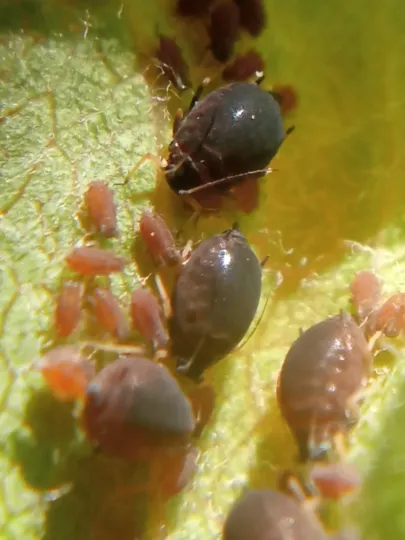
Adult aphids typically range from light green to yellowish-brown, allowing them to blend into the foliage. They possess distinct siphunculi (cornicles) on their abdomen, which is a key identification feature.
This species exhibits a migratory life cycle. It overwinters in the egg stage, with eggs deposited by females in the crevices of young pear tree bark during the autumn.
In spring, the eggs hatch into stem mothers that initiate new colonies. The aphids reproduce parthenogenetically, which allows for extremely rapid population growth under favorable conditions.
Their life cycle is highly sensitive to environmental factors; mild, warm springs with moderate humidity provide the ideal conditions for the explosion of the aphid population.
What it damages
The primary host in spring is the pear tree, where the aphids feed on the sap of young leaves and shoot tips. Later in the season, they migrate to various grasses to continue their life cycle.
Damage is caused by the extraction of phloem sap, which deprives the plant of nutrients. This results in stunted shoot growth and severe leaf deformation, reducing the tree's overall vigor.
The secretion of honeydew by the aphids creates a medium for sooty mold growth, which covers the leaves and hinders photosynthesis, further weakening the tree's health.
Grass crops can also be impacted during the summer, potentially affecting plant development and overall biomass yield due to the sustained feeding pressure of the colonies.
Economic damage is significant, as it leads to reduced fruit yield, decreased tree resilience to cold or drought, and the need for costly chemical interventions.
Signs of infestation
The most noticeable sign is the curling and distortion of young leaves at the tips of pear shoots. Leaves often appear crumpled, making them easy to spot during regular inspections.
Sticky honeydew on the leaves and branches is a clear indicator of aphid presence. This substance is highly attractive to ants, which often farm the aphids for their sugary secretions.
Inspecting the underside of curled leaves will usually reveal dense colonies of small, pale-green insects. Shed skins (exuviae) are often visible among the active aphids.
The presence of black sooty mold on the foliage and bark confirms that the aphid infestation has been ongoing for some time and is negatively impacting the tree's health.
The yellowing of leaves and the stagnation of terminal bud growth are critical indicators that the infestation level is high and requires immediate attention from orchard managers.
Control measures
Early spring dormant spraying with horticultural oils is a highly effective method to kill overwintering eggs before they hatch on the pear tree branches.
During the growing season, the application of systemic insecticides is recommended. These chemicals are absorbed by the plant and provide long-term protection against feeding aphids.
Managing ant populations is essential for integrated pest control. Installing sticky barriers on the tree trunks prevents ants from moving aphids between branches and protecting them.
Regular maintenance of the orchard floor, including the removal of unwanted grasses and weeds, reduces the reservoir of hosts for the aphids during the summer migration period.
- Conservation of natural predators such as ladybugs, lacewings, and hoverflies.
- Application of balanced fertilizers to improve overall plant resistance.
- Implementation of yellow sticky traps for monitoring aphid migration and population density.
Taxonomy
- Latin name
- Longiunguis pyrarius
- Order
- Hemiptera (bugs, aphids, leafhoppers)
- Family
- Aphididae
- EPPO code
- LONUPY
Discussion
No discussions yet — be the first.