

Summer fruit tortrix
Adoxophyes orana
Description
How to identify
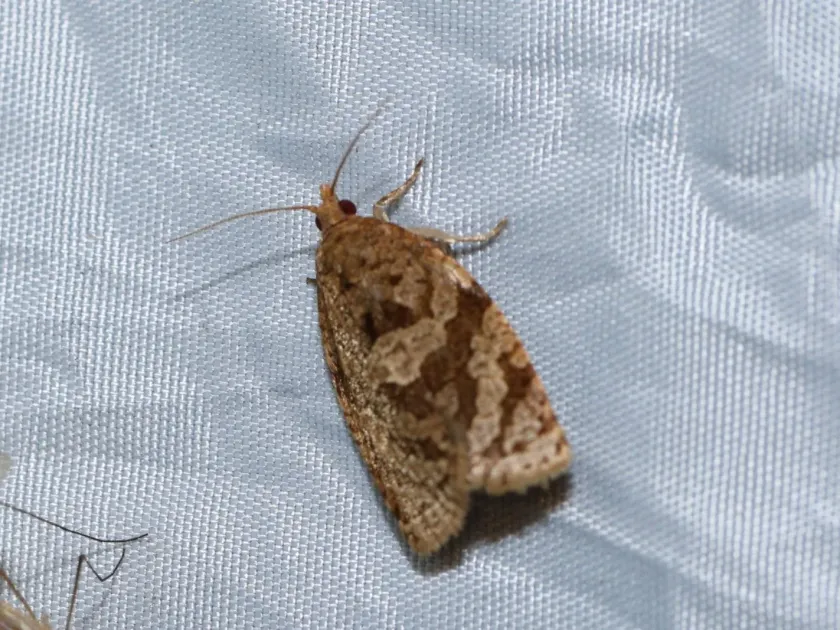
The Summer fruit tortrix (Adoxophyes orana) is a moth belonging to the Tortricidae family. The adult moth has a wingspan of 15–22 mm, with brownish-yellow front wings featuring a distinctive reticulated (net-like) pattern.
The larvae, or caterpillars, go through several stages of development. Initially, they are pale green, eventually turning olive-green. The head capsule is typically light brown or ochre, serving as a key diagnostic feature for field identification.
Pupae are 8–11 mm in length and range in color from green to dark brown. They are typically found inside rolled leaves, secured with a dense layer of silk webbing that protects them during metamorphosis.
Eggs are laid in batches, appearing as flat, fish-scale-like clusters on the upper side of leaves. The color of the egg mass transitions from pale yellow to a darker shade as the embryo matures.
As a highly adaptable species, the Summer fruit tortrix is a major pest across Europe and Asia, capable of thriving in various temperate climate conditions and agricultural settings.
What it damages
This moth is a polyphagous pest, meaning it attacks a wide variety of plants. Primary hosts include apple, pear, plum, cherry, and apricot trees, where larvae consume buds, leaves, and young fruit.
Beyond stone and pome fruits, the larvae can infest berry crops such as raspberries and currants. In nurseries, they can severely stunt the growth of young saplings, causing long-term structural issues.
Significant fruit damage occurs in late summer, as older larvae feed on the surface of the maturing fruit. This feeding creates shallow, irregular cavities, which drastically reduce the market value of the harvest.
These superficial wounds often serve as entry points for rot-causing fungi, leading to storage losses even after the fruit has been harvested and placed in warehouses.
Defoliation caused by mass infestations weakens the trees, reducing their photosynthetic capacity and overall resilience, which can lead to reduced flowering and yield in subsequent growing seasons.
When it appears
In most regions, the Summer fruit tortrix undergoes two to three generations per year. The insect overwinter as larvae in the second or third instar, hidden within deep crevices of the tree bark.
Larval activity resumes in early spring, coinciding with bud burst. This is the period of highest vulnerability for the crop, as the insects feed voraciously on emerging green tissues.
The first generation of moths typically takes flight in late May or early June. During this time, growers use pheromone traps to monitor adult population levels and predict the timing of the next larval hatch.
A second generation of moths emerges in mid-summer. The larvae from this generation are particularly dangerous because they target maturing fruit as the harvest season approaches.
Depending on the cumulative heat units, a partial third generation may occur in warmer years. As temperatures drop in autumn, larvae prepare for hibernation by seeking protected spots under the bark.
Signs of infestation
The most visible sign of infestation is leaves rolled into tubes or clumps, tightly bound with silk webbing. Inside these structures, you will find the larvae and their dark, grainy excrement.
Blossoms and developing fruit clusters may show webbing, with petals or young fruit being partially gnawed or destroyed, preventing proper pollination and development.
Surface scarring or "netted" marks on the skin of the fruit are classic symptoms. Larvae often attach a leaf to the fruit to create a hidden feeding site, resulting in localized damage.
Egg masses, appearing as light-colored, overlapping scales on the upper side of the leaves, are an early warning sign that a new generation of larvae will hatch within a few days.
In late autumn or winter, look for tiny silk-covered overwintering chambers (hibernacula) tucked into the cracks of the trunk or along the main branches of the trees.
Control measures
Effective management begins with orchard sanitation: removing dead bark, pruning infested branches, and clearing debris under trees to eliminate overwintering sites for the larvae.
Biological control, such as the application of Bacillus thuringiensis, is highly recommended. These bio-insecticides specifically target the larvae while preserving beneficial predators and pollinators.
Pheromone traps are essential for monitoring and mating disruption, a strategy that prevents males from finding females, thereby drastically reducing the size of the next generation.
Chemical control should be applied based on precise monitoring data. It is crucial to rotate chemical groups to prevent the development of insecticide resistance in the pest population.
- Install pheromone traps to monitor adult flight activity.
- Use natural enemies like Trichogramma wasps for biological control.
- Apply targeted insecticides during peak larval hatching windows.
- Maintain orchard hygiene to reduce shelter for overwintering stages.
Content graph
Connections · Summer fruit tortrix
Most often together:
Marketplace
Products · 2

Biology
Taxonomy
- Latin name
- Adoxophyes orana
- Order
- Lepidoptera (butterflies)
- Family
- Tortricidae
- EPPO code
- CAPURE
Community
Discussion
No discussions yet — be the first.