

Pest · Lepidoptera (butterflies) · affects Apple, Citrus, Ornamental crops
Especially harmful
Carnation tortrix
Cacoecimorpha pronubana
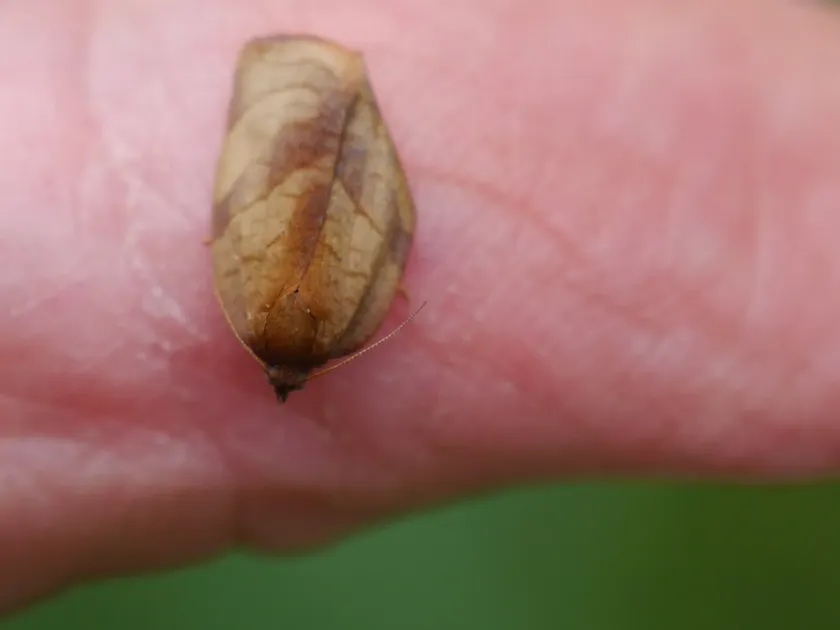
Description
How to identify
The carnation tortrix (Cacoecimorpha pronubana) is a moth belonging to the family Tortricidae. It is a polyphagous pest known to affect a wide range of horticultural and agricultural plants.
The adult moth has a wingspan ranging from 18 to 22 mm. The forewings are typically ochre-brown with a distinct dark transverse band and a reticulated pattern, while the hindwings are brighter, yellowish-orange.
The larvae, or caterpillars, are the damaging stage. When mature, they reach up to 20 mm in length and are generally grey-green with a dark head, displaying significant agility when disturbed.
Pupation occurs within leaf rolls or spun webs. The pupae are dark brown, providing protection against environmental fluctuations and some natural predators.
The eggs are laid in clusters, resembling small overlapping scales. These clusters are often deposited on the upper surface of leaves, making them difficult to detect during casual inspections.
What it damages
This pest is a significant threat to various plants, including the apple tree (Malus domestica). Damage is primarily caused by the larvae feeding on buds, young leaves, and developing fruits.
In orchards, larvae attack the generative parts of apple trees, consuming flower buds and young fruitlets. This feeding pattern often leads to crop loss and reduced fruit quality.
The larvae are notorious for tying leaves together with silk, creating protective shelters where they skeletonize the foliage, eventually leading to stunted plant growth and reduced photosynthesis.
Fruit damage manifests as shallow holes and skin scarring. These wounds are often entry points for secondary pathogens, such as fungal infections, leading to fruit decay.
Ornamental plants and nursery stock are equally vulnerable. The destruction of terminal shoots by the larvae can cause malformation and loss of apical dominance in young trees.
When it appears
The life cycle of the carnation tortrix is heavily influenced by the local climate. In warm temperate regions, the species can complete several generations within a single growing season.
Overwintering typically occurs in the larval stage. Caterpillars hibernate in silk-lined cocoons, often hiding in bark crevices, protected leaves, or other organic debris beneath the trees.
Larval activity resumes in early spring as temperatures rise above 10°C. They immediately begin feeding on swelling buds, which is a critical time for orchard management.
The first adult flight usually occurs late in the spring. Subsequent generations follow throughout the summer months, with overlapping stages often present by mid-summer.
Monitoring the flight periods of the moths is essential to predict the emergence of larvae and to time intervention strategies effectively.
Signs of infestation
The most evident sign of infestation is the presence of rolled or spun leaves on the shoots. Carefully opening these webs will reveal the larvae or their greenish-brown frass.
Damaged flower buds that fail to open or appear stunted are early indicators of larval presence before the foliage becomes severely affected.
Signs on mature fruits include irregular, shallow depressions in the skin where the larvae have scraped the surface during their development.
- Silk webs tying leaves together.
- Distorted or rolled foliage at the tips of shoots.
- Presence of larval excrement (frass) near feeding sites.
- Deformed fruitlets or buds with visible feeding damage.
- Premature fruit drop caused by larval boring.
Regular visual inspections, especially during the blossom and post-blossom periods, are necessary to identify early symptoms before the infestation becomes widespread.
Control measures
Effective management requires an integrated approach. Cultural practices should be combined with monitoring and, if necessary, targeted chemical or biological treatments.
Sanitation is key; removing and destroying dead leaves and pruning infested branches helps reduce the overwintering population of larvae.
Pheromone traps are essential tools for monitoring the population density of adult moths. These traps help determine the exact timing for insecticide applications to maximize efficacy.
Chemical control should be applied during the larval emergence period. Once the caterpillars have successfully spun their protective leaf-roll nests, they are much harder to reach with contact pesticides.
Biological control methods, including the use of B. thuringiensis-based products or natural parasitoids, can significantly mitigate damage while reducing the overall chemical footprint in the orchard.
In brief
1
Damages crops
Content graph
Damages crops · 1
Content graph
Connections · Carnation tortrix
Most often together:
Marketplace
Products · 2

Biology
Taxonomy
- Latin name
- Cacoecimorpha pronubana
- Order
- Lepidoptera (butterflies)
- Family
- Tortricidae
- EPPO code
- TORTPR
Community
Discussion
No discussions yet — be the first.