
Liothrips urichi
Liothrips urichi
Description
How to identify
Liothrips urichi is a member of the order Thysanoptera and the family Phlaeothripidae. These insects are characterized by an elongated body and a tube-like structure on the final abdominal segment.
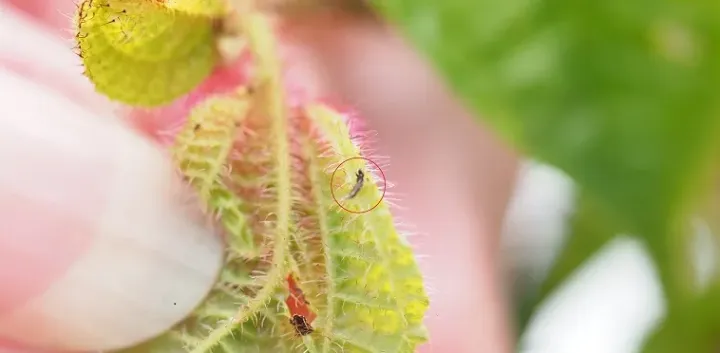
Adults typically exhibit a dark, almost black coloration, allowing them to blend into the shadows of leaves effectively. Larvae are generally lighter, often presenting with yellowish or reddish hues.
The insect possesses specialized mouthparts adapted for piercing and sucking plant sap. Its life cycle involves several stages: egg, two larval instars, prepupa, pupa, and adult.
Identification requires professional microscopic examination, focusing on wing morphology and specific body setae. In field conditions, it is important to distinguish this species from other members of the Phlaeothripidae family.
This species is highly specialized, which has made it a significant subject in biocontrol programs aimed at managing invasive weed species worldwide.
What it damages
The primary host plant for Liothrips urichi is the weed Clidemia hirta. It has been deliberately introduced in several countries as a biological control agent to combat this plant.
The insects damage terminal leaves and shoots by feeding on cell sap, which leads to the formation of characteristic galls or curling of the young leaves.
Heavy infestation causes severe shoot deformation, stunted growth, and a reduction in the weed's reproductive output. The plant loses vigor, making it less competitive in its environment.
Damage symptoms include chlorotic spots, tissue necrosis at feeding sites, and general vegetative suppression. Under high population pressure, shoot tips may eventually wither and die.
While considered beneficial in weed management, its spread into areas with susceptible related plants might pose a potential risk, necessitating careful monitoring.
When it appears
The life cycle of Liothrips urichi is closely linked to environmental conditions. In tropical and subtropical regions, breeding occurs almost continuously throughout the year.
Activity peaks during periods of active shoot growth in the host plant, as these provide the tender tissues required for feeding and oviposition.
The rapid turnover of generations allows the population to increase quickly under favorable temperature and humidity levels. Optimal conditions support the fast colonization of new weed patches.
During dry seasons, activity may decrease, but the insects often survive in protected leaf axils or within deformed tissues, waiting for favorable conditions to return.
Regular population density monitoring is conducted by experts to evaluate the effectiveness of the insects' impact on target weed infestations.
Signs of infestation
The primary sign of presence is the deformation of young leaves, which curl up or form dense galls. This is the most reliable indicator of colonization.
Inspection of the underside of leaves or the interior of curled tissues usually reveals colonies of small, dark insects. Affected tissues often develop a yellow or bronzed discoloration.
Evidence of feeding includes dark fecal spots on the leaf surface and scattered light-colored patches caused by localized tissue destruction.
Reduced terminal growth and overall vigor of the plant are secondary indicators of high thrips population density.
- Severe shoot deformation.
- Leaf curling or gall formation.
- Black fecal spots on foliage.
- Tissue chlorosis at feeding sites.
- Withered terminal buds.
Control measures
Liothrips urichi serves as a biological control agent, and its intentional release is used to suppress the invasive weed Clidemia hirta.
In areas where control of the pest itself is required, chemical management involves systemic or contact insecticides, such as neonicotinoids or organophosphates.
Agrotechnical practices, including proper field management and soil health maintenance, can help strengthen crops and minimize the spread of associated weed hosts.
Biological control of the thrips itself may involve the use of natural predators such as predatory mites, bugs, or lacewings, which help regulate population levels.
Phytosanitary and quarantine measures are essential to prevent the unauthorized introduction of the pest into new regions where it could negatively impact native vegetation.
Taxonomy
- Latin name
- Liothrips urichi
- Order
- Thrips
- Family
- Phlaeothripidae
- EPPO code
- LIOTUR
Discussion
No discussions yet — be the first.