
Olive thrips
Liothrips oleae
Description
How to identify
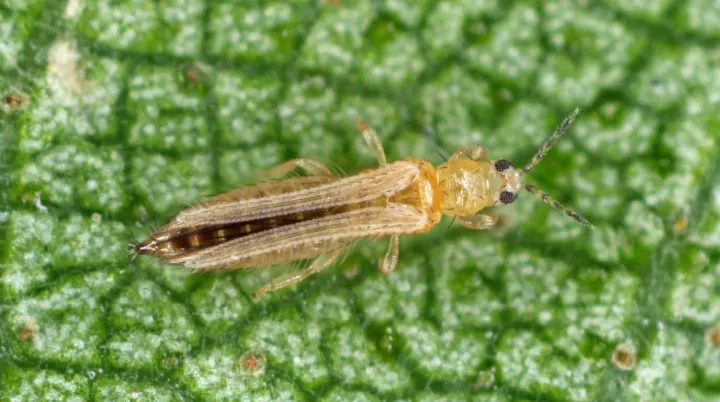
The Olive thrips (Liothrips oleae) is a member of the Phlaeothripidae family within the Thysanoptera order. Adult thrips are small, elongated insects, typically measuring 2.0 to 2.5 mm in length, with a shiny black or dark brown body.
Adults possess narrow, transparent wings with delicate fringes. Their mouthparts are designed for piercing plant tissues and sucking cell sap, which is their primary method of nutrition.
The nymphs are smaller than the adults and generally have a yellow or orange-red coloration. They undergo several molting stages, gradually developing into the mature adult form.
Liothrips oleae spends the winter in the adult stage. They seek refuge in sheltered areas on the olive tree, such as bark crevices, pruning wounds, or dry leaf debris trapped in the branches.
As temperatures rise in the spring, the adults emerge from their wintering sites and move to new, tender growth to begin feeding and laying eggs for the first generation of the season.
What it damages
The primary host for this pest is the olive tree (Olea europaea). The insects feed by puncturing the epidermis of leaves, stems, and flower buds, causing direct cell damage.
Severe infestations can lead to significant foliage loss. Affected leaves often curl, distort, and drop prematurely, which disrupts the tree’s photosynthetic capacity.
Flower damage is particularly critical, as the thrips feed on the delicate reproductive organs of the buds, often resulting in flower abortion and reduced fruit set.
The feeding process leaves the plant vulnerable to secondary infections. The sugary excretions produced by the thrips act as a substrate for sooty mold growth, coating the leaves in black fungus.
Over time, continuous infestation stunts the development of young shoots, weakens the tree's immune response, and negatively impacts both olive oil quality and quantity.
Signs of infestation
The most noticeable sign of an Liothrips oleae attack is the deformation of leaves on the terminal shoots, which appear twisted and stunted compared to healthy foliage.
Look for light-colored, silvery, or yellow spots on the leaf surface, which are the result of the insects emptying the cells of chlorophyll through their feeding action.
A widespread black, powdery residue on the leaves or fruit indicates the presence of sooty mold, which almost always accompanies a heavy population of thrips.
Examine the crevices of the bark and the axils of the leaves; during peak periods, you can often find clusters of the black adults huddled together for protection.
If you observe flowers turning brown and drying out before they even bloom, it is a strong indication of a high thrips population attacking the plant's reproductive structures.
Control measures
Effective management requires a combination of chemical and cultural practices. Insecticide treatments should be targeted toward the spring period, before full bloom or immediately after.
Pruning is a vital cultural control measure. Removing dead wood and thinning out dense canopy cover reduces the number of hiding spots available to the insects and improves light penetration.
Biological control can be highly successful. Predators such as lacewings, lady beetles, and specific predatory mites serve as natural regulators of thrips populations in sustainable olive groves.
- Set up yellow sticky traps to monitor adult population trends throughout the season.
- Maintain tree vigor through proper irrigation and balanced fertilization programs.
- Use selective insecticides to minimize harm to beneficial predatory insects.
Integrated Pest Management (IPM) protocols should emphasize the prevention of infestations by monitoring and using less toxic interventions whenever the economic threshold is not yet reached.
Taxonomy
- Latin name
- Liothrips oleae
- Order
- Thrips
- Family
- Phlaeothripidae
- EPPO code
- LIOTOL
Discussion
No discussions yet — be the first.