
Reed moth
Limnaecia phragmitella
Description
How to identify
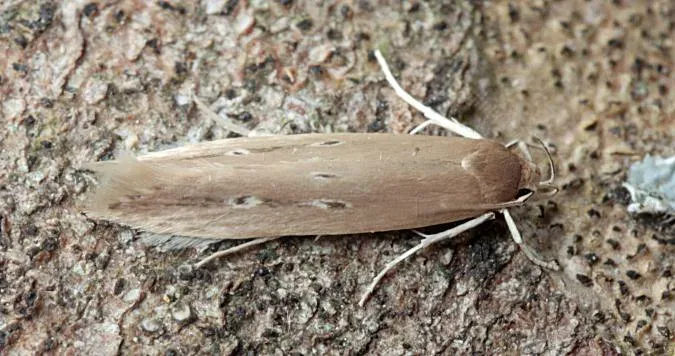
The Reed moth (Limnaecia phragmitella) is a member of the family Cosmopterigidae. It is a small moth with a wingspan of approximately 15 to 20 mm.
The forewings are yellowish-brown, decorated with small dark spots, which provide excellent camouflage against the dead reed stems.
Its hindwings are notably narrow and feature long, delicate fringes, a key morphological characteristic of this moth family.
The larvae are known for constructing distinct protective cases (cocoons) from plant debris, which they carry while feeding.
The pupal stage typically occurs within the damaged inflorescences or stems, making the insect hard to spot until significant damage has been done.
What it damages
The primary host for this species is the common reed (Phragmites australis), which is crucial for aquatic and wetland habitats.
The larvae feed on the inflorescences (panicles) of the reed, hollowing out the tissues and preventing the normal development of seeds.
Heavy infestations can lead to significant destruction of the reed's reproductive parts, impacting its ability to spread naturally.
In addition to inflorescences, larvae may tunnel into the stems, compromising the structural integrity of the plant and making it susceptible to breakage.
For industries utilizing reeds for construction or bio-materials, larval activity degrades the quality of the harvested biomass.
When it appears
Adult moths typically emerge during the summer months, with peak activity usually occurring from June through August.
The female moths lay their eggs on the host plants, ensuring that the hatched larvae have immediate access to their primary food source.
The larval phase is long, often extending through most of the year as the insects hibernate within the host plants.
Hibernation takes place as a larva inside the stem or inflorescence, providing a protected environment during the winter season.
In the spring, larvae resume their activity, finalizing their growth and pupating in sync with the reed's flowering cycle.
Signs of infestation
The most visible sign of infestation is the frayed or "shaggy" appearance of the reed panicles, which lose their natural, compact shape.
Signs of larval activity include the presence of frass (excrement) and silk webbing woven between the spikelets of the reed.
Close inspection often reveals small exit or entry holes in the stems or remnants of larval cases attached to the panicles.
Early wilting or stunted growth of the seed-bearing parts of the plant often indicates high larval density within the reed colony.
- Deformed reed panicles
- Visible silk webbing
- Larval frass on stems
- Holes in stems
- Premature spikelet destruction
Control measures
The most effective management strategy involves mechanical control, specifically the cutting and removal of old reeds during winter.
By removing the previous year's growth before the moths emerge in spring, the population of hibernating larvae is significantly reduced.
Maintaining a healthy ecosystem and encouraging natural predators can help keep moth populations below the economic threshold.
Chemical applications are generally discouraged, as reeds are almost always located in sensitive riparian zones where pesticides could cause ecological harm.
Where necessary, monitoring moth flight activity can help identify the exact timing for implementing non-chemical intervention methods.
Taxonomy
- Latin name
- Limnaecia phragmitella
- Order
- Lepidoptera (butterflies)
- Family
- Cosmopterigidae
- EPPO code
- LMNCPH
Discussion
No discussions yet — be the first.