
Description
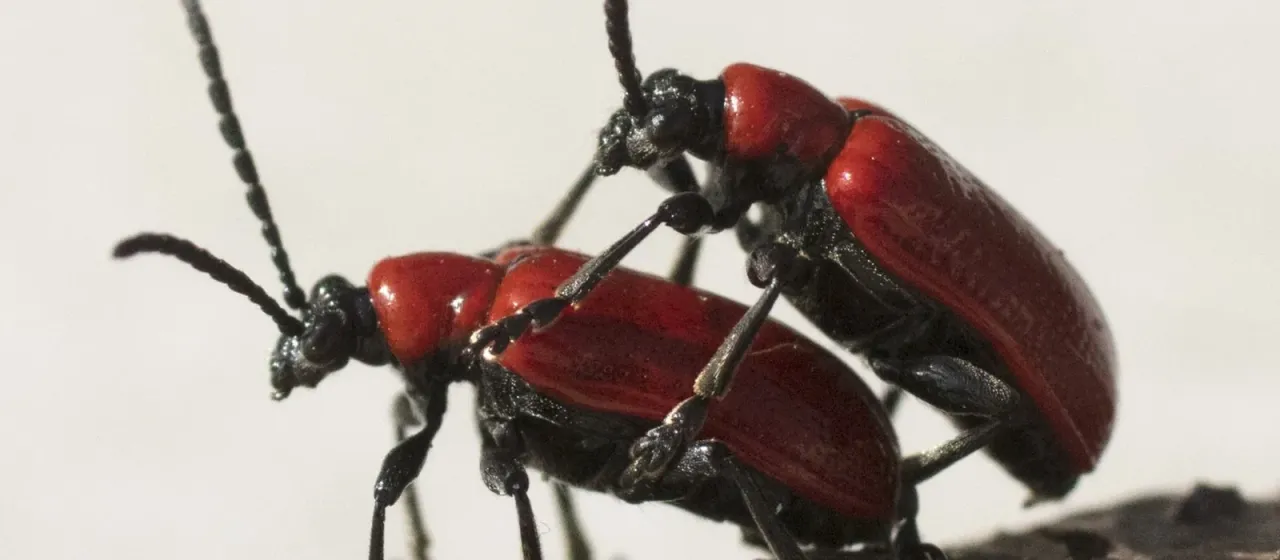
The Lily Beetle (Lilioceris) is a member of the Chrysomelidae family within the order Coleoptera. The most common species, Lilioceris lilii, is a bright red leaf beetle that poses a significant threat to ornamental gardens, particularly those featuring lilies and fritillaries.
The host range of this pest is primarily restricted to the Liliaceae family. Lilies (Lilium) and fritillaries (Fritillaria) are the main targets. In some cases, the beetle may also attack Solomon's seal (Polygonatum), causing widespread damage to foliage, stems, and flower buds throughout the growing season.
The biological cycle starts with adults overwintering in the soil or under garden debris. As temperatures rise in spring, they emerge to feed and mate. Females lay rows of bright orange-red eggs on the underside of leaves. The larvae, which are notorious for covering themselves in their own excrement to deter predators, hatch and begin feeding voraciously for several weeks before pupating in the ground.
The damage caused by these beetles is severe. Adults create large, jagged holes in leaves, while larvae skeletonize the leaf tissue entirely. Heavy infestations can lead to complete defoliation, which severely weakens the bulb and prevents the plant from flowering or storing energy for the next year.
Effective management strategies include:
- Manual removal of adults and eggs during regular garden inspections.
- Use of systemic insecticides labeled for ornamental garden use during the early larval stage.
- Application of neem oil or insecticidal soaps as organic alternatives.
- Maintaining soil hygiene by removing debris and regular weeding around lily beds to disrupt the pupation cycle.
Taxonomy
- Latin name
- Lilioceris
- Order
- Coleoptera (beetles)
- Family
- Chrysomelidae
Taxonomy and Latin: EPPO Global Database · code LILISP
Products · 0
Discussion
No discussions yet — be the first.