
Owlfly
Libelloides macaronius
Description
How to identify
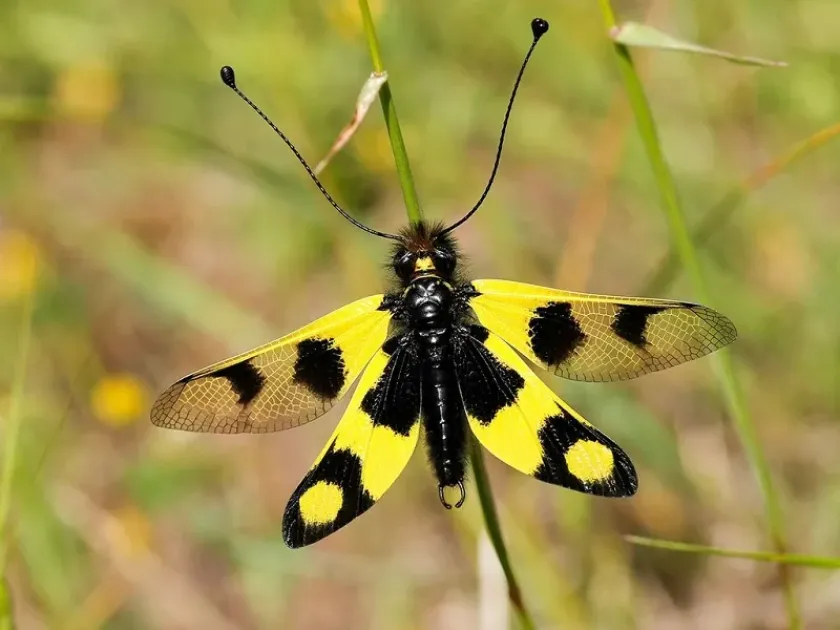
The Owlfly (Libelloides macaronius) is a member of the Ascalaphidae family within the order Neuroptera. It is often mistaken for a pest due to its somewhat aggressive appearance and mimicry of dragonflies.
The most distinctive feature of the adult is its pair of long, clubbed antennae, which are much longer than the head. The wings are characterized by dark, conspicuous markings against a transparent membrane.
Adults are day-flying predators. They possess strong wings and rely on their speed and agility to catch other small flying insects in mid-air, making them highly effective hunters in their natural habitat.
The larvae are flat, sedentary predators with large, sickle-shaped mandibles. They hide in soil or under forest litter, waiting for prey to come within reach, which distinguishes them from herbivorous pests.
This species is highly regarded in ecology as a indicator of habitat health. In many European countries, it is listed as a protected species, highlighting its value to biodiversity.
What it damages
The Owlfly is not considered an agricultural pest in any commercial sense. It does not cause damage to crops, fruit trees, or stored agricultural products during any of its life stages.
Adult Owlflies feed exclusively on other small arthropods. They are beneficial insects that contribute to the natural biological control of other insect populations within the ecosystem.
Larvae, residing in the soil, feed on other small invertebrates. There is no evidence of them damaging roots, tubers, or subterranean parts of commercial agricultural plants.
Most sightings of this species occur in uncultivated areas, meadows, or near field edges where natural biodiversity is maintained. They rarely penetrate deep into intensive monoculture farms.
Farmers and agronomists should not target this species for eradication. Confusing beneficial predators like the Owlfly with true pests can lead to unnecessary insecticide use and environmental damage.
When it appears
Adults are typically active during the warmest months of the year, specifically June and July. During this time, they can be seen patrolling sunny areas in search of prey and mates.
The life cycle of the Owlfly is relatively long, often taking one or two years to complete. This extended cycle is spent primarily in the larval stage, buried in the soil or protected by vegetation.
Hibernation occurs during the winter months, with larvae entering a state of diapause. They remain inactive until the soil warms sufficiently in the spring to trigger development.
Pupation takes place inside a silk cocoon, often camouflaged with debris. This stage is crucial for the metamorphosis from the soil-dwelling larva into the winged adult.
Their flight season is synchronized with the peak abundance of their prey, ensuring that the next generation has sufficient food sources for successful reproduction.
Control measures
There are no control measures required for the Owlfly as it does not pose a threat to agricultural productivity. Management efforts should be directed elsewhere toward true pests.
Maintaining a balanced ecosystem through the use of Integrated Pest Management (IPM) practices is sufficient to keep populations at natural levels without intervention.
Avoid the prophylactic use of broad-spectrum insecticides, as these chemicals eliminate beneficial insects such as Owlflies, which help maintain ecological stability in agricultural landscapes.
Good soil management, such as appropriate tillage, naturally regulates the micro-habitats of soil-dwelling larvae without needing additional chemical inputs.
If you encounter an Owlfly in your field, it is a positive sign of a healthy, biodiverse environment. Enjoy their presence as they help to naturally suppress pest populations.
Taxonomy
- Latin name
- Libelloides macaronius
- Family
- Ascaphalidae
- EPPO code
- LIBDMA
Discussion
No discussions yet — be the first.