
Leptothrips
Leptothrips
Description
How to identify
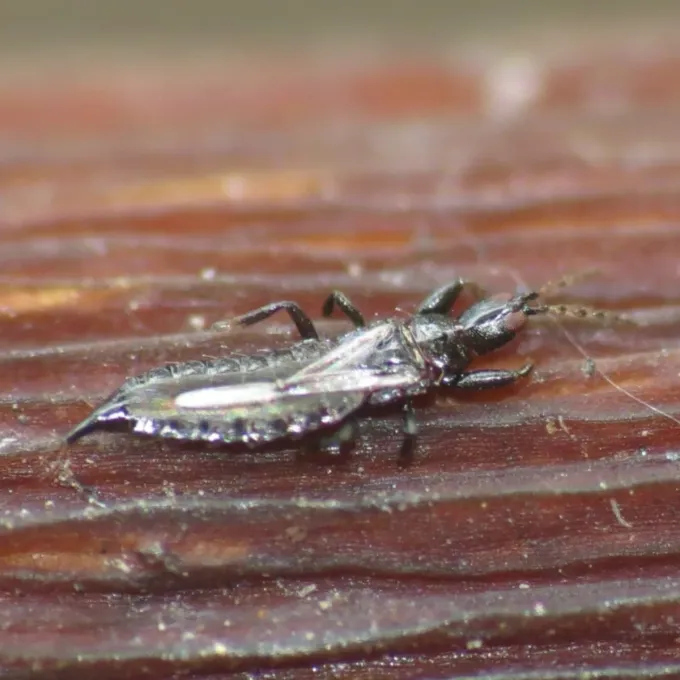
Leptothrips is a genus of insects belonging to the order Thysanoptera and the family Phlaeothripidae. These insects are typically small with slender bodies, often exhibiting a dark brown or black coloration, which makes them distinct from lighter-colored thrips species.
Their mouthparts are specifically adapted for piercing plant tissues and sucking out sap. Adults possess narrow wings fringed with hairs, providing them with the capability for short-distance flight and efficient migration within plant canopies.
The life cycle of Leptothrips includes several stages: egg, larva, prepupa, pupa, and adult. Their biological development is often hidden from view, as larvae and adults tend to colonize flowers, leaf sheaths, or deep within plant structures.
While many species in this family are primarily plant-feeders, some exhibit predatory behavior towards other pests. However, in agricultural contexts, their feeding on vital plant parts usually classifies them as a notable pest to be monitored.
They are highly adaptable to various environmental conditions, allowing them to persist in different types of habitats, from gardens and greenhouses to large-scale agricultural fields.
What it damages
Leptothrips damage a wide range of host plants, including vegetables, fruits, and ornamental flowers. They prefer feeding on young, succulent parts of the plant, which often leads to severe physiological stress.
Feeding involves rupturing plant cells and extracting the fluid contents. This mechanical injury, combined with the removal of nutrients, causes leaves to curl, yellow, and eventually exhibit signs of necrosis or drying out.
When feeding on buds and flowers, they cause significant aesthetic and economic damage by preventing full blooming or triggering flower drop, which directly affects fruit set and yield.
Toxic enzymes injected by the insects during feeding can alter plant growth patterns, leading to stunting and abnormal shoot development that weakens the plant's overall vigor.
In addition to direct damage, they serve as vectors for various plant pathogens, such as viruses and phytoplasmas, complicating the phytosanitary management of infected crops.
Signs of infestation
The most common sign of a Leptothrips infestation is the presence of silvery, blotchy patches on the leaf surface, created by the evacuation of cell contents and subsequent air entry.
Clusters of small black fecal spots on the underside of leaves are a diagnostic indicator of their presence, often helping to distinguish thrips activity from other environmental damages.
Growth distortion, such as leaf curling or the twisting of new shoots, frequently occurs because the insects gather in these tender areas to feed, disrupting regular cell division.
Flower deformation and discoloration are classic signs in ornamentals, where the presence of the pest leads to damaged petals and shortened floral life spans.
- Silvering or mottling on the foliage.
- Visible tiny black droppings on leaf undersides.
- Deformed or stunted new leaf and flower growth.
Control measures
Managing Leptothrips requires an integrated approach starting with systematic monitoring. The use of blue or yellow sticky traps is a standard practice for detecting populations early in the season.
Chemical control involving systemic insecticides is often necessary when populations reach economic injury levels, as these products can reach the insects hidden within plant structures.
Sanitation practices play a crucial role in suppression. Removing weeds and crop debris around the field eliminates alternative hosts and reduces the potential for overwintering sites.
Biological control agents, such as predatory mites, lacewings, or certain parasitic wasps, can be encouraged or introduced to help keep the populations at manageable levels in greenhouse or organic settings.
Proper irrigation and fertilization help plants recover from thrips feeding damage and improve their natural resistance, ensuring that the crop remains productive despite some pest pressure.
Taxonomy
- Latin name
- Leptothrips
- Order
- Thrips
- Family
- Phlaeothripidae
- EPPO code
- LPTTSP
Discussion
No discussions yet — be the first.