
Leptopilina japonica
Leptopilina japonica
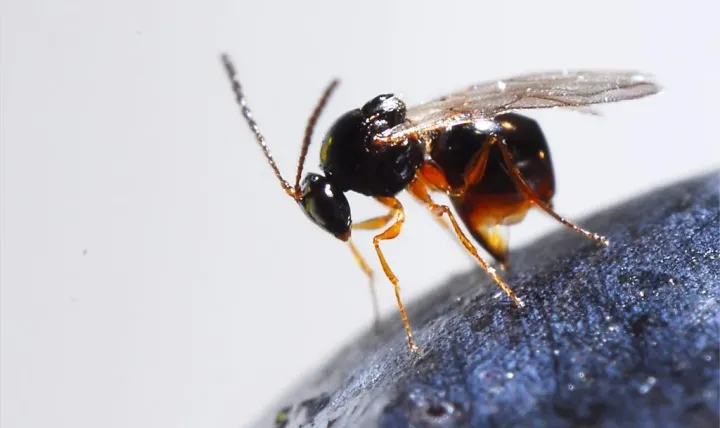
Description
How to identify
Leptopilina japonica is a microscopic species of parasitic wasp belonging to the family Figitidae within the order Hymenoptera.
The adult wasps are very small, typically measuring between 2 to 3 millimeters, and feature a distinct dark, shiny appearance.
They are characterized by specific morphological traits in their wings and antennae, which are essential for accurate taxonomical identification.
These wasps are highly specialized, having evolved to navigate complex host-seeking behaviors to locate their specific targets in the environment.
Proper identification usually requires professional entomological expertise and the use of high-resolution magnification tools.
What it damages
Leptopilina japonica is primarily recognized as a beneficial parasitoid rather than a crop-damaging pest in modern agriculture.
It specializes in attacking the larvae of various dipteran species, most notably the spotted wing drosophila (Drosophila suzukii).
By parasitizing the larvae of these pests, the wasp effectively reduces the population pressure on various small fruit crops like berries and grapes.
While not a direct pest, the presence of the wasp is a critical component in the natural management of fruit-infesting flies.
Its role as a natural enemy contributes significantly to reducing crop losses caused by drosophila larvae without damaging the fruit itself.
When it appears
The seasonal activity of Leptopilina japonica is strictly synchronized with the emergence of its host, the fruit flies, throughout the growing season.
Adult wasps are most active during the warmer months, taking advantage of higher temperatures to optimize their host-searching efficiency.
They are capable of completing multiple generations per season, allowing them to rapidly respond to increases in host density in the field.
The overwintering strategy involves remaining as pupae inside the host's puparium, providing protection against harsh winter temperatures.
Emergence in early spring is closely linked to the appearance of the first generation of fruit fly larvae on early-ripening fruit crops.
Signs of infestation
Signs of Leptopilina japonica are subtle, as the entire larval development of the wasp occurs hidden within the host and the infested fruit.
The most common indicator of their presence is a decreased emergence rate of adult fruit flies from samples collected in the field.
Dissection of infested fruit may reveal the presence of wasp pupae, confirming the success of the parasitoid in that particular location.
Monitoring for the presence of this beneficial wasp is typically conducted using specialized field traps for adults.
A reduction in the infestation levels of susceptible fruits often correlates with the active presence of this natural biological control agent.
Control measures
Since Leptopilina japonica is a beneficial insect, the primary management strategy is to protect its population from broad-spectrum insecticides.
Integrated Pest Management (IPM) practices focus on maintaining ecological corridors and floral resources to support their survival.
Avoiding unnecessary chemical applications during the critical window of fruit ripening is essential for preserving these parasitoid populations.
Sustainable agricultural methods that promote biodiversity naturally enhance the performance of this wasp in controlling pest populations.
- Minimize use of non-selective pesticides during fruit development.
- Maintain non-crop areas to act as refuges for beneficial insects.
- Prioritize biological control over chemical interventions whenever possible.
Taxonomy
- Latin name
- Leptopilina japonica
- Order
- Hymenoptera
- Family
- Figitidae
- EPPO code
- LTOPJA
Discussion
No discussions yet — be the first.