
Leptomydas corsicanus
Leptomydas corsicanus
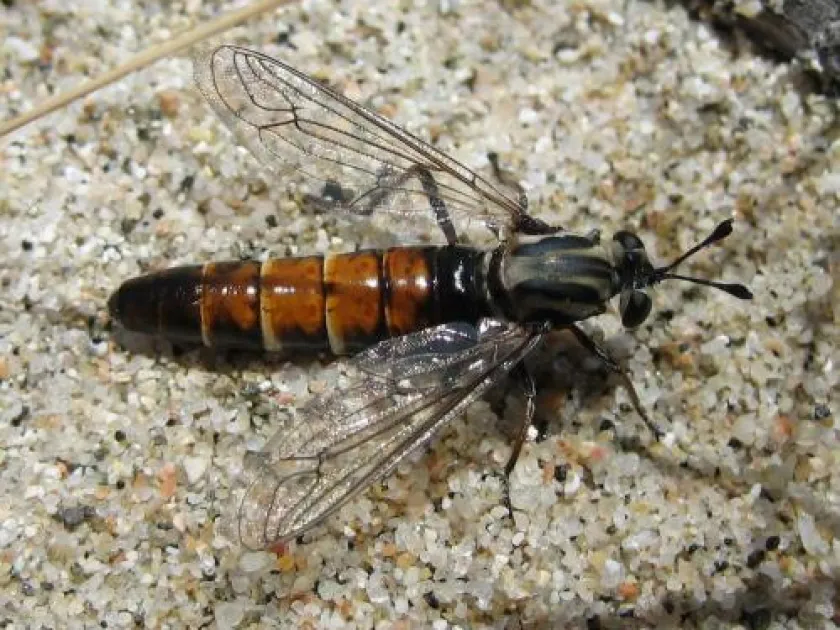
Description
How to identify
Leptomydas corsicanus is a member of the Mydidae family within the order Diptera. These are robust, often large flies that frequently mimic wasps or other hymenopterans.
The adult flies possess a slender body and prominent hind legs, which is a common diagnostic feature for the Mydidae family.
Their coloration is generally dark, providing them with effective camouflage against the soil surface and vegetation where they rest.
Adults have short antennae and large eyes, adapted for efficient navigation and mating behaviors in open field environments.
The larval stage is subterranean, where they spend most of their life cycle developing within the soil profile.
What it damages
The damage caused by Leptomydas corsicanus is primarily attributed to its larval stage, which feeds on the root systems of various plants.
By consuming roots, these larvae disrupt the plant's ability to uptake essential water and nutrients from the soil.
In addition to direct mechanical damage, the wounds created by the larvae provide entry points for secondary pathogens like fungi and bacteria.
Plants affected by larval feeding often show signs of stunted growth, wilting, and reduced biomass, leading to poor yield potential.
High infestation levels in agricultural areas can result in significant patches of crop loss, particularly during early growth stages.
When it appears
The life cycle and activity of this pest are highly dependent on soil temperatures and seasonal moisture levels.
Adult emergence typically occurs during the warmer months, ensuring that optimal conditions are met for successful mating and oviposition.
Larval activity is most pronounced during the spring and summer seasons when the soil environment is conducive to feeding and growth.
The larvae overwinter in deeper soil layers, where they can survive temperature fluctuations until favorable conditions return in the spring.
Monitoring the soil temperature is crucial for predicting the start of larval feeding activity and planning timely field interventions.
Signs of infestation
The primary sign of a Leptomydas corsicanus infestation is sudden wilting of crops even when soil moisture appears to be adequate.
Careful inspection of the roots reveals scarring, chewed bark, or internal tunnels indicative of larval burrowing and feeding activity.
Visible changes in plant vigor, such as yellowing leaves and reduced foliage density, are secondary indications of a compromised root system.
Adult flies may be observed emerging from the ground, especially in early morning hours, signaling an active population in the field.
- unexplained wilting during sunny days
- root decay or visible mechanical feeding marks
- patchy distribution of stunted plants across the field
Control measures
Managing this pest requires a combination of cultural practices and targeted chemical interventions to minimize damage to crop roots.
Deep tillage is an effective mechanical method that disrupts the soil environment, exposing larvae to surface conditions and predation.
Crop rotation is essential to break the life cycle of the pest, as moving to a non-host crop can significantly starve the larval population.
Soil-applied insecticides may be used when heavy infestations are detected, ensuring the chemical reaches the root zone for maximum efficacy.
Regular field surveys and monitoring are key to identifying early infestation stages, allowing for precise control and protection of the investment.
Taxonomy
- Latin name
- Leptomydas corsicanus
- Order
- Diptera (flies)
- Family
- Mydidae
- EPPO code
- LMYDCO
Discussion
No discussions yet — be the first.