
Gauromydas
Gauromydas
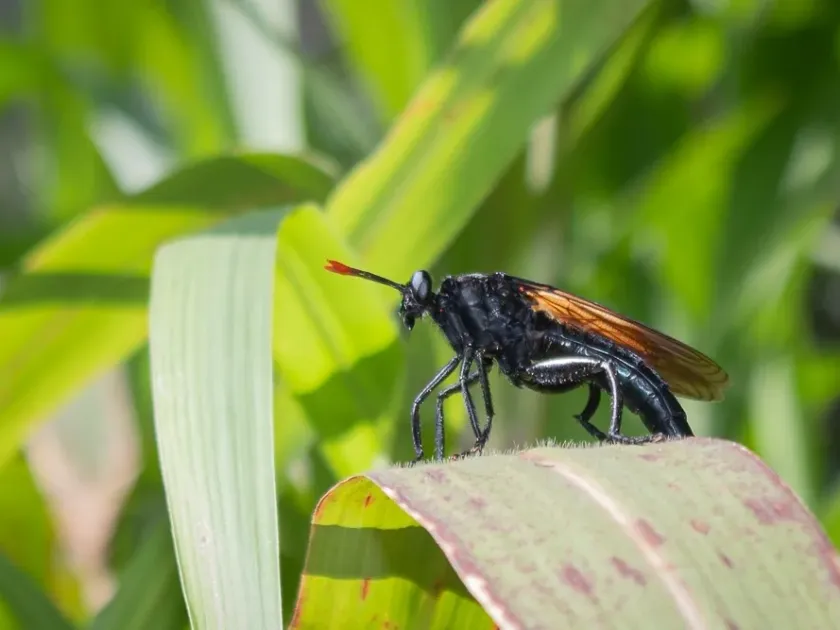
Description
How to identify
Gauromydas is a genus of flies belonging to the Mydidae family. They are known for being some of the largest flies in existence, with some species displaying impressive wingspans.
Adult flies exhibit Batesian mimicry, evolving to resemble wasps or hornets. This protective mechanism discourages predators from attacking these large, slow-moving insects.
The adult Gauromydas flies have vestigial mouthparts and do not feed, focusing their brief adult lives solely on reproduction and egg-laying.
The larval stage is the most significant from an agricultural perspective. These larvae are robust, heavily chitinized, and live in soil or decomposing plant material.
Identifying this pest often requires expertise, as larvae can be confused with other large soil-dwelling insect larvae without a proper entomological examination.
What it damages
The primary damage to plants is caused by the larvae, which live in the soil. While they primarily feed on decaying organic matter, they can damage plant roots.
Young trees, shrubs, and perennial nursery plants are most vulnerable to larval feeding, which can lead to reduced vigor, stunted growth, or even plant death.
Damage to the root system disrupts nutrient and water uptake, making the plants more susceptible to secondary pathogens and environmental stress.
Large-scale presence of these larvae in fields rich in organic matter can result in significant economic losses in seedling production and horticulture.
The tunneling activity of the larvae in the soil creates cavities that destabilize the root environment and promote root decay in sensitive plant species.
When it appears
Adults are typically observed during the warmer months. Their emergence is synchronized with soil temperature patterns that allow for successful pupation.
The life cycle is long, often spanning one or two years, with the majority of the insect's life spent in the larval stage hidden within the soil or wood substrate.
Peak activity for egg-laying occurs during the mid-summer period when temperatures are optimal for the development of the next generation.
Pupation begins as the soil warms up during spring, with adult flies emerging shortly thereafter to complete their life cycle.
Larval activity is most pronounced during periods of adequate soil moisture, which allows them to move freely through the root zone in search of food.
Signs of infestation
Sudden wilting or decline of trees and shrubs is a primary sign that a soil pest, potentially Gauromydas larvae, may be damaging the root system.
Physical evidence of the pest can be confirmed by excavating the soil around the affected plants to look for large, robust larvae or signs of larval tunneling.
The presence of large, empty pupal cases in the soil after the emergence season indicates an established population of the fly within the area.
Observing adult flies that resemble large wasps near orchards or nurseries suggests that a breeding population may be present nearby.
Root damage patterns that show irregular chewing marks, combined with the presence of rotting organic matter, are typical indicators of this pest's presence.
Control measures
Effective management begins with sanitation. Removing old stumps, fallen logs, and accumulated organic debris eliminates potential larval breeding sites.
Deep plowing or mechanical tillage of the soil can expose larvae to the surface, making them vulnerable to predators such as birds and unfavorable weather conditions.
Crop rotation and careful management of organic fertilizers are essential, as fresh manure can act as an attractant for egg-laying females.
Biological control using entomopathogenic nematodes or fungi can provide a sustainable way to reduce larval density in the soil without resorting to harsh chemicals.
When infestation levels are high, targeted soil-applied insecticides may be necessary, provided they are used in accordance with environmental regulations.
Taxonomy
- Latin name
- Gauromydas
- Order
- Diptera (flies)
- Family
- Mydidae
- EPPO code
- GMYDSP
Discussion
No discussions yet — be the first.