
Leptomydas
Leptomydas
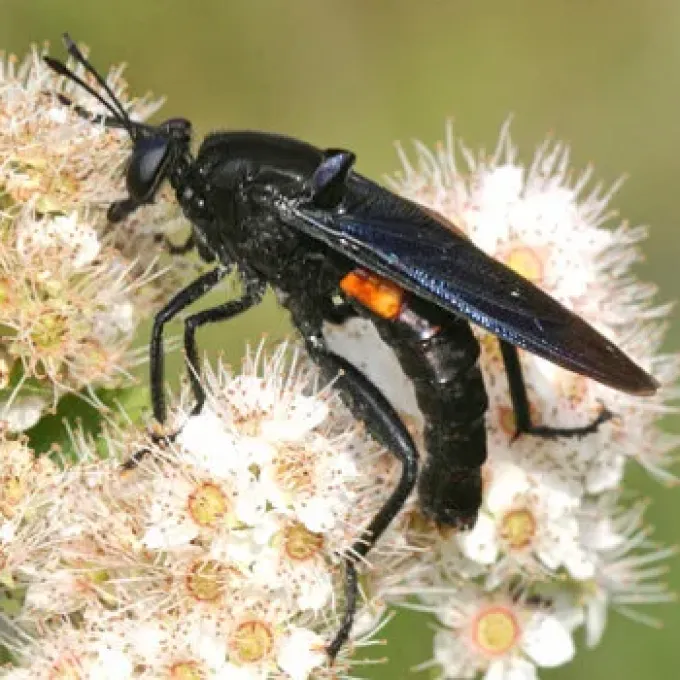
Description
How to identify
Leptomydas is a genus within the Mydidae family, which falls under the order Diptera. These insects are known for their relatively large size and appearance, often mimicking wasps or bees to deter predators.
The adult form is characterized by distinct antennae and a robust body structure. In their larval stage, they reside primarily underground, exhibiting a typical segmented, pale-colored larval morphology.
The larval stage features a heavily chitinized head capsule, which allows them to effectively navigate and feed within the soil environment.
Entomological studies identify the genus through specific wing venation patterns and abdominal structure, distinguishing them from other similar-looking dipteran flies.
Their subterranean life cycle makes them a challenging subject for field observation and pest control monitoring programs.
What it damages
The primary concern regarding Leptomydas in agriculture involves their larval feeding habits. While they are opportunistic feeders on decaying matter, they can damage the roots of various crops when food is scarce.
Root damage leads to reduced vigor in crops, as the plant struggles to uptake water and essential nutrients effectively from the soil.
Damage to the root architecture often results in stunting or wilting, particularly in younger plants that have not yet established a deep root system.
The feeding sites created by the larvae provide easy access for opportunistic soil pathogens, which often causes systemic plant decline.
Crop losses are most significant in sandy soil types, where larvae can easily migrate through the root zone of the host plants.
When it appears
Adult Leptomydas insects typically emerge during the warmer months, often peaking in late spring to mid-summer depending on the regional climate.
Larval activity is highest during the spring and autumn months when soil moisture levels are optimal for their development and movement.
During dry summer months, larvae typically descend to deeper, cooler, and more humid layers of the soil to survive, entering a state of reduced activity.
The duration of the larval stage is often multi-annual, meaning their presence in the soil can be persistent if not managed correctly through agronomic practices.
Weather patterns influence their life cycle timing, with high moisture levels often correlating with increased larval movement near the surface.
Signs of infestation
The most common indicator of infestation is irregular plant growth or unexpected wilting of plants in patches within a field.
If you suspect an infestation, inspecting the root systems of affected plants often reveals clean-cut bites or tunnels in the root tissue.
A reduction in the density of crops in certain zones of the field often suggests the presence of soil-dwelling larvae affecting germination and survival.
Plants affected by Leptomydas may exhibit yellowing leaves, which is a symptom of nutrient deficiency caused by compromised root systems.
- Wilting despite adequate irrigation.
- Tunnels or notches on the primary roots.
- Patches of stunted crop growth.
Control measures
Effective management begins with deep tillage, which disturbs the soil environment and exposes larvae to predators and environmental stress.
Crop rotation remains the most sustainable method for reducing the population density of Leptomydas larvae over multiple seasons.
Maintaining soil health and fertility helps plants withstand moderate root damage and recover more quickly from potential pest attacks.
Chemical control involving soil insecticides should be considered a last resort and used only when monitoring confirms high population densities.
Biological controls, such as introducing entomopathogenic nematodes or fungi, can provide an environmentally friendly alternative for soil pest management.
Taxonomy
- Latin name
- Leptomydas
- Order
- Diptera (flies)
- Family
- Mydidae
- EPPO code
- LMYDSP
Discussion
No discussions yet — be the first.