
Lepidiota crinita
Lepidiota crinita
Description
How to identify
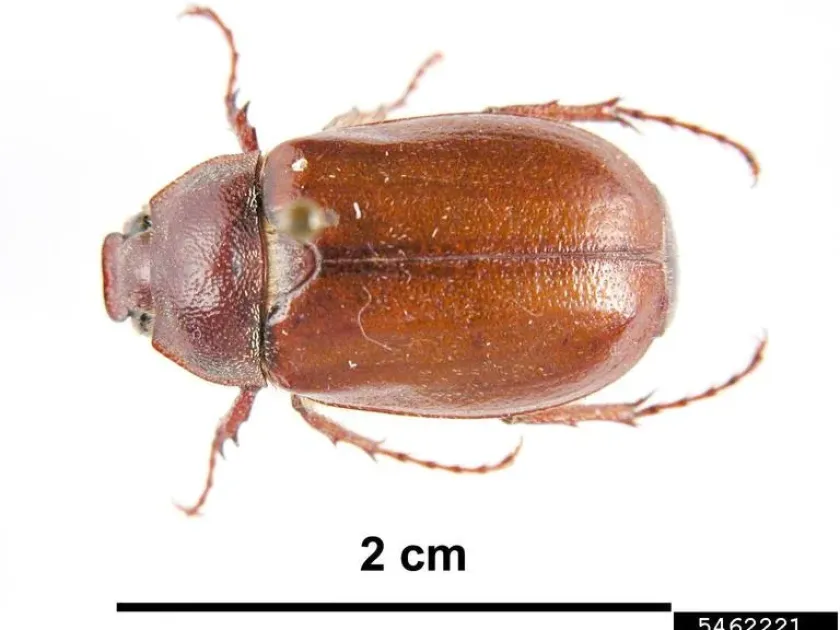
Lepidiota crinita is a species of scarab beetle belonging to the subfamily Melolonthinae. The adults are robust beetles, often characterized by a dense covering of fine hairs, which is typical for many members of this taxonomic group.
The larval stage, commonly known as a white grub, is C-shaped and lives entirely underground. These larvae are the primary life stage responsible for damage to agricultural crops, feeding in the root zone.
The life cycle encompasses four main stages: egg, larva (with several instars), pupa, and adult. The duration of the cycle is heavily dependent on soil temperature and humidity, which regulate the growth rate of the larvae.
Adults are typically nocturnal and are attracted to lights, which is a common feature used by researchers for population monitoring and timing control applications during the flight season.
Identifying the species often requires careful examination of the raster pattern on the final abdominal segment of the larva, which is a standard procedure in entomological diagnostics.
What it damages
The larvae of Lepidiota crinita are significant pests of sugar cane. They feed directly on the root system, pruning the roots and severely compromising the plant's ability to uptake water and nutrients.
While sugar cane is a primary host, these larvae are generalist feeders and can damage a variety of other crops, including cereals and vegetables, when they share the same habitat.
Severe infestations lead to stunted growth, yellowing of the leaves, and eventual lodging of the cane stalks. In extreme cases, the destruction of the root mass leads to plant death and significant yield losses.
The economic impact is most pronounced during the peak feeding stages of the third instar larvae, which consume larger quantities of biomass than younger stages.
Beyond direct feeding, the wounds inflicted by the larvae provide entry points for secondary pathogens, such as fungi and bacteria, leading to rot and further systemic degradation of the plant.
Signs of infestation
The first visual signs in the field are typically patches of wilting plants that fail to recover even after irrigation. This indicates a loss of root functionality due to larval feeding.
When affected plants are uprooted, they often show signs of severe root pruning, with the root system significantly reduced or completely missing from the base of the stem.
The presence of larvae can be confirmed by excavating soil samples within the root zone. White grubs are usually found within a few centimeters of the plant base.
An abundance of adult beetles around lights during the evening hours serves as a warning signal that an oviposition event is likely occurring, necessitating immediate field scouting.
Presence of tunnels in the soil around the base of the stalks and gaps in the crop stand are clear indicators that a high-density population of white grubs may be active in the field.
Control measures
Chemical control usually involves the application of soil-applied insecticides at the time of planting to protect the young root system until the crop is established.
Cultural control measures, such as deep tillage, can help by physically disrupting the soil, which exposes the larvae to predators like birds and harsh environmental conditions.
Biological control options include the use of entomopathogenic fungi or specialized nematodes that actively hunt and infect the larvae within the soil profile.
Integrated Pest Management (IPM) strategies, including crop rotation and monitoring, are essential to keep populations below the economic injury level over long-term planting cycles.
- Soil insecticide application at planting.
- Deep tillage for soil disruption.
- Application of entomopathogenic fungi.
- Regular field scouting and light trapping.
Taxonomy
- Latin name
- Lepidiota crinita
- Order
- Coleoptera (beetles)
- Family
- Scarabaeidae
- EPPO code
- LEPDTR
Discussion
No discussions yet — be the first.