
Fruit gall midge
Lasioptera fructuaria
Description
How to identify
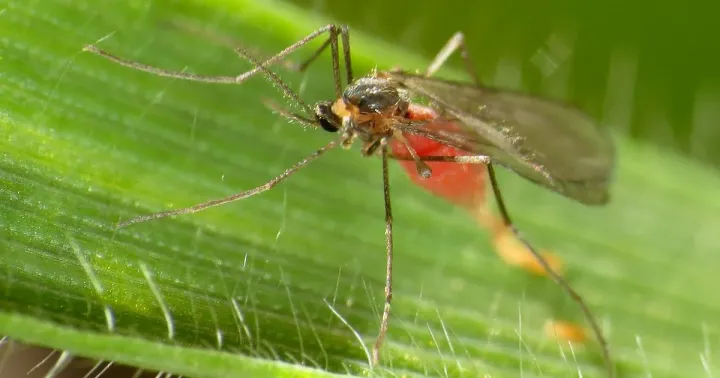
The fruit gall midge (lat. Lasioptera fructuaria) is a microscopic insect belonging to the order Diptera and the family Cecidomyiidae. Adult midges are tiny, fragile insects with long antennae and delicate wings.
Identification is primarily based on the presence of larvae within damaged plant tissues, as adults are difficult to spot in an orchard environment due to their extremely small size.
The larvae are small, legless, and white or yellowish, typically found developing inside the fruit pulp or near the seed chamber. They remain hidden for most of their development cycle.
This species is taxonomically classified as a gall-forming or tissue-feeding pest. Its life strategy involves utilizing plant nutrients to fuel its rapid larval growth.
Accurate identification often requires laboratory examination of the larvae or rearing them to the adult stage to confirm the specific species involved in the infestation.
What it damages
The fruit gall midge primarily infests a range of pome and stone fruit crops. The larvae feed on the internal tissues of developing fruit, disrupting normal growth processes.
Feeding damage causes physical malformations and stunting. Often, the fruits fail to develop properly and remain undersized or show visible deformations on the surface.
The entry points created by the larvae provide easy access for fungal pathogens, leading to secondary infections such as fruit rot, which can destroy the entire fruit.
Severe infestations lead to premature fruit drop. In high-pressure years, this can result in significant yield losses, severely impacting the commercial viability of an orchard.
Even if the fruit does not drop, it loses its market quality, as internal damage makes it unsuitable for storage, processing, or fresh consumption.
When it appears
The life cycle of the fruit gall midge is synchronized with the phenology of its host plants. Adults typically emerge during the flowering and fruit-set stages of trees.
Females deposit eggs on the fruit surface or near the calyx. Upon hatching, the larvae immediately bore into the fruit tissue to begin their feeding cycle.
The most active developmental period for the larvae occurs during the summer months when fruits are actively expanding and accumulating sugars.
Overwintering occurs in the pupal or larval stage, typically in the soil beneath the host trees or occasionally within mummified fruits left on the ground.
Environmental factors like temperature and moisture determine the number of generations per season, necessitating regular monitoring throughout the vegetative period.
Signs of infestation
The first signs of infestation are small, often inconspicuous holes in the fruit surface. These areas may eventually show darkening or localized rot.
Upon cutting open an affected fruit, one can find the larvae or the cavities they have created. The internal structure of the fruit may appear brown or decayed.
Outwardly, infested fruits may look distorted or develop unevenly. A common sign is the lack of development compared to healthy fruits on the same branch.
Premature fruit drop in early summer, especially when trees are under no drought stress, is a strong indicator of midge larval activity.
- Surface deformations and irregular fruit shape.
- Small entry holes with localized discoloration.
- Premature yellowing and dropping of young fruits.
- Presence of larvae inside the flesh during internal inspection.
Control measures
Cultural control is the first line of defense. This involves rigorous collection and disposal of fallen fruits to break the midge's development cycle.
Cultivating the soil under the tree canopy in the autumn helps expose overwintering larvae to adverse conditions, significantly reducing the spring population.
Pheromone traps are essential tools for monitoring adult emergence, allowing for the precise timing of protective measures.
When infestation levels exceed economic thresholds, appropriate insecticides should be applied, timed specifically to target the egg-laying or larval emergence phase.
Encouraging natural predators and maintaining healthy orchard ecosystems can help mitigate the severity of gall midge infestations naturally.
Taxonomy
- Latin name
- Lasioptera fructuaria
- Order
- Diptera (flies)
- Family
- Cecidomyiidae
- EPPO code
- LASOFR
Discussion
No discussions yet — be the first.