
Lasioptera
Lasioptera
Description
How to identify
Lasioptera is a genus of small insects belonging to the gall midge family (Cecidomyiidae) within the order Diptera.
Adult specimens are minute, typically measuring 1 to 3 mm in length, characterized by slender bodies and long, delicate antennae.
Their wing venation is distinct, often showing specific reduction patterns that are diagnostic for the genus when examined under magnification.
The larvae are typically spindle-shaped, legless, and lack a distinct head capsule, often exhibiting bright orange or white coloration.
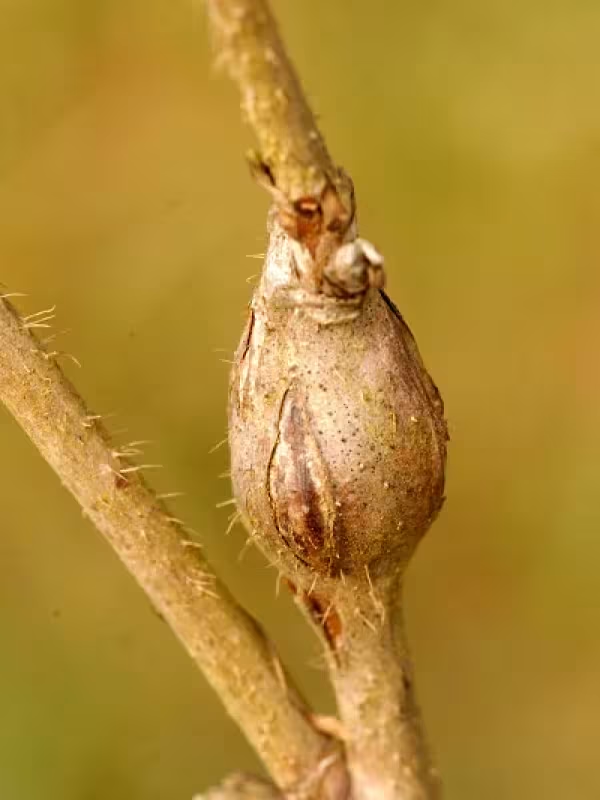
These insects are primarily known for their ability to induce galls on host plants, which provide both nutrition and a protective environment for the developing larvae.
What it damages
The primary hosts of Lasioptera are various cereal crops, including wheat, rye, and barley, as well as several wild grass species.
The larvae feed on plant tissues by extracting sap, which triggers abnormal cell growth and the development of galls within the stems or inflorescences.
This feeding behavior disrupts nutrient transport, leading to stunted plant growth, reduced stalk strength, and significant yield losses.
In addition to physiological stress, the damage creates entry points for secondary pathogens, such as fungi and bacteria, further compromising plant health.
Heavily infested crops often exhibit poor grain quality, including shriveled seeds that fail to meet industrial and agricultural standards.
When it appears
Adult activity typically peaks during the spring and early summer months, coinciding with the tillering and stem elongation stages of cereal crops.
Females lay eggs in the leaf sheaths or beneath the epidermis of young stalks, where the emerging larvae begin their feeding cycle.
The species may undergo one or multiple generations per year depending on environmental conditions, particularly local temperatures and humidity levels.
Lasioptera overwinter primarily in the larval stage, residing within host plant residues, dry stems, or the soil surface to survive the winter.
Spring development is highly temperature-dependent, and the synchronization of adult emergence with crop growth stages is critical for the pest's success.
Signs of infestation
The most prominent sign of infestation is the formation of galls — visible swellings on the stem nodes or near the base of the ears.
Affected plants often appear deformed or stunted compared to healthy counterparts in the same field, showing signs of premature yellowing.
Careful dissection of the galls will reveal a colony of small larvae feeding inside, providing clear evidence of the pest's presence.
Damage to the inflorescences often results in poorly developed ears or a condition known as "whitehead," where the grain fails to fill properly.
General field symptoms include decreased stem rigidity, which makes the crop highly susceptible to lodging during windy or rainy weather.
Control measures
Integrated pest management begins with cultural practices, such as deep plowing of stubble to bury and kill overwintering larvae.
Crop rotation is essential to break the lifecycle of the pest by ensuring that host plants are not grown in the same field in consecutive years.
Managing weed populations in and around fields is crucial, as many wild grasses can act as alternative hosts for Lasioptera species.
Chemical control with insecticides is generally only effective during the brief window of adult flight before the larvae settle into the plant tissues.
Biological control, focusing on the preservation and augmentation of natural parasitoid wasps, plays a vital role in maintaining the pest population at low levels.
Taxonomy
- Latin name
- Lasioptera
- Order
- Diptera (flies)
- Family
- Cecidomyiidae
- EPPO code
- LASOSP
Discussion
No discussions yet — be the first.