

Description
How to identify
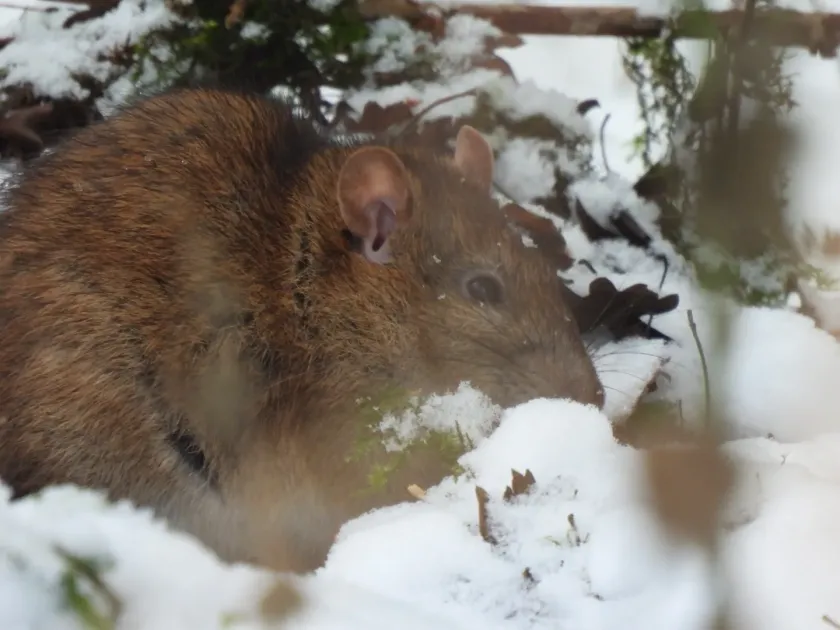
The brown rat is a large rodent belonging to the Muridae family. Its body is robust, reaching up to 25 cm in length, with a thick tail that is shorter than its head and body combined.
The fur is typically brown or greyish-brown, while the belly is lighter in color. They have small ears, a blunt muzzle, and strong incisors that allow them to chew through almost any material.
Brown rats are nocturnal, highly intelligent, and social animals. They live in colonies and are known for their exceptional ability to adapt to various environments, including farms and warehouses.
Their reproduction rate is high; in optimal conditions, a single female can produce multiple litters per year, with each litter consisting of up to 12 pups.
Due to their sensory capabilities—keen smell and hearing—they are naturally cautious of new objects in their territory, which makes them difficult to catch with traditional mechanical traps.
What it damages
Brown rats are major pests in agriculture, consuming and damaging vast quantities of stored grain, corn, seeds, and animal feed. They also frequently attack fruit and vegetables in fields.
Economic damage is not limited to the food they consume; they spoil significantly more by contaminating produce with their urine, feces, and fur, making the entire stock unfit for market.
In livestock farming, they consume feed intended for animals, destroy insulation in barns, and pose a severe threat by biting young livestock and poultry, often killing them.
Their gnawing behavior causes structural damage to wooden doors, concrete foundations, and electrical systems, which is a frequent cause of fires in storage facilities and silos.
Furthermore, they serve as vectors for various zoonotic diseases, including leptospirosis and salmonellosis, threatening both the health of the workforce and the quality of agricultural products.
When it appears
Brown rats are active throughout the entire year. During warmer months, they often live in open fields, gardens, and near water sources, feeding on crops and vegetation.
When temperatures drop in autumn, they migrate toward human structures to find warmth and food. Grain stores, barns, and stables provide the perfect shelter for the winter.
In facilities with a consistent food supply, they maintain high activity levels during the winter. They use this period to breed continuously, protected from the harsh outside conditions.
Spring migration can occur if the population density is high, causing some rats to spread back into the surrounding environment, though many remain in established indoor colonies.
Effective pest management requires a year-round approach, as the constant pressure of migration from fields to buildings keeps the risk of re-infestation high.
Signs of infestation
The most common signs of a brown rat presence are physical evidence of gnawing on containers, packaging, and the base of wooden walls or doors.
Dark, smeary marks caused by the oil from their fur are often found along the baseboards or walls, following their regular paths between their nests and food sources.
Droppings are another key indicator; they are usually capsule-shaped and found in clusters, particularly near feeding areas or entry points into the facility.
Audible indicators, such as scratching, squeaking, or gnawing sounds heard at night, are clear indications of a significant rodent infestation.
Finding burrows, often seen as holes in the ground or tunnels into feed piles, confirms a well-established colony living on the premises.
Control measures
The first line of defense is exclusion: sealing all gaps and cracks in foundations, using heavy-duty mesh for ventilation, and ensuring doors fit tightly to deny entry.
Maintaining high levels of sanitation is crucial; removing spilled grain, keeping feed in sealed containers, and eliminating clutter reduces nesting sites and food availability.
Rodenticides, specifically anticoagulants, are the primary tool for control. They are delivered via tamper-resistant bait stations to safely eliminate the population over time.
Mechanical traps, such as snap traps, can be used in areas where chemical products are prohibited, provided they are placed strategically along known rat runways.
Professional pest control services are highly recommended to ensure the safe and systematic reduction of the rodent population while minimizing risks to livestock and the environment.
Content graph
Connections · Brown rat
Most often together:
Marketplace
Products · 1
Biology
Taxonomy
- Latin name
- Rattus norvegicus
- Order
- Rodents
- Family
- Muridae
- EPPO code
- RATTNO
Community
Discussion
No discussions yet — be the first.