
Klambothrips
Klambothrips
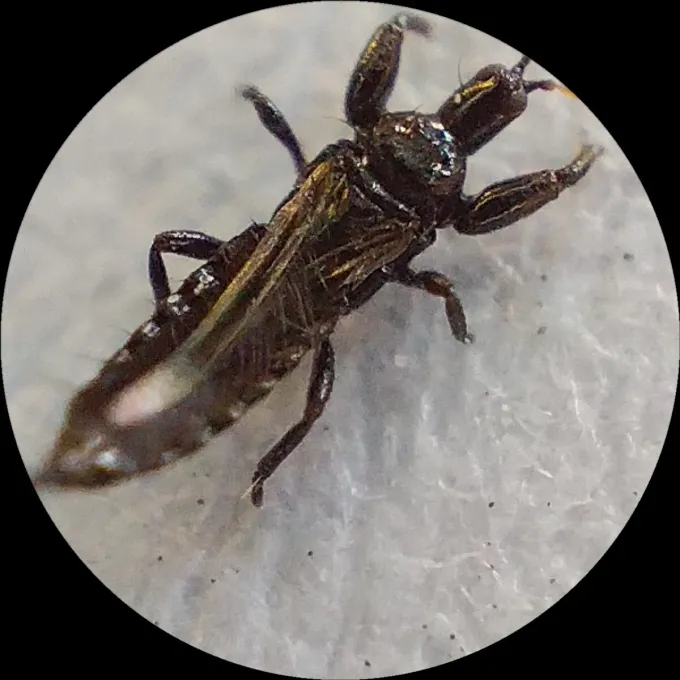
Description
How to identify
Klambothrips is a genus of insects belonging to the order Thysanoptera (thrips) and the family Phlaeothripidae. These insects are distinguished by the tubular end of the abdomen in adult forms, which is a key diagnostic feature of the family.
The adults typically exhibit a dark, often black or brownish coloration, allowing them to blend into the foliage of host plants. Their wings are thin and fringed with long hairs, which is characteristic of the order.
Larval stages develop through several instars, resembling adults but lacking fully developed wings. They are often found in hidden areas of the plant where they can feed without being easily detected.
Correct identification of the species usually requires microscopic examination of structural traits, such as antennae and mouthparts, especially in professional agricultural settings.
These insects are highly adapted to their hosts, often displaying specific site preferences on the plant, which is useful information for growers trying to identify an infestation.
What it damages
Klambothrips primarily targets specific woody and ornamental plants, with a noted impact on species within the Myrtaceae family, where they can cause severe tissue damage.
The feeding process involves puncturing plant cells with their mouthparts and sucking the contents, leading to nutrient loss and structural disruption of the leaves.
Infestations typically result in deformed, curled, and shriveled leaves. In many cases, the plant tissue reacts by forming galls or necrotic lesions in the areas where the thrips have fed.
Heavy infestations can significantly stunt the growth of young shoots, leading to a loss of vigor and potential death of the growing point in small or young plants.
Furthermore, the physical wounds caused by the feeding activity serve as entry points for various secondary pathogens, including fungi and bacteria, further damaging the host plant.
When it appears
The life cycle and population dynamics of Klambothrips are heavily influenced by temperature and humidity levels. Their activity typically peaks during the warm spring and early summer months.
In controlled environments such as greenhouses, these pests can thrive year-round. The absence of a winter dormancy period in such conditions allows for continuous overlapping generations.
Females insert eggs directly into the plant tissue, such as developing buds or young leaf epidermis, ensuring that the emerging larvae have an immediate food source.
Warm and dry weather conditions accelerate the insect's metabolism, shortening the time required for each generation to reach maturity and leading to rapid population explosions.
As temperatures decline, the pest may seek shelter in the soil or protected crevices of the plant to survive the winter, effectively entering a state of diapause until conditions improve.
Signs of infestation
One of the earliest signs of a Klambothrips infestation is the presence of distorted and curled young foliage, often accompanied by a wrinkly texture on the leaf surface.
Small, dark spots on the underside of leaves represent the excrement of the thrips and serve as a reliable visual indicator that an active colony is present.
The formation of galls or specific deformities on shoots or leaves is a common symptom of feeding, as the plant tissues react to the saliva and mechanical damage caused by the insects.
A silvery or bronzed appearance on the leaf surface is indicative of cells having been emptied of their contents, resulting in a thin, papery quality to the leaves.
General yellowing, reduced flowering, and failure of new buds to open properly are late-stage signs that indicate the pest population has reached a critical density.
Control measures
Effective management of Klambothrips requires an integrated pest management (IPM) approach to maintain populations below the threshold of economic damage.
- Deployment of sticky traps (yellow or blue) for monitoring adult population spikes and early detection.
- Sanitation measures, including the pruning and immediate destruction of severely infested plant materials.
- Maintenance of proper humidity levels to create a less favorable environment for rapid population growth.
- Application of systemic insecticides that can penetrate plant tissues to reach hidden larvae and nymphs.
- Introduction of biological control agents, such as predatory mites or bugs, which specialize in hunting thrips.
Resistance management is crucial; therefore, growers should rotate between different classes of chemical pesticides to ensure the long-term efficacy of control measures.
Taxonomy
- Latin name
- Klambothrips
- Order
- Thrips
- Family
- Phlaeothripidae
- EPPO code
- KLAMSP
Discussion
No discussions yet — be the first.