
Kissophagus fasciatus
Kissophagus fasciatus
Description
How to identify
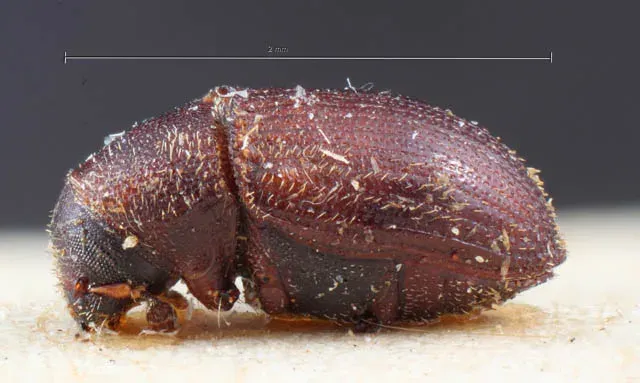
Kissophagus fasciatus is a species of beetle belonging to the Curculionidae family (weevils) within the order Coleoptera. This is a specialized pest whose morphological characteristics are typical of concealed-living species.
Adult individuals have a small body (usually 3-5 mm), covered with scales that form distinct stripes, which gives the species its name. Body coloration varies from dark brown to almost black.
The larvae are legless, curved in shape, and typically whitish or cream-colored with a brown head. They are fully adapted to life inside plant tissues, where they complete all stages of their life cycle until pupation.
The development cycle includes complete metamorphosis: egg, larva, pupa, and imago. The adults possess a hard chitinous exoskeleton, providing them with resistance to adverse environmental conditions.
Identification in the field is difficult due to their hidden lifestyle. Agronomists typically use dissection of affected plant tissues or pheromone traps for accurate monitoring and identification.
What it damages
The primary food source for Kissophagus fasciatus includes various species of woody plants and shrubs, most commonly from the Rosaceae family. The pest exhibits high specificity towards certain host species.
The larvae cause the most significant damage by boring tunnels inside shoots or beneath the bark of young trees. This disrupts the plant's natural sap flow, leading to a significant weakening of the culture's immunity.
Adult beetles may feed on young buds or leaves, causing deformation and premature leaf drop. In intensive orchards, mass infestation can lead to substantial yield losses.
Damaged tissues serve as entry points for secondary infections, including fungal diseases and bacterioses. This significantly complicates the treatment of already weakened trees.
The economic threshold for damage depends on the age of the plantings and their overall physiological state. Young saplings suffer much more severely from this pest than mature specimens.
Signs of infestation
The first sign of infestation is the premature wilting of shoot tips during the active growing season. Externally, this appears as localized drying of individual twigs despite adequate watering.
Small exit holes (shot-holes) created by emerging adults can often be found on the bark of affected plants. This is a clear indicator of a current infestation cycle.
Characteristic winding tunnels, filled with frass (larval excrement and wood shavings), are visible under the bark or inside the wood of shoots. This is a classic sign of wood-boring insects.
Stunted growth and distorted internode development are also indicative of impaired plant nutrition. Early yellowing and curling of leaf blades are frequently observed on affected branches.
Upon removing the bark, tissue necrosis and localized wood discoloration are apparent. In advanced cases, complete death of individual branches or structural parts of the tree may occur.
Control measures
The foundation of control is diligent sanitary pruning and timely removal of infested branches. Collected plant waste must be burned immediately to prevent the emergence of new beetles.
The application of systemic insecticides is effective during the period when young beetles emerge from their overwintering sites. Treatments must be synchronized with the pest's specific biological development cycle.
Maintaining a high level of agricultural practices and balanced mineral fertilization promotes the regenerative capacity of plants. Healthy trees are significantly more resistant to pest colonization.
The use of pheromone traps allows for the precise determination of peak adult population levels, helping to optimize the timing of chemical treatments and reduce overall pesticide use.
Biological control methods include the use of entomopathogenic fungi and the preservation of natural predators within the agro-ecosystem. Creating favorable conditions for beneficial insects helps manage pest populations effectively.
Taxonomy
- Latin name
- Kissophagus fasciatus
- Order
- Coleoptera (beetles)
- Family
- Curculionidae
- EPPO code
- KISSFA
Discussion
No discussions yet — be the first.