
Carrot gall midge
Kiefferia pericarpiicola
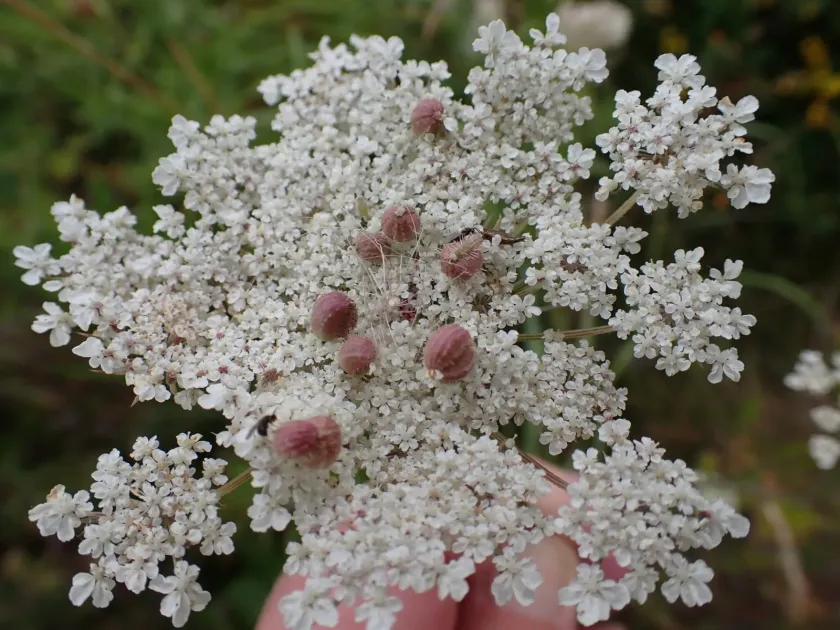
Description
How to identify
The carrot gall midge (Kiefferia pericarpiicola) is a member of the Cecidomyiidae family, which belongs to the order Diptera. Adults are very small, fragile flies with long legs, which are rarely seen in the field due to their short lifespan.
The larvae, which are the main damaging stage, are spindle-shaped, legless, and headless. They are typically whitish or yellowish, blending in with the tissues of the host plant where they reside.
The life cycle of this species is exclusively adapted to parasitize plants of the Apiaceae family, completing its development within specialized structures known as galls.
Pupation usually takes place within the soil or inside the damaged plant parts, completing the transition from the larval stage to the adult fly.
Monitoring the presence of adults requires professional entomological tools, such as sweep nets or yellow sticky traps placed in carrot fields during the flowering period.
What it damages
The carrot gall midge specifically targets cultivated carrots (Daucus carota), particularly those grown for seed production purposes.
The larvae feed on the generative organs of the plant, primarily the floral parts, causing the plant to produce galls instead of healthy, viable seeds.
These galls restrict the development of the umbels, leading to stunted or deformed flowering structures that cannot produce high-quality seeds.
High infestation levels can result in significant economic losses for seed producers, as the yield and germination quality of the harvested seeds are drastically reduced.
Furthermore, the physical damage to the reproductive organs makes the carrot plants more susceptible to secondary fungal or bacterial pathogens.
When it appears
The activity of the adult carrot gall midge coincides precisely with the flowering phase of the carrot crop, usually occurring during mid-summer.
Females lay their eggs directly into the developing umbels, ensuring that larvae have immediate access to food upon hatching.
Overwintering occurs in the larval or pupal stage, typically in the soil beneath the previous season's crop or within plant debris.
The emergence of adults in the spring is triggered by rising soil temperatures and humidity levels, aligning with the plant growth cycle.
Seasonal patterns can shift based on regional climate, necessitating local observation to determine the exact timing for implementing protective measures.
Signs of infestation
The most prominent sign of infestation is the appearance of abnormal swellings or galls on the umbels of the carrot plants.
Inside these galls, one can find the small, characteristic larvae of the midge, which are the direct cause of the tissue deformation.
Affected umbels often show signs of premature browning or drying, failing to produce a full complement of well-developed seeds.
Reduced size of the umbels and lack of uniformity in seed maturation are clear indicators of potential midge damage within the seed plot.
Early detection is vital, as the damage becomes irreversible once the larvae have completed their development and formed galls within the floral tissues.
Control measures
Crop rotation is the most essential cultural practice to disrupt the life cycle of the midge and prevent the accumulation of pests in the soil.
Spatial isolation between seed crops and commercial carrot fields significantly reduces the risk of cross-infestation by migrating adults.
Deep plowing after the harvest is highly recommended, as it buries the pupae and larvae, preventing them from emerging as adults in the following year.
Chemical control with systemic insecticides may be necessary in cases of high population density, provided they are authorized for use on carrots.
- Regular monitoring of flowering umbels.
- Strict control of wild Apiaceae weeds near fields.
- Use of clean, certified seeds.
- Proper destruction of plant debris post-harvest.
Taxonomy
- Latin name
- Kiefferia pericarpiicola
- Order
- Diptera (flies)
- Family
- Cecidomyiidae
- EPPO code
- KIEFPI
Discussion
No discussions yet — be the first.