
Umbellifer gall midge
Kiefferia
Description
How to identify
The umbellifer gall midge (Kiefferia pericarpiicola) is a small insect belonging to the family Cecidomyiidae (gall midges) and the order Diptera. Adults are minute flies, often resembling tiny mosquitoes, measuring about 2–3 mm in length.
The body of the adult is fragile, typically yellowish-brown or brownish. They possess well-developed antennae that are sensitive to chemical signals emitted by host plants during the flowering phase.
Larvae are small, legless, and white or yellowish in color. They are the primary damaging stage of the life cycle, living and feeding internally within the floral tissues of host plants.
Pupation occurs in the soil, protected by a resilient cocoon. This allows the pest to survive winter conditions effectively and emerge as adults during the following spring when the climate warms.
Due to their small size and evening activity, monitoring adults is challenging. Agronomists often employ yellow sticky traps positioned near the inflorescences to detect the beginning of the emergence period.
What it damages
The umbellifer gall midge primarily affects plants in the Apiaceae family. Key agricultural targets include carrots, dill, caraway, fennel, and parsley, particularly those grown for seed production.
Larvae feed on the developing ovaries within the umbels. This feeding activity disrupts seed formation, leading to poor quality, sterile, or completely destroyed seeds, which is devastating for seed farms.
Heavy infestations result in significant yield losses. In commercial seed production, the damage caused by these larvae can lead to the total loss of the harvest on specific plots if left unmanaged.
Besides physical destruction of seeds, the midge creates entry points for secondary infections. Fungal and bacterial pathogens often colonize the damaged umbels, accelerating the decay of the plant tissue.
The structural integrity of the seed head is compromised, leading to stunted and deformed growth that is easily recognizable by experienced field scouts during regular crop inspections.
When it appears
The life cycle of the umbellifer gall midge is synchronized with the phenology of its host plants. Adults typically emerge from the soil just as the host crops start to develop flower buds.
The peak flight of the midges occurs during the summer months, specifically June and July. During this time, females use their ovipositors to insert eggs into the buds or developing ovaries of the host.
Incubation is rapid, often taking only a few days. Once hatched, larvae immediately migrate into the plant tissues, creating a feeding environment that fosters the growth of gall-like structures.
Depending on local climatic conditions and host availability, the midge can complete one or two generations per season, requiring sustained vigilance from planting through to harvest.
Larvae finish their feeding cycle by late summer and drop to the ground to pupate in the soil, remaining in diapause until the next spring, ensuring the continuity of the species.
Signs of infestation
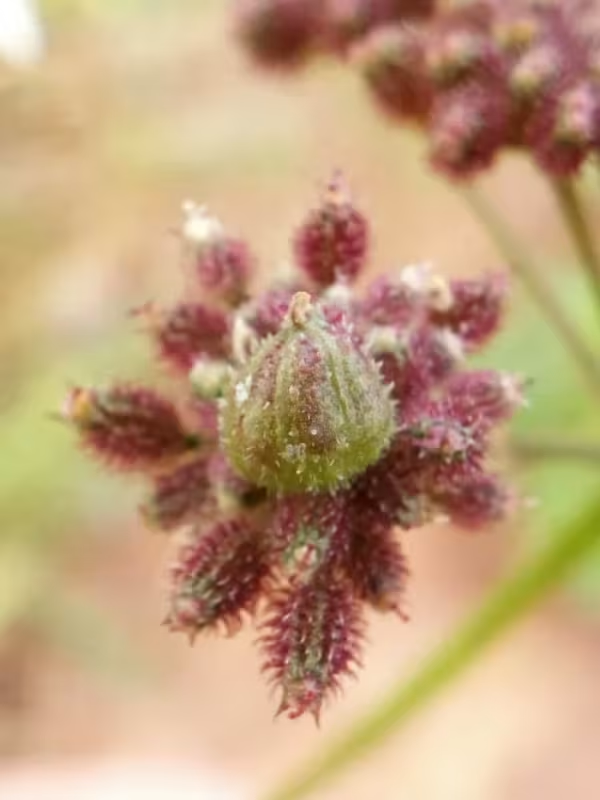
The most prominent sign of infestation is the deformation of the umbels. Instead of a normal, flat, or dome-shaped flower head, the umbel becomes twisted, curled, and severely stunted.
Internal inspection of the distorted umbel reveals small swellings or galls. These structures provide protection and food for the larvae as they develop within the host plant tissues.
Failure of seed development is a major indicator. If the seeds fail to ripen properly and remain thin, discolored, or blackened, it is often due to the feeding activity of the midge larvae.
Early wilting and premature browning of the flower stalks are common symptoms in heavily infested fields, signaling that the vascular system or the flower head is significantly damaged.
Under close observation, one may find small white larvae if an infested flower head is shaken over a white sheet of paper, confirming the presence of the active pest population.
Control measures
Strategic crop rotation is the most effective management tool. Farmers should avoid planting Apiaceae crops on the same site for at least 3 to 4 years to break the pest's life cycle.
Deep autumn plowing of the soil is highly recommended. This practice exposes the overwintering pupae to the surface, significantly increasing their mortality rate due to predators and cold.
Insecticide applications must be timed precisely to target the adult stage before oviposition. Once the larvae are inside the floral tissue, chemical control becomes much less effective.
Field hygiene is essential; removing and destroying wild host weeds in and around the field edges significantly reduces the local population density of the pest.
Choosing early-maturing varieties can help the crop pass through the vulnerable flowering phase before the peak population of the midge emerges, thereby protecting the potential seed yield.
Taxonomy
- Latin name
- Kiefferia
- Order
- Diptera (flies)
- Family
- Cecidomyiidae
- EPPO code
- KIEFSP
Discussion
No discussions yet — be the first.