
Elm gall aphid
Kaltenbachiella pallida
Description
How to identify
The elm gall aphid (Kaltenbachiella pallida) is a member of the family Aphididae, order Hemiptera. It is a specialized pest known for its complex life cycle that involves migration between different host plants.
These aphids are small and often difficult to spot due to their pale green or yellowish coloration, which helps them blend in with the leaf tissue of the host plant.
The life cycle involves multiple generations, with both asexual and sexual reproduction phases. This allows the population to expand rapidly during the growing season under favorable environmental conditions.
Winter is typically spent in the egg stage, with eggs deposited in the bark crevices of elm trees, serving as a protected reservoir for the next spring season.
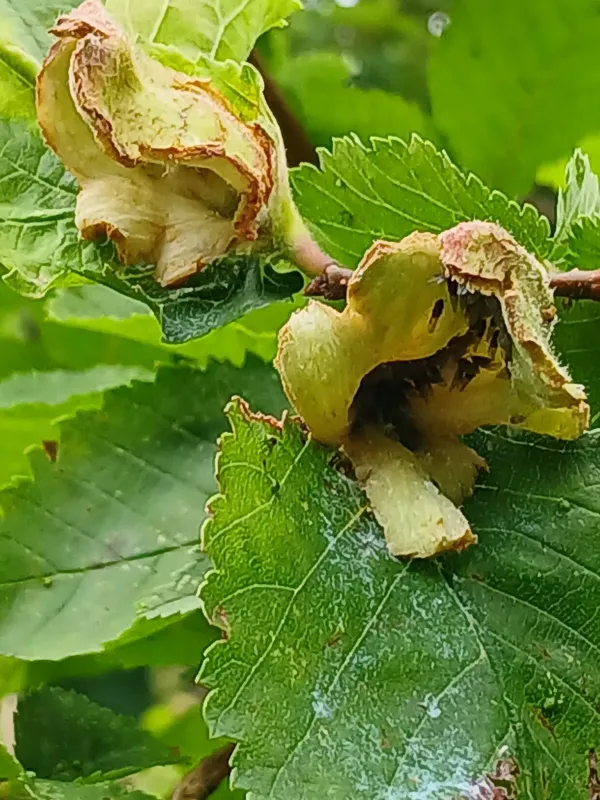
The species is particularly noted for inducing the formation of characteristic galls on elm leaves, which provide a protected niche for the developing aphid colonies.
What it damages
Elm trees (Ulmus species) are the primary hosts. The aphid feeds on plant sap, and its feeding activity triggers the plant to form pathological growths known as galls.
While the galls are primarily a cosmetic issue, heavy infestations can lead to significant stress on the tree, reducing its overall photosynthetic capacity and vigor.
Repeated or severe attacks can cause premature leaf drop, stunting shoot growth and potentially weakening the tree's natural defense mechanisms against other environmental stressors.
The presence of aphids also results in the production of honeydew, a sugary substance that promotes the growth of sooty mold, further impeding the tree's health.
In addition to the direct impact on elm, the aphids' migration to secondary hosts can affect other plant species within the vicinity of the infested elms.
When it appears
The annual activity begins in early spring, synchronized with the bud break of the elm tree, when the overwintering eggs hatch into fundatrices (stem mothers).
Spring and early summer are periods of peak activity as the aphids establish colonies within the developing galls, producing multiple generations.
During the mid-summer months, winged aphids often migrate away from the elm trees to alternate host plants to continue their reproductive cycle.
As autumn approaches, the aphids return to the elm trees to mate and lay the eggs that will survive the winter, completing the annual life cycle.
Environmental factors, particularly temperature and humidity levels, play a critical role in determining the speed of development and the total density of the aphid population.
Signs of infestation
The most distinctive sign of infestation is the appearance of deformed leaves featuring various types of swellings or pouch-like galls.
Affected leaves may show discoloration, including yellowing or wilting, in areas where the aphid colony is actively feeding and causing cellular changes.
The presence of honeydew on the foliage and branches is a strong indicator of aphid presence, often attracting ants that tend the aphids for their sugary secretions.
If you observe high ant activity on the trunks of elm trees, it is frequently a sign that a colony of aphids is active somewhere in the higher canopy.
Early leaf drop occurring during the summer months is a reliable symptom of a severe infestation that has compromised the foliage health of the tree.
Control measures
Sanitation is a primary management strategy; pruning and destroying infested branches in the spring can significantly reduce the number of emerging aphids.
Biological control agents, including lady beetles, lacewings, and syrphid fly larvae, are natural predators that can effectively suppress aphid populations.
Chemical control should be timed correctly, targeting the vulnerable stage of nymphs emerging in early spring before the protective galls fully form.
Systemic insecticides are generally more effective than contact sprays, as they are absorbed into the plant tissues and reach aphids protected inside the galls.
- Monitor tree health regularly during the growing season.
- Avoid over-fertilization, which encourages succulent growth attractive to aphids.
- Promote the presence of natural predators in the garden.
- Use dormant oils in late winter to target overwintering eggs on the bark.
Taxonomy
- Latin name
- Kaltenbachiella pallida
- Order
- Hemiptera (bugs, aphids, leafhoppers)
- Family
- Aphididae
- EPPO code
- KALTPA
Discussion
No discussions yet — be the first.