
Elm gall midge
Janetiella ulmii
Description
How to identify
The elm gall midge (Janetiella ulmii) is a small dipteran insect belonging to the family Cecidomyiidae. It is known for its specialized ability to induce abnormal tissue growth on its host plant.
Adult midges are extremely small and fragile, often resembling tiny gnats, and their presence is rarely detected until the symptoms on the foliage become visible.
The taxonomic classification places this species within the gall-making group, reflecting a co-evolutionary relationship with specific elm species that serves as both food and shelter.
Biological development involves a metamorphosis where larvae transition through stages inside protected structures, ensuring their survival against predators and environmental conditions.
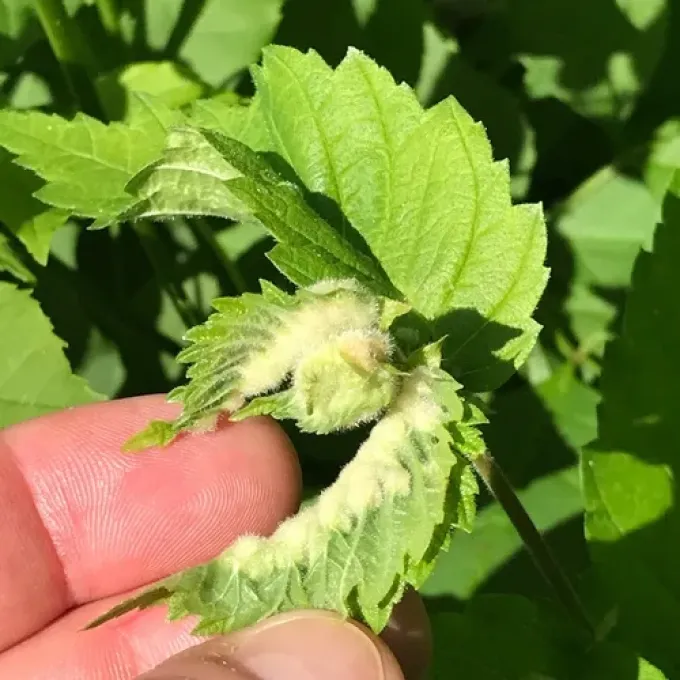
Identifying this species requires an examination of the galls, which have a specific shape and structure unique to Janetiella ulmii on elm foliage.
What it damages
The elm gall midge specifically targets trees within the genus Ulmus, often affecting both native and ornamental elm species found in urban landscapes.
Larvae feed by extracting nutrients from the leaf tissue, which triggers the plant to develop galls around the feeding site as a localized defensive response.
These galls interfere with the normal physiological functions of the leaves, such as photosynthesis and transpiration, which can impact the overall health of the tree.
Heavy infestations can lead to premature leaf drop and a general decline in the tree's vigor, making it more susceptible to environmental stress and secondary pathogens.
While usually not fatal to mature trees, the aesthetic damage is significant, rendering ornamental elms less desirable for landscaping purposes.
When it appears
The life cycle begins in early spring when adults emerge to mate and lay eggs on the newly developing foliage of the host elm trees.
The formation of galls follows shortly after, with larvae feeding actively throughout the spring and summer months as the leaves continue to mature.
By late summer, the larvae complete their feeding stage and often migrate away from the leaves to find suitable overwintering sites, typically in the soil or bark crevices.
Environmental conditions, particularly temperature and humidity, play a crucial role in the timing and number of generations produced during a single growing season.
The cycle is synchronized with the bud burst of the host tree, ensuring that the midge larvae have an immediate food source upon hatching.
Signs of infestation
The most prominent sign of infestation is the development of distinct, often cone-shaped or circular galls that protrude from the surface of the elm leaves.
- Visible swellings or galls on the leaf blades, often displaying varied coloration.
- Noticeable twisting or puckering of the leaf tissue surrounding the gall site.
- Early onset of leaf yellowing and premature abscission throughout the canopy.
- Small exit holes visible on the surface of the galls after the adult midges have vacated.
During a close inspection, these galls can be found scattered across the foliage, creating a characteristic look that distinguishes this pest from fungal leaf diseases.
Control measures
Managing the elm gall midge is challenging because the larvae are protected inside the leaf galls, rendering contact insecticides largely ineffective during the mid-season.
Cultural control, such as removing and destroying fallen leaves in the autumn, is an effective strategy to reduce the overwintering population for the following year.
If chemical control is necessary, systemic insecticides should be applied early in the season, precisely when buds begin to burst, to target the emerging adults.
Biological control methods involving natural predators and parasitoids can play a significant role in keeping midge populations below damaging thresholds.
Consistent monitoring and maintaining tree health through proper fertilization and watering can help trees better tolerate infestations and recover more quickly.
Taxonomy
- Latin name
- Janetiella ulmii
- Order
- Diptera (flies)
- Family
- Cecidomyiidae
- EPPO code
- JANEUL
Discussion
No discussions yet — be the first.