
Veronica gall midge
Jaapiella veronicae
Description
How to identify
The Veronica gall midge (Jaapiella veronicae) is a small dipteran insect belonging to the family Cecidomyiidae. The adult is a tiny gnat, often remaining unnoticed due to its microscopic size and secretive behavior.
Identification is primarily based on the larvae, which develop within the plant tissues, and the specific deformations they cause. Adults possess a slender body, long legs, and characteristic wing venation typical of the Diptera order.
Their life cycle is intricately linked to the host plant, where eggs are laid, leading to the development of specific pathological growths known as galls.
Agronomists and gardeners usually focus on the visual signs of plant deformation rather than searching for the adult insect itself. Identification is most reliable during the active growth period of the host plant.
Taxonomically, this pest belongs to the order Diptera, family Cecidomyiidae, and the genus Jaapiella.
What it damages
The primary host plant for this species is Veronica, including various ornamental cultivars and certain wild species. The pest is highly specialized and feeds exclusively on plants within this genus.
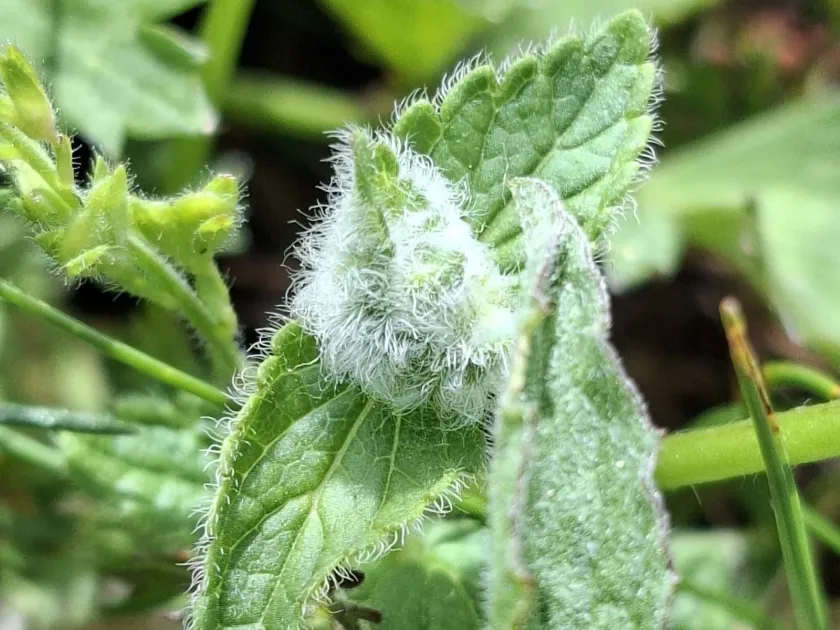
The larvae induce the formation of galls at the tips of the stems. These structures consist of heavily modified, fused leaves that form a dense, swollen, rosette-like cluster, often resembling a tiny cabbage head.
Inside these protected structures, the larvae find shelter and a constant source of nutrients. The affected parts of the plant cease their vertical growth, which severely damages the aesthetic appeal of ornamental plantings.
Heavy infestations can lead to deformation of a significant part of the plant, reduced flowering, and overall weakening of the host.
While the pest rarely kills the plant outright, its activity makes ornamental Veronica unsuitable for landscaping purposes.
When it appears
The Veronica gall midge becomes active in late spring when the host plants start producing new shoots. This is the optimal time for females to lay their eggs on the growing points.
The peak period for the formation of visible galls occurs in early to mid-summer. During this time, the larvae actively feed within the rosette formations, gradually increasing their volume.
The midge can produce several generations during one growing season if weather conditions favor rapid insect development. They typically overwinter as larvae inside the galls or in the soil beneath the host plant.
The spring emergence of the pest is synchronized with the active growth phase of Veronica, ensuring that larvae have fresh tissues available for feeding.
By late summer or autumn, gall development slows down, and the pest enters a state of diapause, remaining dormant until the following season.
Signs of infestation
The primary sign of infestation is the appearance of characteristic galls at the tips of Veronica stems, which are dense, spherical, or cone-shaped clusters of curled, pubescent leaves.
- Reddening or discoloration of leaves within the gall area.
- Complete cessation of the stem's vertical growth.
- Presence of small orange or yellowish larvae when the gall scales are pulled apart.
- An abnormally dense, "curly" top that contrasts with the natural architecture of the bush.
- Failure of the affected shoots to produce flowers.
Control measures
The most effective method of control is the manual removal and destruction of infested shoots, including the larvae inside. This must be carried out before the adults emerge from the galls.
Timely sanitary pruning of Veronica in early summer can significantly reduce the population of the pest in the garden and prevent it from spreading to healthy plants.
The use of systemic chemical insecticides is advisable only in cases of severe infestation when mechanical methods prove insufficient. Applications should target the period when larvae are emerging.
Maintaining plant health is crucial: vigorous, well-fertilized plants are more resilient to pest stress. Proper watering and adherence to cultivation practices help support the plant's natural immunity.
Biological control strategies include the preservation of natural predators, such as parasitic wasps or predatory bugs, which can help regulate the midge population in the environment.
Taxonomy
- Latin name
- Jaapiella veronicae
- Order
- Diptera (flies)
- Family
- Cecidomyiidae
- EPPO code
- CECIVE
Discussion
No discussions yet — be the first.