
Isostasius
Isostasius
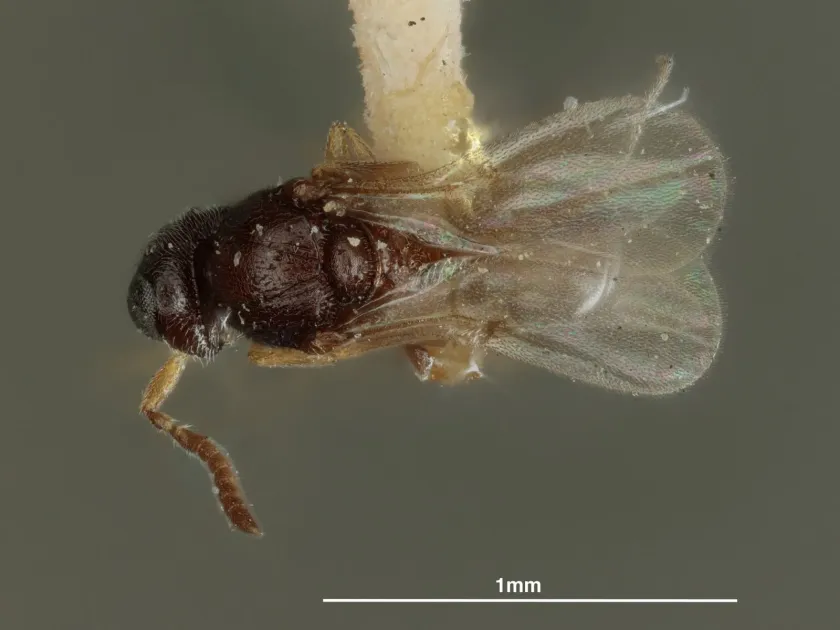
Description
How to identify
Isostasius is a genus of minute parasitic wasps belonging to the family Platygastridae. These insects are not pests; rather, they are specialized parasitoids that play a vital role in natural ecological balance.
Adult Isostasius are typically very small, often measuring between 1 and 2 millimeters in length. They possess a characteristic dark, shiny appearance and delicate wing venation, which is typical for the superfamily Platygastroidea.
Due to their microscopic size, identifying Isostasius to the species level requires expert taxonomic knowledge and laboratory equipment. In the field, they are recognized by their association with specific insect hosts.
Their life cycle is highly specialized, involving an intimate relationship with a host species. Females are highly efficient at searching for the eggs or larvae of pests to deposit their own offspring within them.
The development of Isostasius is internal, meaning the larva grows inside the body of the host. This process is perfectly synchronized with the host’s phenology, ensuring the parasitoid has enough resources to complete its development.
What it damages
Isostasius causes absolutely no damage to crops. As parasitoids, they feed on nectar as adults and develop within other insects as larvae, leaving foliage, stems, and roots completely untouched.
They target harmful insects, often serving as natural regulators of populations of cereal-infesting flies. By killing the host before it reaches maturity, they prevent damage that would otherwise impact crop yields.
The presence of Isostasius in a field is a sign of a healthy, functioning agro-ecosystem. Their activity contributes significantly to reducing the overall pest pressure.
From an agricultural standpoint, they function as a free biological control service. Their impact is equivalent to the effect of well-timed, highly specific insecticide applications, but without the cost or ecological footprint.
Their value is strictly positive; they represent a natural defense mechanism that farmers should aim to foster and protect rather than eradicate.
When it appears
Activity of adult Isostasius typically aligns with the growing season of crops and the life cycles of their hosts. They are most active during the spring and summer months when host populations are expanding.
Multiple generations can occur throughout the season. This temporal continuity is crucial for keeping pest populations below the economic injury level for the duration of the crop's development.
Overwintering usually occurs in the pupal stage, often inside the desiccated remains of the host or within soil debris. Development resumes as soon as environmental temperatures rise.
Their presence is dictated by the availability of hosts. In fields with high pest diversity, the parasitoid population can remain stable and effective throughout the growing season.
Monitoring for these insects is difficult due to their size, so farmers often focus on assessing the overall suppression of the target pest rather than counting the wasps themselves.
Signs of infestation
The most reliable sign of Isostasius activity is the discovery of parasitized pest individuals during lab examinations. This typically involves dissecting the larvae of potential pests.
A field indicator of their activity is a noticeable decline in the pest population over time without the use of chemical controls. This suggests that a natural biological agent is at work.
Occasionally, one may find empty host pupae with small, clean exit holes. These holes are created by the adult Isostasius as they emerge, providing physical evidence of a successful parasitization event.
Farmers should look for a lack of pest outbreaks in areas where they would otherwise be expected. If pest damage remains low despite favorable conditions for the pest, it often points to a robust population of natural enemies.
No symptoms are present on the plants themselves. Any changes are observed solely in the dynamics of the pest population within the crop canopy.
Control measures
There are no control measures for Isostasius because they are beneficial. The goal of any modern agricultural practice should be to protect and enhance their presence in the field.
- Minimize the use of broad-spectrum insecticides that harm beneficial insects.
- Adopt Integrated Pest Management (IPM) strategies.
- Provide floral resources around fields to support adult parasitoid nutrition.
- Practice conservation tillage to protect overwintering pupae in the soil.
- Choose selective pesticides if intervention against major pests becomes strictly necessary.
By prioritizing the survival of parasitoids, farmers can reduce their dependency on chemicals, leading to more sustainable and cost-effective production cycles.
Investing in the health of the local entomofauna is a hallmark of progressive, high-quality agricultural management that benefits both the farmer and the environment.
Taxonomy
- Latin name
- Isostasius
- Order
- Hymenoptera
- Family
- Platygastridae
- EPPO code
- ISOSSP
Discussion
No discussions yet — be the first.