
Pine gall midge
Inostemma matsutama
Description
How to identify
The pine gall midge is a small insect belonging to the order Diptera and the family Cecidomyiidae. Adult midges resemble tiny mosquitoes with delicate bodies and transparent wings.
The biological cycle of this pest is intrinsically linked to the growth stages of the pine tree, making its detection reliant on identifying the unique galls it creates.
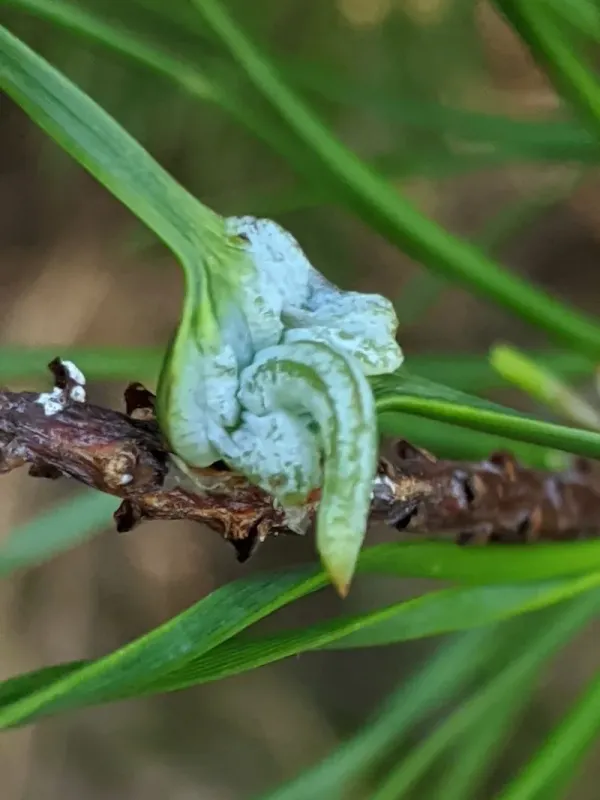
Larvae are typically orange or yellowish and thrive inside specialized plant structures known as galls, which form as a reaction to the larvae's metabolic secretions.
While natural predators help regulate their population in the wild, the pine gall midge can cause significant localized outbreaks under favorable climatic conditions.
Entomologists identify these midges primarily by the deformities they cause on needles and shoots rather than by direct observation of the elusive adult insects.
What it damages
The pine gall midge primarily attacks pine species, with Scotch pine being a common host. The pest targets developing needles and shoot buds, which are essential for tree growth.
By feeding on the sap, the larvae trigger the plant to produce galls, leading to shoot deformation, needle yellowing, and premature needle drop.
This damage is particularly destructive in nurseries and young plantations, where the loss of the leader shoot or apical buds causes stunted growth and stem deformity.
Infested trees suffer from weakened immunity, making them susceptible to secondary attacks by bark beetles and various fungal diseases that thrive in damaged tissues.
The aesthetic and economic value of timber is significantly reduced due to the crooked stem development caused by recurrent midge infestations.
When it appears
The emergence of adult midges usually occurs in late spring and early summer, typically May and June, coinciding with the rapid growth phase of pine shoots.
Females deposit eggs directly into the tissues of developing needles or buds, setting the stage for the formation of galls shortly after larvae emerge.
Larvae remain inside the protective galls throughout the summer months, making them resistant to many contact-based insecticide treatments during this period.
Pupation typically occurs either within the gall itself or in the soil beneath the host tree, depending on the specific midge species and environmental temperature.
Warm and humid spring weather patterns significantly enhance the survival rate of newly hatched larvae, increasing the potential for a severe infestation in the following cycle.
Signs of infestation
The most prominent sign of infestation is the appearance of distinct swellings or galls at the base of needles or along the stems of new growth.
Affected needles often become chlorotic, taking on a sickly yellow color, and may curl or drop prematurely compared to healthy foliage on the same tree.
Microscopic examination of the galls will reveal tiny orange larvae living inside, confirming that the structural change is indeed due to the gall midge.
Massive infestations are characterized by a noticeable lack of height growth in young saplings and distorted, bushy tops caused by repeated damage to apical buds.
A scatter of yellowed, distorted needles beneath the canopy is often a secondary indicator that the tree is harboring a midge population in its upper branches.
Control measures
The application of systemic insecticides during the peak adult flight period is one of the most effective ways to prevent eggs from being successfully laid.
Mechanical control, such as pruning and burning infested shoots before the larvae leave the galls, is crucial for reducing the local population in plantations.
Biological control strategies include protecting and encouraging native parasitoid wasps and predatory insects that feed on gall midge larvae in their natural habitat.
Maintaining high tree vigor through proper site management and fertilization helps trees resist damage and recover more quickly from localized infestations.
Implementing pheromone-based monitoring tools allows forest managers to precisely time their interventions, ensuring maximum efficacy while minimizing environmental impact.
Taxonomy
- Latin name
- Inostemma matsutama
- Order
- Hymenoptera
- Family
- Platygastridae
- EPPO code
- INOSMA
Discussion
No discussions yet — be the first.