
Inostemma horni
Inostemma horni
Description
How to identify
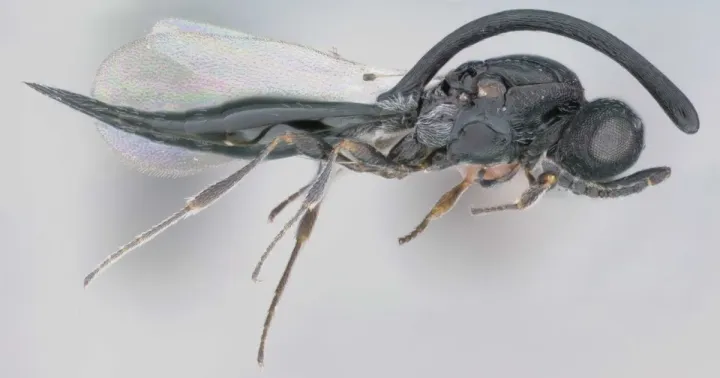
Inostemma horni is a tiny wasp species belonging to the family Platygastridae. These insects are classified within the order Hymenoptera and are recognized as specialized parasitoids that play a significant role in ecological balance.
Adult wasps are extremely small, often overlooked during field scouting. The morphological characteristic of this species includes a uniquely shaped abdomen, which in females facilitates the precise deposition of eggs inside the hosts.
Systematically, they belong to the superfamily Platygastroidea. This group is known for its complex evolutionary relationship with various Diptera species, which are common pests in agricultural settings.
They thrive in habitats with dense vegetation and moderate humidity, which provides the necessary microclimate for the survival of both the wasps and their host populations during the breeding season.
Identifying this species requires specialized entomological knowledge and microscopic examination. In professional agronomy, they are identified through rearing samples from infested plant material collected in the field.
What it damages
Inostemma horni does not cause direct physical damage to crop tissues. Unlike phytophagous pests, its lifestyle is exclusively parasitic, focusing on the developmental stages of other harmful insects.
Their primary targets are dipteran larvae that infest cereal stems. By parasitizing these pests, Inostemma horni acts as a natural biological regulator, helping to keep pest populations below the economic injury level.
The "damage" in an agricultural context arises only when indiscriminate chemical spraying eliminates these natural predators, leading to secondary pest outbreaks that are far more difficult to manage.
Farmers should view the presence of this wasp as a positive indicator of an active natural pest control system within their fields, rather than a threat to the current or future harvest.
It is crucial for agronomists to distinguish between beneficial parasitoids and actual pests to avoid unnecessary insecticide usage, which would ultimately harm the crop's ecological resilience.
When it appears
The seasonal activity of Inostemma horni is tightly linked to the phenology of their host pests. The emergence of adults typically coincides with the tillering stage of cereal crops, when host density is at its peak.
The insect spends the winter in a pupal stage, protected within the puparium of the host, often located in the soil or in crop residues. This allows the species to survive harsh winter temperatures effectively.
As spring temperatures rise, the adults emerge to begin their life cycle. Depending on regional climatic conditions, there can be multiple generations produced throughout the growing season.
Summer months are characterized by the highest activity levels, where the wasps actively search for new hosts. This period of high activity is crucial for natural pest management in wheat and barley fields.
By autumn, the population growth slows as the insects prepare for diapause. Timing field activities such as tillage and pesticide application to respect these cycles is essential for sustainable agriculture.
Control measures
No direct control measures are required or recommended for Inostemma horni because it is a beneficial organism. Management strategies should focus on conservation rather than elimination.
The best approach is the adoption of Integrated Pest Management (IPM) practices, which prioritize the use of selective insecticides that do not harm parasitic wasps while targeting primary pests.
Cultural practices, including deep plowing and crop rotation, help manage host pest levels, which in turn regulates the population of Inostemma horni in a balanced and natural way.
Maintaining wild flower borders and buffer zones around fields provides vital nectar sources for adult wasps, which can significantly increase their lifespan and reproductive success.
Monitoring the population dynamics of both pests and their natural enemies allows farmers to make informed decisions about whether chemical intervention is truly necessary, ensuring that beneficial populations remain intact.
Taxonomy
- Latin name
- Inostemma horni
- Order
- Hymenoptera
- Family
- Platygastridae
- EPPO code
- INOSHO
Discussion
No discussions yet — be the first.