
Inostemma boscii
Inostemma boscii
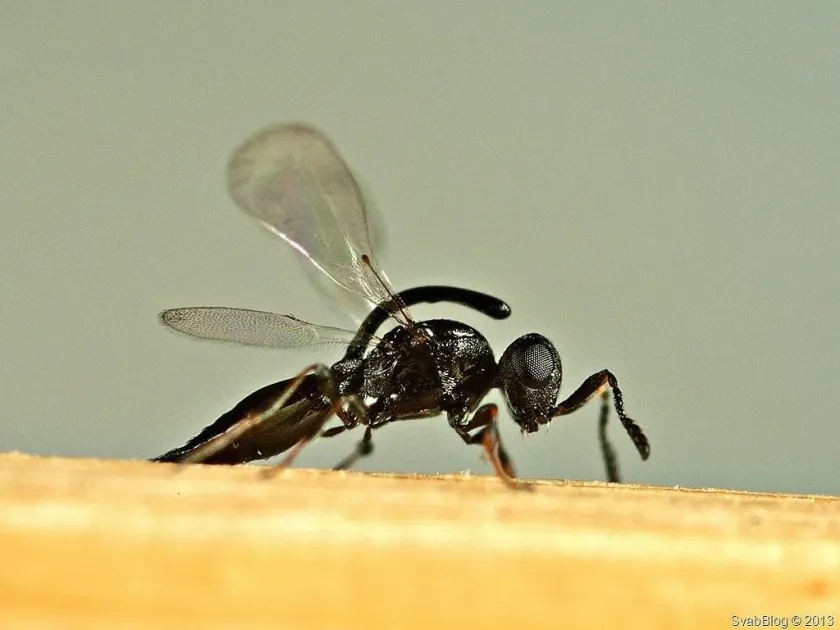
Description
How to identify
Inostemma boscii is a small hymenopteran insect belonging to the family Platygastridae, widely recognized as a parasitoid of gall midges.
The adult female is easily distinguished by a unique, horn-like projection on its abdomen, which acts as a sheath for the ovipositor during egg-laying.
They are typically dark in color, often small and slender, making them difficult to detect without specialized entomological monitoring tools.
The larvae develop endoparasitically within the body of the host, consuming tissues from the inside until they reach maturity.
Identification often requires careful microscopic examination of the characteristic abdominal morphology of the females.
What it damages
Inostemma boscii acts as a natural biological control agent, specifically targeting larvae of pests like the Hessian fly (Mayetiola destructor).
By parasitizing these pests, it prevents the severe damage typically associated with larval feeding on wheat, barley, and rye stems.
It does not cause any direct damage to crops; on the contrary, it provides significant ecological services by reducing pest density.
The impact of this wasp is highly valued in organic and integrated pest management systems as a sustainable way to suppress pest outbreaks.
Reduction in the presence of this beneficial insect usually leads to an immediate increase in the damage caused by primary crop pests.
When it appears
The seasonal activity of Inostemma boscii is perfectly synchronized with the emergence patterns of its host, the gall midges.
Active adults are typically observed during the spring months, correlating with the onset of favorable temperatures and crop germination.
Temperature and moisture levels during the overwintering period in the soil determine the success rate of the next generation.
Multi-voltine populations may occur, depending on the availability of hosts and the climatic conditions of the specific growing season.
Monitoring the flight periods is essential for understanding the population dynamics of both the parasitoid and its target host.
Control measures
Direct control measures against Inostemma boscii are not recommended, as it is a beneficial organism that supports crop health.
Agricultural management should focus on protecting these beneficial wasps by reducing the reliance on non-selective chemical pesticides.
Cultural practices that maintain a healthy field environment help preserve the populations of this parasitoid throughout the year.
- Adoption of IPM strategies to prioritize natural enemies of pests.
- Avoiding unnecessary insecticide applications during peak parasitoid activity.
- Encouraging surrounding biodiversity to support the survival of local beneficial insect populations.
By promoting the presence of this species, farmers can naturally regulate the population of cereal pests and enhance overall sustainability.
Taxonomy
- Latin name
- Inostemma boscii
- Order
- Hymenoptera
- Family
- Platygastridae
- EPPO code
- INOSBO
Discussion
No discussions yet — be the first.