
Raspberry aphid
Illinoia rubicola
Description
How to identify
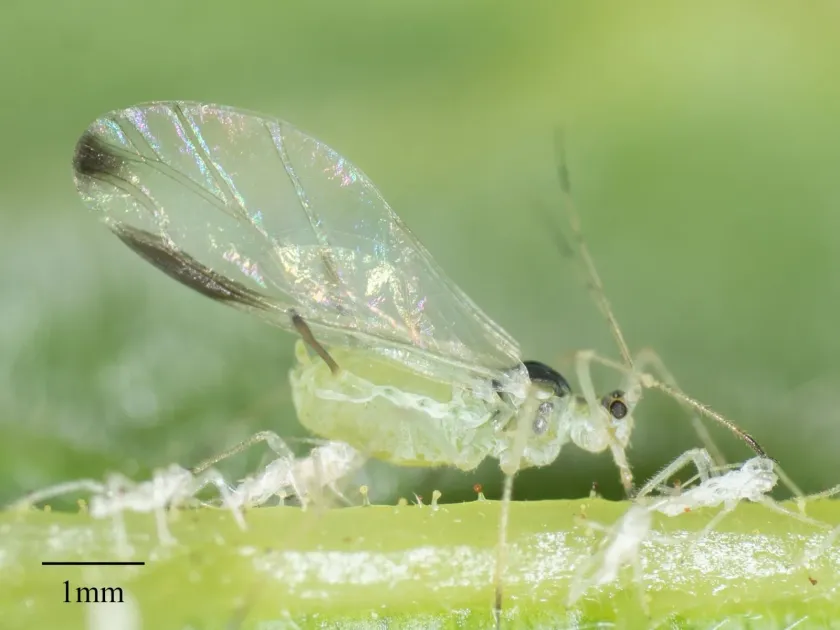
The raspberry aphid (Illinoia rubicola) is a small sap-sucking insect belonging to the order Hemiptera and the family Aphididae. These pests are typically pale green or yellowish, measuring about 1.5–2.5 mm, which allows them to blend perfectly with the plant foliage.
The colony consists of both winged and wingless forms, which allows for both local infestation and migration to neighboring plants. Their reproductive rate is extremely high, as they can produce multiple generations within a single growing season under optimal environmental conditions.
What it damages
This species primarily attacks plants within the genus Rubus, with a strong preference for red raspberries and blackberries. They tend to congregate on young, tender shoots and the underside of leaves to access the nutrient-rich phloem sap.
As they feed, they drain the plant's essential fluids, leading to stunted growth of new canes and foliage. Chronic infestation weakens the overall health of the raspberry bush, resulting in reduced fruit yield and poorer berry quality.
When it appears
The life cycle begins with overwintering eggs laid near the buds of raspberry canes. As soon as temperatures rise in the spring, the eggs hatch, and the nymphs begin feeding on the emerging leaves.
Population peaks usually occur during late spring and early summer when the weather is mild. While high summer heat can reduce their activity, persistent or returning colonies are common if conditions remain favorable throughout the autumn.
Signs of infestation
The most noticeable sign of a raspberry aphid infestation is the curling and distortion of terminal leaves. These curled leaves serve as protective micro-environments for the aphid colonies to thrive undisturbed by predators.
Additionally, gardeners often observe honeydew, a sticky substance excreted by the aphids, on the surface of the leaves. This honeydew frequently attracts secondary infestations, such as sooty mold, which appears as a dark, powdery coating on the plant surface.
Control measures
Effective management begins with maintaining plant vigor through proper pruning and thinning to ensure good air circulation. Encouraging natural predators, such as lady beetles, lacewings, and hoverflies, can significantly keep aphid numbers in check.
When populations exceed acceptable thresholds, the application of horticultural oils, insecticidal soaps, or targeted chemical insecticides is necessary. It is crucial to follow product guidelines to ensure safety for pollinators and to respect the pre-harvest interval to avoid chemical residues on fruit.
Taxonomy
- Latin name
- Illinoia rubicola
- Order
- Hemiptera (bugs, aphids, leafhoppers)
- Family
- Aphididae
- EPPO code
- ILLNRU
Discussion
No discussions yet — be the first.