
Tulip tree aphid
Illinoia liriodendri
Description
How to identify
The tulip tree aphid, scientifically known as Illinoia liriodendri, belongs to the family Aphididae. It is a highly host-specific insect that primarily feeds on the tulip tree (Liriodendron tulipifera).
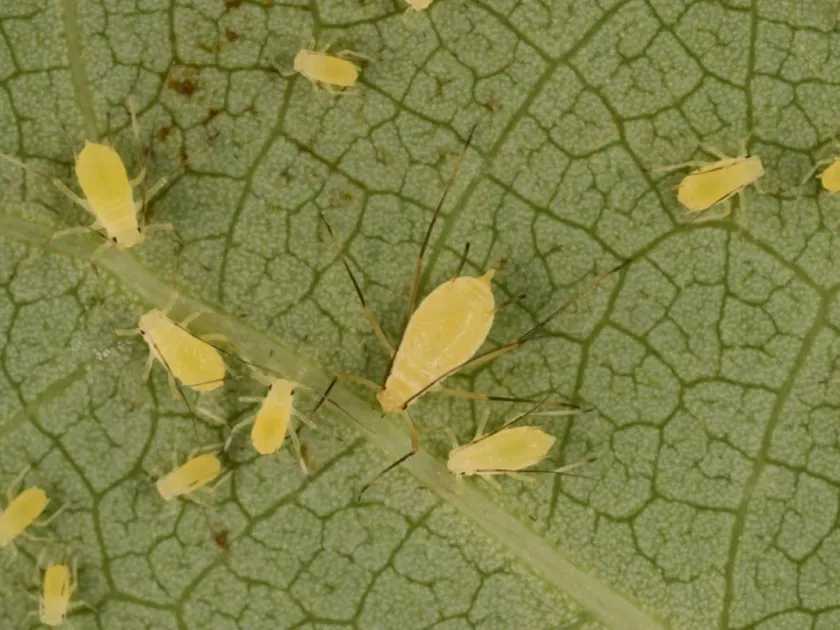
These aphids are small, soft-bodied insects, usually ranging in color from pale yellow to light green, providing excellent camouflage against the foliage of their host tree.
As members of the order Hemiptera, they possess piercing-sucking mouthparts which are specifically adapted to tap into the vascular system of the host plant.
Their life cycle is closely synchronized with the phenology of the tulip tree, ensuring they remain active during the period when the plant's sap is most nutrient-rich.
The population structure allows for rapid growth through both asexual and sexual reproduction phases throughout the growing season.
What it damages
The primary damage caused by Illinoia liriodendri is the extraction of large volumes of phloem sap from the leaves, which stresses the host tree.
As they feed, they excrete honeydew, a sticky, sugar-rich substance that coats the leaves and branches, creating a favorable environment for secondary pests and diseases.
The feeding activity can lead to leaf curling, chlorosis, and in severe cases, the premature dropping of leaves, reducing the tree's overall vigor.
Sooty mold, a fungus that thrives on the honeydew, covers the foliage, which can physically impede photosynthesis and affect the tree's aesthetic appeal.
Repeated, heavy infestations over several years can result in stunted growth and increased susceptibility to other environmental stressors or pathogens.
When it appears
The activity of these aphids begins in early spring, coinciding with the bud break and the emergence of new, soft foliage on the tulip tree.
Peak populations are typically reached during the late spring and early summer when temperatures are optimal for the rapid reproductive cycles of the aphids.
Multiple generations occur throughout the summer months, with population levels fluctuating based on predator presence and environmental conditions.
As the season progresses into autumn, the aphids shift their reproductive strategy to produce eggs that overwinter in crevices of the tree bark.
Understanding these seasonal patterns is essential for planning inspections and implementing control measures at the most effective time.
Signs of infestation
Visible curling and distortion of new leaf growth are often the first signs that a colony of tulip tree aphids has established itself on the tree.
The presence of a sticky, glistening residue on the leaves indicates the production of honeydew, a tell-tale sign of a sap-sucking pest infestation.
Secondary infections of sooty mold, appearing as black, soot-like dust on the surface of the leaves, confirm the presence of honeydew-secreting insects.
Increased ant traffic on the trunk and branches is a strong indicator of aphid activity, as ants are known to tend and protect aphids for their sugary secretions.
- Curled or distorted young leaves.
- Sticky honeydew coating on foliage.
- Black sooty mold growth.
- High ant activity on the tree.
- Premature yellowing of leaves.
Control measures
Natural predators, including lady beetles, lacewings, and hoverfly larvae, are vital for maintaining aphid populations at manageable levels in the landscape.
When chemical intervention is necessary, horticultural oils or insecticidal soaps are often preferred as they offer effective control while being less harmful to beneficial insects.
Systemic insecticides may be used for mature trees showing significant distress, though these should be applied carefully to avoid impacts on non-target species.
Ensuring proper tree health through adequate irrigation and fertilization helps the tulip tree tolerate and recover from aphid infestations more effectively.
Regular monitoring of the canopy during the spring months allows for early detection, which makes control much easier and prevents mass outbreaks.
Taxonomy
- Latin name
- Illinoia liriodendri
- Order
- Hemiptera (bugs, aphids, leafhoppers)
- Family
- Aphididae
- EPPO code
- MACSLR
Discussion
No discussions yet — be the first.