
Lily aphid
Illinoia lambersi
Description
How to identify
The lily aphid (Illinoia lambersi) is a specialized insect pest belonging to the Aphididae family, order Hemiptera. These insects are particularly known for their affinity for lily species and their ability to rapidly colonize host plants.
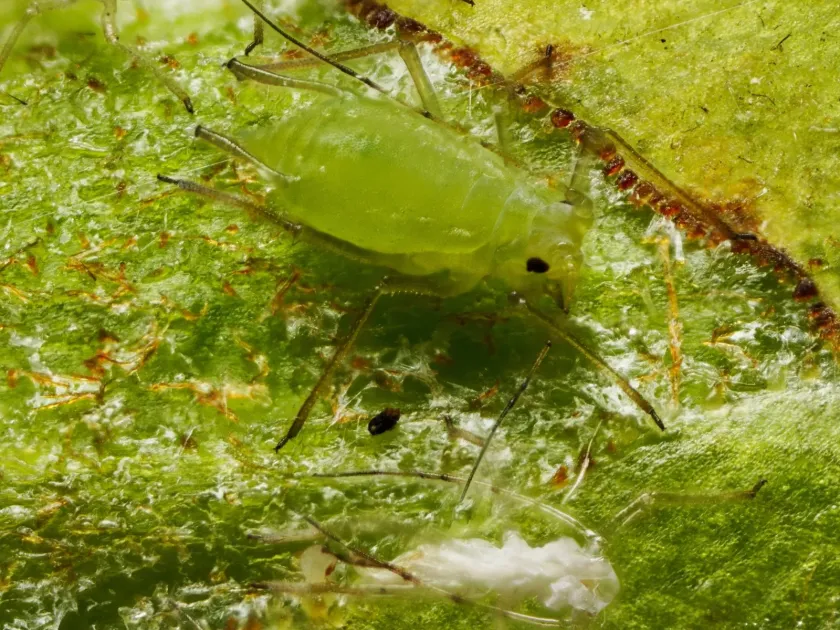
Adult aphids are typically pear-shaped, measuring approximately 2–3 mm in length. Their coloration ranges from light green to yellow-green, often with distinct markings, and they possess long, slender siphunculi on the posterior of the abdomen.
The life cycle involves rapid asexual reproduction during the growing season. A single female can produce numerous nymphs, leading to the formation of dense colonies on susceptible plants in a very short timeframe.
Identification is easiest using a hand lens to inspect the underside of leaves and developing buds. The presence of these specific aphids is often confirmed by their association with Lilium species.
Understanding the biology of this pest is essential for effective management. Because they can reproduce so quickly, even a few individuals found in early spring can lead to a severe infestation by summer.
What it damages
Lily aphids primarily feed on the phloem sap of lily plants. By piercing the plant tissues with their stylets, they extract vital nutrients, causing significant stress to the host.
Feeding damage results in stunted growth, leaf curling, and yellowing. In severe cases, the entire plant may become chlorotic and fail to thrive, particularly if the infestation starts early in the season.
Flower buds are a favorite target for these aphids. Damage to buds often causes them to abort, fail to bloom correctly, or produce malformed flowers, which is a major concern for lily enthusiasts.
Beyond physical damage, the lily aphid is a notorious vector of several plant viruses. These viruses, such as Lily Mosaic Virus, can cause permanent disfigurement and reduce the longevity of expensive bulb collections.
The honeydew excreted by the aphids provides a substrate for sooty mold growth. This dark fungal coating further weakens the plant by reducing the leaf surface area available for photosynthesis.
When it appears
The cycle begins in early spring when overwintering eggs hatch on plant debris. These first generations typically concentrate on the emerging shoots of the lilies.
The period of peak activity occurs from late spring through early summer, aligning with the plant’s most active growth phase. Warm, dry weather conditions are optimal for aphid population explosions.
Throughout the summer, multiple overlapping generations are produced. The population continues to thrive as long as the host plant remains succulent and the ambient temperature is favorable.
As autumn approaches and temperatures drop, sexual forms emerge to produce overwintering eggs. These eggs are laid on stems or near the bulb area to ensure survival until the following year.
Early spring monitoring is the most critical time for intervention. By checking for the first signs of activity, gardeners can prevent the establishment of large colonies.
Signs of infestation
Visual signs of an infestation include distorted, curling leaves and buds that look shriveled. This physical deformation is one of the most common indicators of aphid feeding.
Sticky honeydew on the foliage is a tell-tale sign that aphids are present. If you touch the leaves and find them tacky, it is likely that a colony is feeding somewhere nearby.
The development of a black, powdery coating known as sooty mold on the stems and leaves indicates that the aphid population has reached a significant level.
Ant activity on lilies is often a secondary sign of an aphid problem. Ants are attracted to the honeydew and will often "farm" the aphids, protecting them from predators.
Plants suffering from high aphid density will look stunted and lose their aesthetic appeal. The lack of flowers or the presence of damaged, unsightly blooms is a clear symptom of advanced infestation.
Control measures
Integrated Pest Management (IPM) is the best approach for controlling lily aphids. Start with cultural practices such as removing infested plant parts to reduce initial populations.
Encourage natural predators like lady beetles, lacewings, and hoverflies by avoiding broad-spectrum insecticides. These beneficial insects can often maintain aphid numbers below the economic threshold.
When infestation levels exceed acceptable limits, systemic insecticides such as those containing acetamiprid or imidacloprid can be highly effective at providing long-lasting control.
Proper sanitation is essential for future prevention. Clear away all dead foliage and stems in late autumn to eliminate potential overwintering sites for the aphid eggs.
- Monitor plants weekly during the spring.
- Use horticultural soaps for mild infestations.
- Apply systemic treatments early in the season if history shows recurring problems.
- Maintain healthy soil to improve plant vigor and stress resistance.
- Rotate insecticides to avoid the development of chemical resistance.
Taxonomy
- Latin name
- Illinoia lambersi
- Order
- Hemiptera (bugs, aphids, leafhoppers)
- Family
- Aphididae
- EPPO code
- ILLNLA
Discussion
No discussions yet — be the first.