
Goldenrod aphid
Illinoia goldamaryae
Description
How to identify
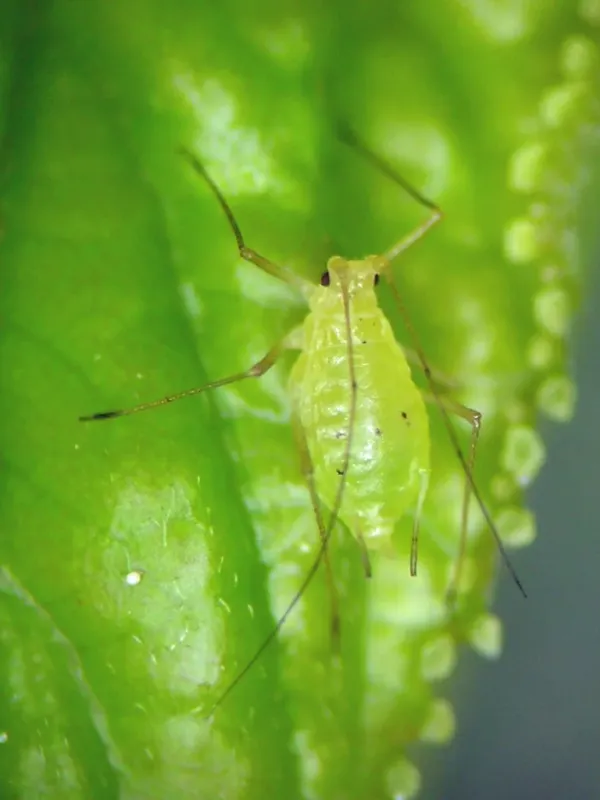
The goldenrod aphid (Illinoia goldamaryae) is a small, sap-sucking insect belonging to the family Aphididae. It is frequently found on its host plants, displaying a coloration that ranges from pale yellow to light green, providing effective camouflage against the foliage.
Adult aphids possess slender bodies with prominent, long antennae. A defining characteristic of the species is the structure of the cornicles — tube-like organs on the abdomen — which often feature dark tips. These structures are vital for the insect's defensive and physiological processes.
The life cycle of Illinoia goldamaryae is highly adaptive. During the growing season, they reproduce through parthenogenesis, meaning females produce offspring without mating. This allows for rapid population growth and the formation of dense colonies in a very short time.
In addition to wingless forms, the species produces winged individuals, known as alates, when the population density becomes too high or the host plant quality declines. These winged aphids migrate to colonize new, healthy plants in the vicinity.
Winter survival is typically achieved through the overwintering of eggs. These are usually deposited in protected areas of the host plant, such as leaf axils or near the base, ensuring the survival of the population through harsh cold periods.
What it damages
As the name suggests, the goldenrod aphid primarily targets goldenrod (Solidago). However, it can also infest various related species within the Asteraceae family, impacting their growth and overall health through constant sap-feeding.
The primary damage occurs when aphids pierce the plant's tissues with their stylets to ingest nutrient-rich phloem sap. This systematic removal of nutrients weakens the plant, often leading to stunted growth, wilting, and poor development.
Infestations often focus on young, tender tissues such as new shoots and flower buds. By destroying these growing points, the aphid limits the plant's ability to produce flowers and reach its full structural potential.
Aphids excrete a substance called honeydew, a sugary byproduct of their feeding. This substance accumulates on leaf surfaces and serves as a medium for the growth of sooty mold, a fungus that covers the leaves in a black, powdery film.
Sooty mold significantly interferes with photosynthesis by blocking sunlight, which further exacerbates the decline of the plant. The combination of nutrient loss and reduced light absorption can be fatal to young or stressed plants.
Signs of infestation
Visual identification starts with inspecting the undersides of the leaves. Aphids tend to congregate in high numbers, making their colonies easily detectable upon close observation during the active growing season.
The presence of honeydew is a primary diagnostic sign. If leaves look glossy or feel sticky to the touch, it indicates an active aphid population. Ants are often seen patrolling these areas, as they farm aphids for the honeydew they produce.
Deformed foliage is another critical symptom. Infested leaves often curl, wrinkle, or turn yellow due to the toxins injected by the aphid during feeding, which alter the plant's growth hormones.
- Yellowing and curling of terminal shoots.
- Presence of sticky honeydew on leaf surfaces.
- Ant activity around plant stems and buds.
- Black sooty mold growth on foliage.
- Failure of buds to bloom correctly.
When scouting for goldenrod aphids, pay special attention to the flower stalks. The tender tissue of developing buds is the preferred feeding site, and damage here is often the most detrimental to the plant's ornamental value.
Control measures
Effective management begins with regular monitoring. Catching the infestation during its early stages makes control significantly easier and prevents the need for heavy chemical interventions.
For minor infestations, mechanical removal is highly effective. Simply washing the aphids off with a strong stream of water or pruning the heavily infested tips of the plants can drastically reduce the pest population.
Applying insecticidal soaps or neem oil is a safe and effective way to manage aphids in home gardens. These treatments must contact the insects directly to be effective, so thorough application to both sides of the leaves is necessary.
Biological control is a sustainable strategy. By encouraging natural predators such as lady beetles, lacewings, and parasitic wasps, you can maintain the aphid population below a level that causes economic or aesthetic damage.
In cases of severe infestation, systemic insecticides containing acetamiprid or similar compounds can be used to protect the plant for a longer period. Always follow label instructions to minimize impacts on non-target pollinators like bees.
Taxonomy
- Latin name
- Illinoia goldamaryae
- Order
- Hemiptera (bugs, aphids, leafhoppers)
- Family
- Aphididae
- EPPO code
- MASOGO
Discussion
No discussions yet — be the first.