
Ibalia leucospoides
Ibalia leucospoides
Description
How to identify
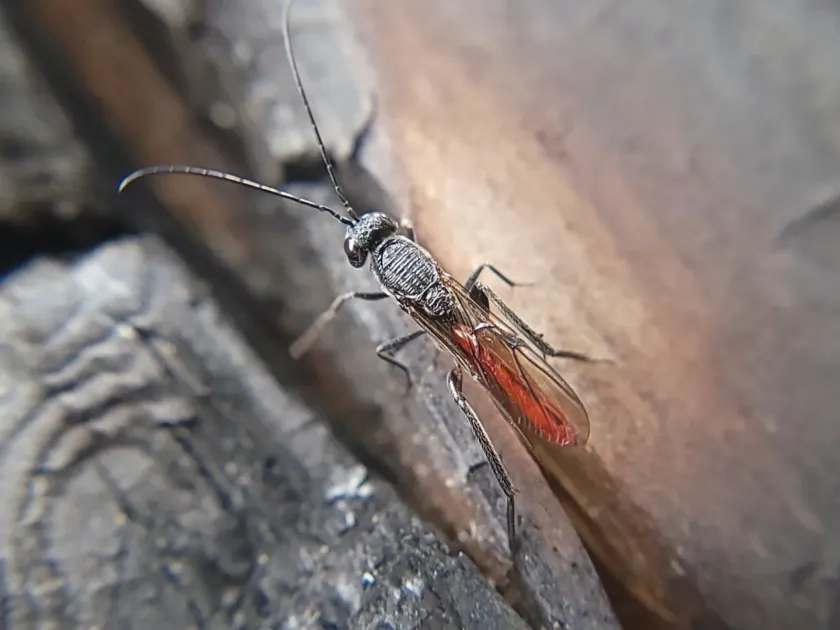
Ibalia leucospoides is a species of hymenopteran insect belonging to the family Ibaliidae. It is a specialized parasitoid wasp known for its unique morphological adaptations that allow it to target larvae deep within wood.
The adult female possesses a long, slender ovipositor capable of drilling into wood to reach the larvae of its host. The body is elongated and laterally compressed, typically colored in shades of brown or black with reddish markings.
Due to its cryptic lifestyle, identifying Ibalia leucospoides in the field requires specialized entomological knowledge. They are rarely seen unless one is actively inspecting trees infested with wood-wasps.
The life cycle undergoes complete metamorphosis, including egg, larval, pupal, and adult stages. Development is strictly tied to the presence of host larvae, which they locate using chemical cues.
In forest entomology, this species is recognized as a vital component of the ecosystem, acting as a natural regulator of wood-wasp populations in coniferous environments.
What it damages
Technically, Ibalia leucospoides is not considered a primary agricultural or forestry pest because it functions as a parasitoid of wood-wasps, such as the Sirex wood-wasp (Sirex noctilio).
However, the act of oviposition can cause minor physical damage to the tree's bark and outer cambium. While these punctures are small, they may introduce fungal spores or opportunistic pathogens that can weaken the host tree.
The primary trees affected are coniferous species, including pine, spruce, and fir. These trees are usually already in a state of physiological stress, making them attractive to wood-wasps and, consequently, their parasitoids.
The damage caused by the wasp is entirely indirect. The ecological impact of the parasitoid is generally positive, as it reduces the survivability of the wood-wasps that cause significant damage to commercial timber.
Management strategies focus on the host pests (wood-wasps) rather than the parasitoid itself, as removing the parasitoid would be counterproductive to forest health.
When it appears
The flight period for adult Ibalia leucospoides typically occurs during the summer months, spanning from mid-June to August, depending on regional climatic conditions.
During this period, females actively search for infested coniferous trees. They use their sense of smell to detect volatiles released by trees stressed by wood-wasp larvae.
The larval stage resides deep within the tree galleries for an extended period, often overwintering inside the wood until the conditions are right for pupation and adult emergence.
Adult emergence is synchronized with the emergence of the wood-wasps, ensuring that the next generation of parasitoids finds suitable hosts for egg-laying.
Environmental factors like prolonged heat waves can slightly accelerate the life cycle, leading to earlier emergence times that must be monitored by foresters.
Signs of infestation
Detection involves observing the surface of coniferous trunks for characteristic pin-sized holes caused by the female's ovipositor during egg-laying.
Another sign is the presence of adult wasps landing on or crawling over stressed trees during the summer flight season.
The most reliable sign of the parasitoid's presence is the emergence of their host (wood-wasps) from the trunks. Finding evidence of parasitoid activity in wood samples often confirms a local control effort is underway.
Tree decline, characterized by chlorosis or needle drop, signals that the tree is infested with wood-wasps, which serves as a beacon for Ibalia leucospoides.
Detailed analysis of tree cores or timber samples often reveals the internal galleries where the parasitoid larvae have successfully consumed the host larvae.
Control measures
Ibalia leucospoides is a beneficial organism and should be conserved. Direct control measures against the parasitoid are neither necessary nor recommended in forestry practices.
The focus of forest management is to maintain healthy stands through thinning and the removal of heavily infested, dying, or dead trees, which serves to regulate the host pest population.
The use of broad-spectrum insecticides is strongly discouraged as it disrupts natural biocontrol by killing parasitoids and other beneficial insects, potentially leading to pest outbreaks.
Biocontrol programs often rely on the presence and dispersal of such parasitoids as a low-cost, effective method for managing invasive wood-boring pests.
- Sanitary logging of infested trees.
- Monitoring wood-wasp populations via pheromone traps.
- Avoiding unnecessary insecticide applications in forests.
- Promoting forest health through proper silvicultural practices.
Taxonomy
- Latin name
- Ibalia leucospoides
- Order
- Hymenoptera
- Family
- Ibaliidae
- EPPO code
- IBALLE
Discussion
No discussions yet — be the first.