
Ibalia
Ibalia
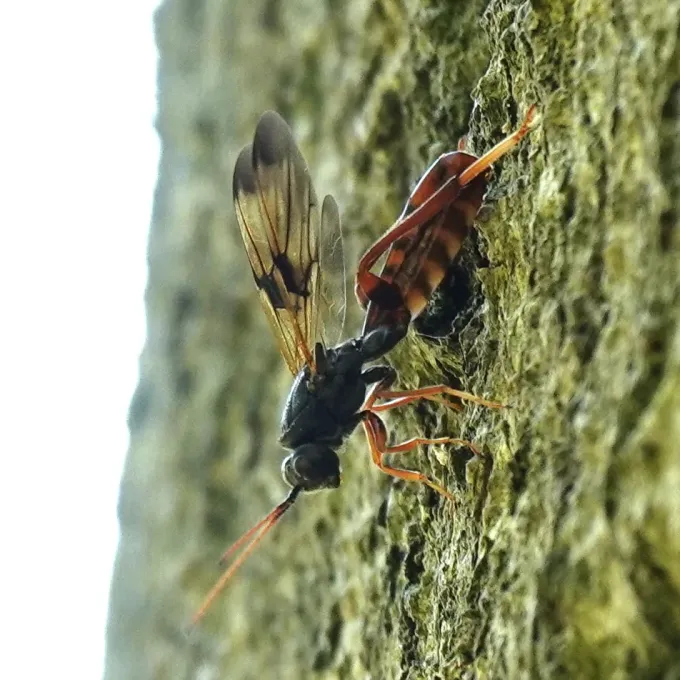
Description
How to identify
Ibalia is a genus of insects belonging to the family Ibaliidae within the order Hymenoptera. These insects are known for their association with wood-boring pests, specifically horntails.
Adult Ibalia possess a flattened body shape, which is a key diagnostic feature allowing them to navigate the environments where their hosts reside. They are typically dark-colored and have specialized organs for oviposition.
Morphologically, these insects are distinct due to their abdominal structure, adapted for reaching larval stages of wood-boring beetles and wasps deep inside the wood tissue.
Identification is often performed by entomologists using trap samples in forested areas, as direct observation on living trees is challenging due to the insects' cryptic behavior.
The biology of Ibalia is complex, involving intricate interactions with the tunnels created by wood-boring larvae, which serve as the primary site for their reproductive cycle.
What it damages
Ibalia affects various conifer species, primarily targeting weakened, stressed, or recently fallen trees that are already infested with host species like Siricidae.
The damage caused by the complex of insects including Ibalia results in the degradation of timber quality, making the wood unsuitable for structural or high-grade construction purposes.
As the larvae develop within the wood, they contribute to the network of galleries that weaken the physical integrity of the tree trunks, leading to potential premature timber failure.
In forest management, the presence of these insects is a significant indicator of failing forest health, prompting the need for immediate silvicultural intervention.
Extensive galleries created by the associated host larvae, coupled with the developmental stages of Ibalia, lead to significant economic losses in the forestry sector.
When it appears
Adult emergence typically occurs during the summer months, aligning with the peak activity of the wood-boring hosts they parasitize within the tree trunks.
Warmer temperatures in mid-summer trigger the flight period, during which female Ibalia search for suitable trees to deposit their eggs.
The total lifecycle of an individual may span multiple years, depending on environmental factors such as humidity, wood moisture content, and ambient forest temperatures.
Monitoring programs are usually established in the early summer, utilizing attractant lures to gauge the population density and prevent further spread.
Winter survival is achieved in the larval stage, protected deep within the woody tissue, where temperatures are more stable than on the outer bark surface.
Control measures
Management of Ibalia focuses primarily on preventive forestry practices rather than direct chemical application, which is ineffective against internal wood pests.
Sanitation cutting and the prompt removal of infested or downed timber are the most effective methods to reduce the breeding substrate available for the population.
Maintaining high stand density and tree vigor is essential for preventing the initial colonization of forests by wood-boring pests and their associates.
Storage of freshly cut logs should be minimized or conducted in areas far from healthy forest stands to prevent the migration of emergent adult insects.
- Sanitary logging of infested trees.
- Proper storage of timber materials.
- Early detection via pheromone or visual traps.
- Improving overall forest stand health.
Taxonomy
- Latin name
- Ibalia
- Order
- Hymenoptera
- Family
- Ibaliidae
- EPPO code
- IBALSP
Discussion
No discussions yet — be the first.