
Hybolasioptera
Hybolasioptera
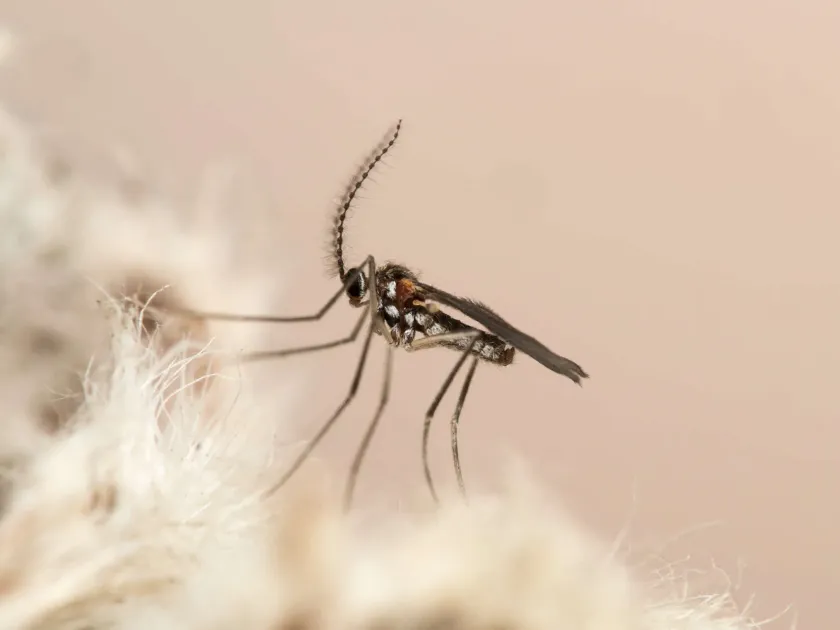
Description
How to identify
Hybolasioptera belongs to the gall midge family (Cecidomyiidae) within the order Diptera. These are tiny, inconspicuous insects that often remain unnoticed until specific plant damage appears.
Adults are miniature midges with a characteristic wing venation typical of this family. Their life cycle is closely linked to the tissues of specific host plants, where the larvae develop.
The larvae of Hybolasioptera are legless, spindle-shaped, and usually yellowish or orange in color. The larval stage is the most damaging, as they lead a hidden lifestyle inside plant tissues.
Identification of a specific Hybolasioptera species often requires laboratory examination, as morphological features of the adults necessitate microscopy. In the field, identification is mainly based on the type of galls or deformations formed.
Systematically, the genus belongs to the tribe Lasiopterini, members of which are known for their ability to induce galls on various herbaceous and woody crops.
What it damages
The host range of Hybolasioptera mainly includes Asteraceae, particularly species of the genus Artemisia (mugwort) and some other weed or cultivated plant species.
Damage manifests as infestation of stems, leaves, or floral organs. Larvae feeding inside plant tissues provoke cellular hypertrophy, leading to the formation of pathological growths.
In industrial agriculture, this pest can reduce the overall vegetative mass of plants by disrupting photosynthesis and the distribution of nutrients within the stem.
Young shoots are most susceptible to infestation, where larval feeding causes curvature and stunted overall plant development, rendering them unsuitable for further use.
The severity of the damage depends on the population density of the pest; during mass outbreaks, Hybolasioptera can significantly suppress growth and reduce the productivity of affected crops.
When it appears
The activity of Hybolasioptera adults occurs during the warm season, typically starting from late spring or early summer, coinciding with the phase of intensive host plant growth.
The pest's life cycle is highly synchronized with plant phenology. Egg-laying occurs directly into the soft tissues of young shoots or leaf bases, where larval feeding is supported by easily accessible plant juices.
The overwintering stage of Hybolasioptera is most often represented by larvae in cocoons inside the formed gall or in plant debris overwintering on the soil surface.
Adult emergence after diapause occurs when optimal temperature conditions are reached, allowing the pest to complete one or more generations per season.
During dry periods, development speed may slow down slightly; however, the hidden feeding habit inside the gall provides protection for larvae against adverse environmental conditions.
Signs of infestation
The main visual sign of the pest's presence is the appearance of galls — swellings or growths on stems and leaf petioles that are not natural for a healthy plant.
Inside such formations, when cut open, one can find one or several gall midge larvae surrounded by a zone of altered, often necrotic tissue upon which they feed.
Affected plant parts often change color to a paler or brownish hue, and in case of severe infestation, shoots may lose turgor and wither prematurely.
Deformation of stems leads to metabolic disruption, which can cause plant tops to twist or acquire an uncharacteristic appearance, such as witch's broom-like distortions.
- Presence of rounded or elongated growths on stems.
- Stunted growth and overall development of the affected plant.
- Premature yellowing and leaf drop below the site of gall formation.
- Detection of larvae upon dissecting pathological swellings.
Control measures
The primary control method is agronomic, involving timely removal and destruction of infested plant debris, where larvae overwinter.
Adherence to crop rotation and weed management, which may serve as alternate hosts for Hybolasioptera, significantly reduces the likelihood of pest outbreaks.
Chemical control is justified only when pest populations are high, using systemic insecticides capable of penetrating the tissues where the larvae are protected.
Biological control involves the use of natural enemies, such as parasitic Hymenoptera, which naturally suppress gall midge population numbers.
Regular monitoring of crop status during the active growing season allows for the early detection of infestation hotspots and their containment before the pest spreads widely.
Taxonomy
- Latin name
- Hybolasioptera
- Order
- Diptera (flies)
- Family
- Cecidomyiidae
- EPPO code
- HYBPSP
Discussion
No discussions yet — be the first.