
Hyblaea constellata
Hyblaea constellata
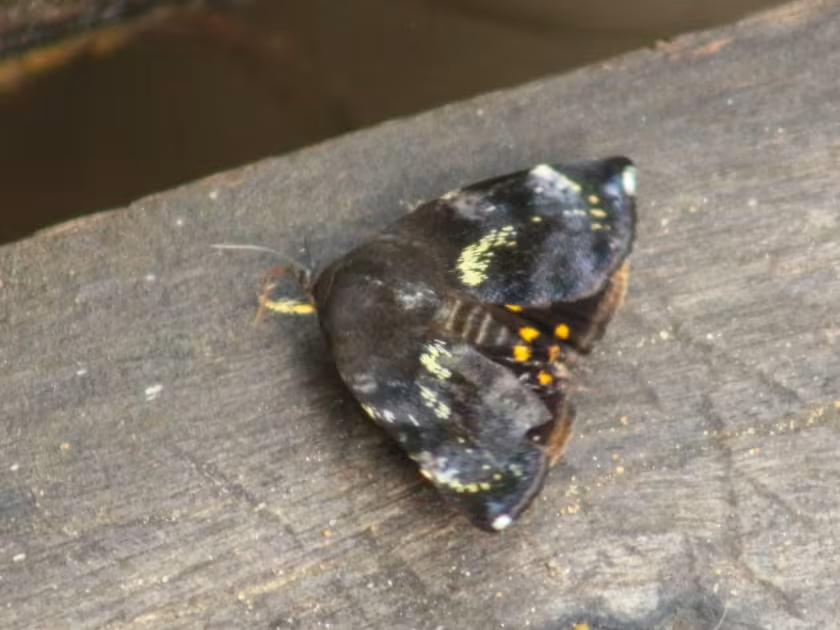
Description
How to identify
Hyblaea constellata belongs to the family Hyblaeidae within the order Lepidoptera. The adult moth is a medium-sized insect with a wingspan typically ranging from 30 to 40 mm.
The forewings feature a cryptic, dark-brown reticulated pattern that resembles constellations, hence the specific name. The hindwings often display vibrant orange or yellow markings, which serve as a warning sign to potential predators.
The larvae progress through several instars, changing from a pale color to a vibrant green with distinct longitudinal stripes. This coloration provides effective camouflage against the foliage of their host plants.
Pupation occurs within a shelter created by the larva itself. The caterpillar ties the edges of a leaf together using silk threads, forming a protective cocoon where the transformation into an adult moth takes place.
The life cycle is highly influenced by tropical and subtropical climatic conditions. The species exhibits high mobility and can produce multiple generations annually if the environment remains humid and favorable.
What it damages
Hyblaea constellata is primarily recognized as a significant defoliator of woody plants. In forestry, it is known to cause severe damage to teak and other valuable timber tree species.
The larvae are specialized leaf-feeders. In their early stages, they skeletonize the leaf blades, while older larvae consume the entire leaf, often leaving only the main veins intact, which cripples the plant's photosynthesis.
Severe infestations result in extensive defoliation of trees. This loss of canopy cover weakens the plant, reducing its energy reserves and significantly stunting its annual growth rate.
Repeated damage over consecutive years can lead to the death of young seedlings and severely stress mature trees, making them susceptible to secondary pests and various fungal pathogens.
The environmental impact of such outbreaks is significant, as the loss of foliage affects not only the individual tree but also the entire local ecosystem dynamics in the affected forest patches.
Signs of infestation
The most reliable sign of a Hyblaea constellata infestation is the presence of rolled or folded leaves fastened with silk. These structures serve as nesting sites for the larvae during the day.
Skeletonized leaves that look like thin, delicate lace are indicative of early larval feeding activity. As the population grows, the presence of frass (larval excrement) on the ground under the trees becomes more evident.
In mature infestations, the canopy of the trees appears scorched or brownish due to the loss of leaf tissue. This visual change is often the first signal detected during regular orchard or forest patrols.
During the peak flight season, adult moths can be observed at dusk or at night when attracted to artificial light sources, which can be utilized for monitoring purposes in pest management programs.
The tips of the growing shoots are often the first to be attacked, leading to stunted or distorted growth, which is a key indicator for field agronomists inspecting young plantations.
Control measures
The cornerstone of managing Hyblaea constellata is an integrated approach, combining early detection with targeted biological controls to minimize the use of harsh chemicals.
Biological control agents, particularly microbial insecticides based on Bacillus thuringiensis, have proven highly effective. They specifically target the larvae while sparing beneficial insects and natural predators.
Promoting a balanced forest ecosystem by encouraging the presence of natural enemies, such as parasitic wasps and predatory beetles, can provide long-term regulation of the pest population.
Systemic insecticides should be applied only when threshold levels of infestation are exceeded. Rotation of chemical classes is essential to mitigate the risk of the population developing resistance to treatments.
- Monitoring flight activity using light or pheromone traps to time control measures accurately.
- Sanitation practices, such as removing heavily infested plant debris where pupae may overwinter.
- Ensuring optimal tree nutrition to enhance the plant’s natural defensive mechanisms against herbivory.
Taxonomy
- Latin name
- Hyblaea constellata
- Order
- Lepidoptera (butterflies)
- Family
- Hyblaeidae
- EPPO code
- HYBLCO
Discussion
No discussions yet — be the first.