
Hyalella azteca
Hyalella azteca
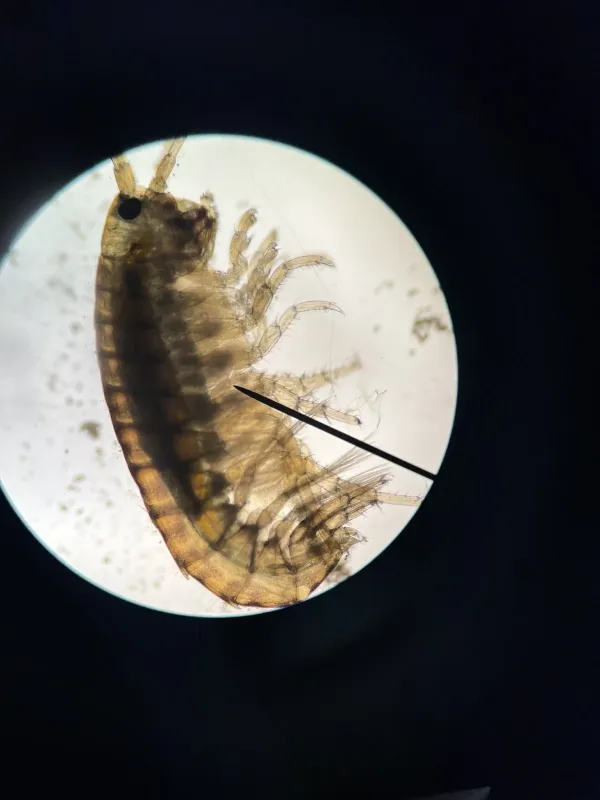
Description
How to identify
Hyalella azteca is a small amphipod crustacean belonging to the Hyalellidae family, commonly found in freshwater environments across North America.
Adults typically range from 3 to 8 millimeters in length, characterized by a laterally compressed, translucent body that can vary in color from green to brown.
This species is highly adaptable, thriving in diverse water bodies including ponds, lakes, and, notably, agricultural rice paddies.
Their life cycle is rapid; females brood their offspring in a dorsal pouch, ensuring a high survival rate for the developing young before they are released.
Due to their short generation time and high reproductive capacity, populations can reach massive densities in a very short period under favorable conditions.
What it damages
In agricultural settings, particularly in rice cultivation, Hyalella azteca causes significant damage by feeding on young plant tissues.
While they are primarily detritivores, high-density populations will shift their diet to include fresh plant material, such as seedlings and tender shoots.
The damage manifests as feeding scars on leaves and stems, which can lead to stunted growth, wilting, and even the total destruction of young plants.
By grazing on the epidermis and roots, these crustaceans inhibit the plant's ability to uptake water and nutrients effectively from the aquatic medium.
Such damage results in reduced crop stand density, necessitating replanting or significant losses in total harvest yield.
When it appears
The activity of Hyalella azteca is heavily temperature-dependent, with significant population growth occurring during the warmer months.
In spring, as water temperatures rise, individuals emerge from their overwintering stage in the sediment to begin feeding and reproductive cycles.
Summer provides optimal conditions for rapid development, leading to several generations per season and peak population numbers.
As water temperatures drop in the autumn, the crustaceans migrate to the substrate, where they remain less active until the following growing season.
The presence of abundant organic matter throughout the year ensures that the pest can maintain significant numbers to threaten the next crop cycle.
Signs of infestation
Early signs of an infestation include the presence of small, irregular holes on the leaves and stems of young rice or other aquatic plants.
Infested seedlings often exhibit chlorosis or generalized yellowing due to the mechanical stress and nutritional deprivation caused by feeding.
Monitoring the base of the plants will often reveal high concentrations of these small, active crustaceans swimming near the stems.
Increased turbidity in the water is a common secondary symptom, as the feeding and movement of large populations disturb the bottom substrate.
Total loss of plant density in localized patches within a flooded field is a strong indicator of an established and damaging population.
Control measures
Water management is the most effective control strategy, specifically the temporary drainage of rice paddies to disrupt the amphipods' habitat.
Cultural practices, such as removing dense aquatic weeds and organic debris, reduce the available refuge and food sources for the crustaceans.
Biological control methods involve the use of specific, environmentally friendly agents to manage population numbers without harming beneficial species.
Chemical control should be used as a last resort, as many standard pesticides can be highly toxic to non-target aquatic organisms.
- Regular monitoring using standardized netting.
- Water level manipulation to stress populations.
- Removal of plant residues to limit food supplies.
Taxonomy
- Latin name
- Hyalella azteca
- Family
- Hyalellidae
- EPPO code
- HYLLAZ
Discussion
No discussions yet — be the first.