
Ficus gall midge
Horidiplosis ficifolii
Description
How to identify
The Ficus gall midge, Horidiplosis ficifolii, belongs to the family Cecidomyiidae (gall midges) within the order Diptera. These are tiny flies that are often difficult to spot.
The larvae are the primary damaging stage, living inside plant tissues and triggering the growth of characteristic galls on the leaves of Ficus plants.
Due to their minute size, the adult midges often go unnoticed until significant leaf damage becomes apparent to the grower.
This pest is highly specialized, and its life cycle is tightly synchronized with the growth of new foliage on its host plants.
Understanding that these insects can reproduce rapidly in indoor environments is crucial for timely detection and intervention.
What it damages
The pest primarily targets Ficus benjamina. The infestation is concentrated on young, developing leaves at the tips of the branches.
Larval feeding causes the plant to develop abnormal cell growth, resulting in visible bumps (galls) on the undersides of the leaves.
The physiological stress caused by the gall formation inhibits the plant's ability to produce energy through photosynthesis efficiently.
Damage results in distorted, stunted leaf growth, which diminishes the ornamental value of the plant significantly.
Over time, the affected leaves fail to function properly, causing them to yellow and drop prematurely from the canopy.
Signs of infestation
The most distinctive symptom is the presence of small, conical, or bump-like galls on the undersurface of younger leaves.
Yellowing or chlorotic spotting appears on the upper leaf surface directly above the sites where larvae are active within the leaf tissue.
Leaves become curled, twisted, and deformed, losing their natural, healthy aesthetic appearance due to the internal tissue disruption.
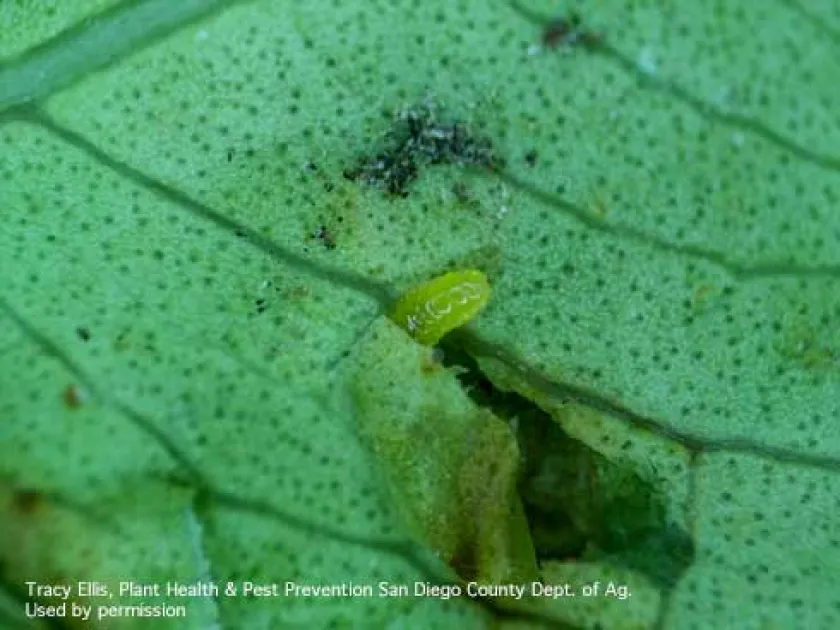
Close inspection of a ruptured gall may reveal the small, yellowish-orange larva responsible for the damage.
Massive leaf drop during the peak of the growing season is a clear indicator of a severe infestation that requires immediate attention.
Control measures
Start by isolating the infected Ficus to prevent the spread of the midges to other nearby houseplants or greenhouse crops.
Manually remove and destroy all leaves showing signs of galls to reduce the pest population immediately.
Apply systemic insecticides that are absorbed by the plant; these are highly effective because the chemicals move through the sap and reach the larvae inside the galls.
Maintain a regular treatment schedule, applying products containing acetamiprid or imidacloprid every 7–10 days to target emerging generations.
Improve plant health through proper watering and fertilization once the infestation has been successfully controlled to support leaf regeneration.
Taxonomy
- Latin name
- Horidiplosis ficifolii
- Order
- Diptera (flies)
- Family
- Cecidomyiidae
- EPPO code
- HRIDFI
Discussion
No discussions yet — be the first.