
Pear sawfly
Hoplocampa pyricola
Description
How to identify
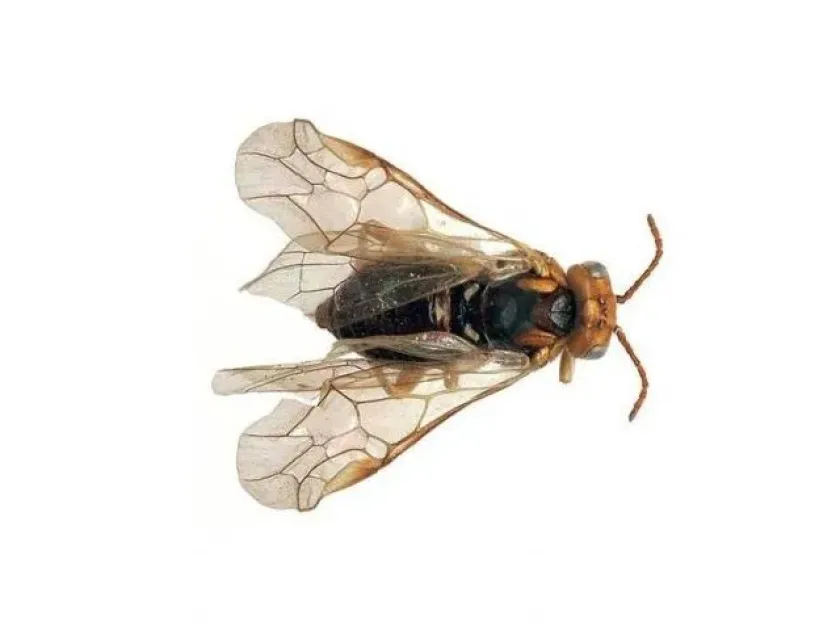
The adult pear sawfly is a small hymenopteran insect measuring approximately 4–6 mm. It has a shiny black body, transparent wings with dark veins, and yellowish-brown legs.
The larvae are about 10 mm long, pale or yellowish with a distinct brown head. Unlike moth caterpillars, they possess ten pairs of legs, which is a key identification feature.
The species belongs to the Tenthredinidae family. It undergoes a complete metamorphosis, including egg, larva, pupa, and adult stages.
They overwinter as mature larvae in dense cocoons within the soil at a depth of 10–15 cm. Pupation occurs in early spring, synchronized with the tree's development.
Adults emerge during the pear blooming period, feeding on nectar and pollen before females lay eggs into the floral tissue.
What it damages
The pear sawfly specifically attacks pear trees. It is considered a primary pest that can significantly reduce fruit quality and total yield.
Larvae bore into the developing fruit, feeding on the pulp and seeds. The internal cavity of the fruit becomes filled with dark-colored excrement.
Infested pears stop growing, become misshapen, and prematurely drop to the ground along with the larvae inside them.
A single larva can destroy several young fruits as it migrates from one to another during its developmental cycle.
Secondary infections, such as fungal rots, often enter the fruit through the holes made by the sawfly larvae, causing further decay.
When it appears
Adult activity corresponds directly with the flowering phase of pear trees, making this the critical window for monitoring and management.
Eggs are laid individually in the flowers. The incubation period usually lasts from 10 to 15 days, depending on environmental temperature.
Larval emergence happens immediately after petal fall, coinciding with the setting of the young fruitlets.
The larval stage lasts for about 3–4 weeks. Once fully grown, they emerge from the fruit and drop to the soil to form cocoons for the winter.
The pest has only one generation per year, so precise timing of interventions is crucial to prevent infestations in the following season.
Signs of infestation
Small dark punctures on the flower calyx are the first visible signs of egg-laying activity by the female sawfly.
A characteristic exudate (gumming) on the surface of the young fruitlet indicates the entry point of the larva.
The presence of fine dark powder or waste pellets inside hollowed-out fruit is a definitive indicator of sawfly presence.
Widespread premature fruit drop in late spring is a clear sign that the population density of the pest is high.
Cutting open an infested pear will reveal the larva and a distinct, unpleasant odor caused by the insect's secretions.
Control measures
Cultivating the soil beneath the canopy in late autumn and early spring is highly effective at destroying overwintering cocoons.
Regularly collecting and destroying fallen fruit prevents the larvae from returning to the soil to complete their lifecycle.
Apply insecticides immediately after the petals fall, ensuring the treatment is timed before the larvae successfully penetrate the fruit.
White sticky traps can be used to monitor adult activity levels and determine the precise timing for protective applications.
- Beneficial nematodes can be applied to the soil to parasitize the larvae and reduce the emerging population.
- Orchard hygiene, including the removal of weeds and debris, helps minimize protective microhabitats for the pest.
Taxonomy
- Latin name
- Hoplocampa pyricola
- Order
- Hymenoptera
- Family
- Tenthredinidae
- EPPO code
- HOPLPY
Discussion
No discussions yet — be the first.