
Plum sawfly
Hoplocampa minuta
Description
How to identify
The plum sawfly (Hoplocampa minuta) belongs to the order Hymenoptera. The adult insect is a small sawfly, about 5 mm long, characterized by a shiny black body and transparent wings.
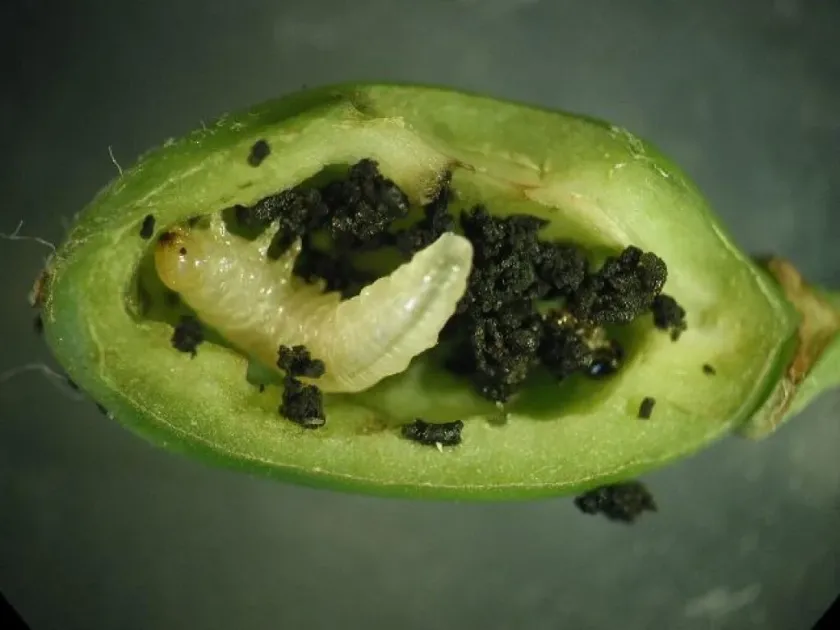
Larvae are white-yellowish with a brown head and have ten pairs of legs. They reach a length of 6–7 mm when fully grown. They are distinct from moth caterpillars by the unpleasant odor they emit when disturbed.
They overwinter as larvae in cocoons within the soil at a depth of up to 15 cm. Pupation occurs in early spring, and the emergence of adults coincides with the flowering period of stone fruit trees.
Females lay eggs individually inside the sepals of plum blossoms. A single female can lay up to 30 eggs during her lifespan, which poses a significant risk to fruit development.
The species has a univoltine life cycle. After feeding, larvae drop to the ground and burrow into the soil to form cocoons, remaining there until the following spring.
What it damages
The plum sawfly primarily infests plums, mirabelle plums, and sloes. The damage is caused by the larvae, which feed on the generative organs of the fruit trees.
Upon hatching, the larva bores into the young fruit, consuming the pulp and the developing pit. This destructive feeding behavior leads to the immediate shedding of the fruit.
A single larva can destroy 3 to 5 fruits by migrating between them. In years with low blossom density, the sawfly can cause crop losses of up to 90 percent.
Infested fruits become deformed, cease growing, and exhibit gumming at the entry or exit holes. The fruit surface often turns dark and develops an irregular, stunted appearance.
Because the damage occurs during the early fruit-setting phase, there is no possibility for the tree to compensate for the lost crop, making early intervention critical.
Signs of infestation
The most prominent sign is the premature dropping of young fruitlets. If these fallen fruits are sliced open, larvae or dark waste deposits are typically found inside.
Visible holes in the fruitlets, often accompanied by gum exudation and dark frass, are clear indicators that the sawfly larva has been or is currently active within the fruit.
Monitoring using white sticky traps during the flowering period is an effective method for detecting the timing of adult activity and assessing the population density.
Close inspection of the flower sepals for small puncture wounds can reveal egg-laying activity before the larvae emerge, providing a window for early protective measures.
Widespread premature fruit drop and the presence of gum on the stems of remaining fruits are definitive signs that the orchard is under severe pressure from this pest.
Control measures
Cultural control measures involve deep cultivation of the soil under the tree canopy in autumn and spring to destroy overwintering cocoons and expose larvae to predators.
Promptly collecting and disposing of fallen fruitlets is essential to prevent the larvae from completing their development and entering the soil for the next season.
- Application of biological insecticides containing entomopathogenic fungi.
- Systemic insecticide spraying performed strictly before flowering to target adults.
- Targeted application of approved insecticides immediately after petal fall if thresholds are exceeded.
Chemical control is most effective when applied at the pink bud stage or immediately after petal fall, before the larvae have fully entered the young fruits.
It is important to manage the pest using an integrated pest management (IPM) approach, rotating active ingredients to prevent the development of insecticide resistance.
Taxonomy
- Latin name
- Hoplocampa minuta
- Order
- Hymenoptera
- Family
- Tenthredinidae
- EPPO code
- HOPLMI
Discussion
No discussions yet — be the first.