
Plum sawfly
Hoplocampa flava
Description
How to identify
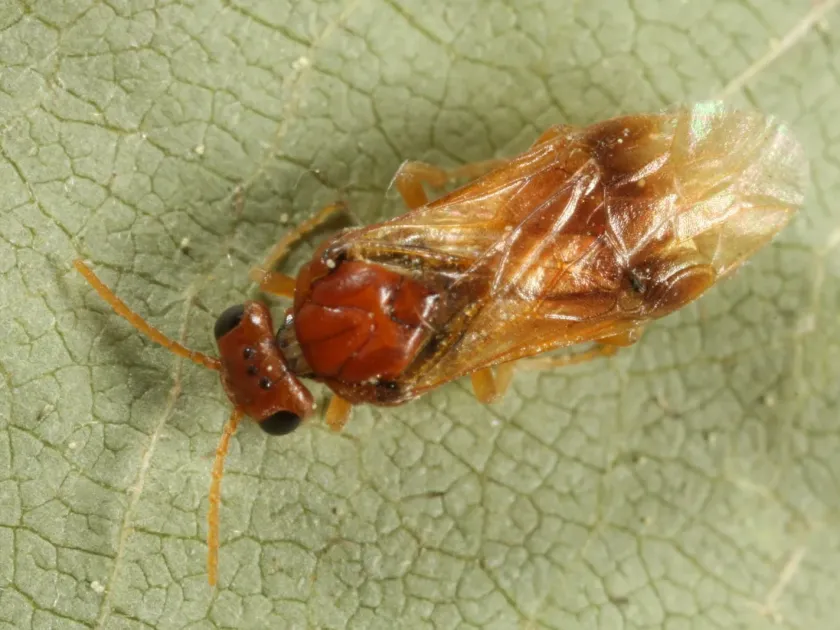
The plum sawfly (Hoplocampa flava) is a member of the Tenthredinidae family within the Hymenoptera order. The adult insect is small, measuring 4–6 mm, with a yellowish-brown body and transparent wings.
The larvae are whitish-yellow with a brown head and possess ten pairs of legs. When disturbed, they emit a distinctive, pungent odor similar to a stink bug, which serves as a key diagnostic feature.
They overwinter as larvae in the soil within tough silken cocoons at a depth of up to 15 cm. Pupation occurs in early spring, synchronized with the budding phase of plum trees.
Adults emerge during the flowering period. Females lay eggs individually by using a saw-like ovipositor to cut into the sepals of the plum blossoms, making them very hard to detect early on.
The life cycle is univoltine, meaning there is only one generation per year. This predictability allows growers to plan their integrated pest management strategies effectively.
What it damages
This pest primarily targets stone fruits, particularly European plums, mirabelle plums, and sometimes apricots. The damage is caused by the larval stage feeding on the developing fruit.
Upon hatching, the larva bores into the small fruit. Throughout its development, a single larva can destroy 3–5 developing plum fruits by moving from one to another.
Damaged fruits stop growing, deform, turn black, and drop prematurely. In years of heavy infestation, the sawfly can destroy nearly the entire harvest if left untreated.
The cryptic behavior of the larvae, which live inside the fruit, makes them largely immune to contact-based pesticide sprays for most of their lifecycle.
Furthermore, the entry holes bored by the larvae create entry points for brown rot fungi, leading to the rapid decay of both infested and neighboring healthy fruits.
Signs of infestation
The earliest sign of infestation is the presence of tiny, inconspicuous scars or punctures on the sepals of the flowers during the blossom phase.
Once fruit set occurs, a reliable indicator is the presence of brown frass (larval excrement) on the surface of the fruit, often mixed with sticky gum exudates.
Massive fruit drop in late May or early June is a clear visual sign of high larval activity. Fallen plums often show a distinct entry hole where the larva has exited.
If an infested fruit is cut open, the larva can be found inside along with dark, winding tunnels filled with frass. The characteristic pungent odor is easily detected at this stage.
Adult activity can be monitored during sunny, warm days when the insects are seen flying around the plum blossoms before they begin laying their eggs.
Control measures
Chemical control via insecticides is the most effective approach. Applications should be timed precisely after the petal fall stage, before the larvae burrow deep into the fruitlets.
Systemic insecticides are generally preferred as they can reach the larvae hiding inside the fruit. Always follow the manufacturer's guidelines regarding pre-harvest intervals.
Cultural practices such as cultivating the soil under the tree canopy in autumn and early spring can destroy cocoons and significantly reduce the overwintering population.
For home orchards, regular collection and destruction of fallen fruit is crucial. Removing the fruit before the larvae exit ensures they cannot enter the soil to pupate.
The use of white sticky traps can help monitor the arrival of adult sawflies, allowing for early intervention and targeted spraying before the eggs are laid.
Taxonomy
- Latin name
- Hoplocampa flava
- Order
- Hymenoptera
- Family
- Tenthredinidae
- EPPO code
- HOPLFL
Discussion
No discussions yet — be the first.