
European pear sawfly
Hoplocampa brevis
Description
How to identify
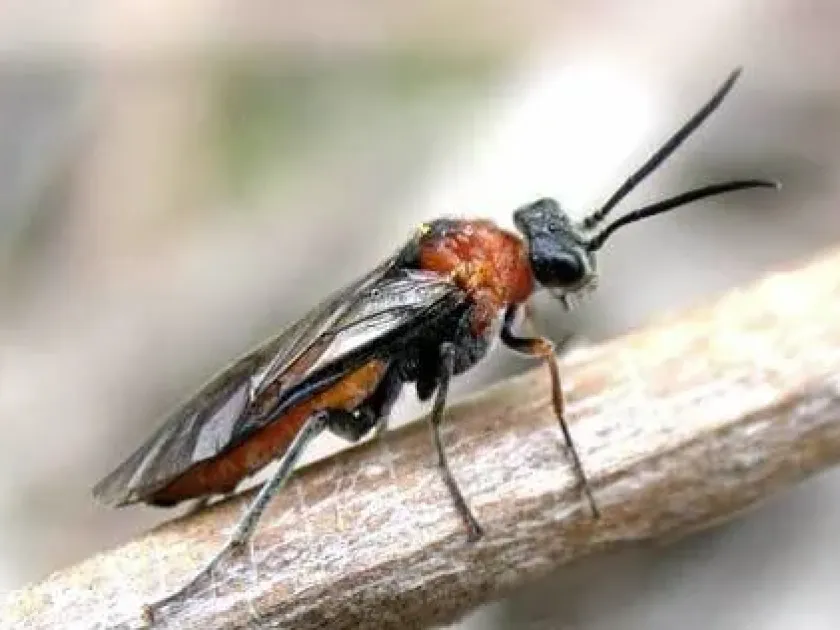
The European pear sawfly, scientifically known as Hoplocampa brevis, is a member of the Tenthredinidae family within the Hymenoptera order. The adult insect is small, measuring about 5-6 mm in length, with a yellowish-brown body and transparent wings.
The larva, often referred to as a false caterpillar, has a white or cream-colored body with a distinctive brown head capsule. It is the primary stage responsible for the economic damage in orchards.
The life cycle involves an overwintering period as a mature larva inside a silk cocoon buried in the soil. This soil-dwelling stage makes the pest resilient to harsh environmental conditions during the winter months.
The adult sawflies emerge in the spring, precisely during the flowering period of pear trees, which makes the bloom window a critical time for monitoring and intervention.
Adult females are equipped with a saw-like ovipositor that allows them to insert eggs into the sepals of the pear flowers, ensuring the larvae have immediate access to food upon hatching.
What it damages
The larvae primarily target the developing ovaries of pear fruits. Upon hatching, they burrow into the center of the young fruit, consuming the seeds and the surrounding pulp, which causes the fruit to stop growing and wither.
A single larva is highly mobile and capable of moving from one fruitlet to another. It is estimated that one larva can destroy multiple developing pears during its growth cycle.
Infected fruits exhibit deep, dark entrance holes filled with brown excrement (frass). These fruits are aesthetically unappealing and often succumb to secondary bacterial or fungal infections.
The economic impact can be severe, leading to significant yield losses if left uncontrolled. In some years, infestations can result in the loss of nearly the entire crop in untreated orchards.
The damage often leads to massive premature fruit drop, which may be mistaken for poor pollination or weather-related issues, masking the true cause of the harvest failure.
When it appears
The life cycle is strictly synchronized with the phenology of the pear tree. Emergence occurs when the pear blossoms open, providing the necessary food source for adult sawflies.
Eggs are deposited individually in the floral buds or flowers. The incubation period lasts approximately 7 to 15 days, influenced by the ambient temperature during the spring.
Once hatched, the larvae feed inside the fruitlets for about 3 to 4 weeks. After this period, they exit the fruit and drop to the ground to pupate in the soil.
This species is univoltine, meaning it produces only one generation per year. The overwintering pupal stage in the soil persists until the following spring.
Environmental conditions such as soil moisture during the spring can affect the emergence success of adults, making it an important factor for orchard management forecasting.
Signs of infestation
A major indicator of an infestation is the premature drop of young fruitlets immediately following the petal fall stage. Examining the fallen fruit is the quickest way to confirm the pest.
Dark, discolored entrance holes on the surface of young pears, often accompanied by dark waste matter, are diagnostic signs of larval feeding activity.
If you cut open a fallen pear fruitlet, you will likely find the white larva inside, often surrounded by darkened, damaged tissue near the core.
An unpleasant, characteristic odor, similar to that of bedbugs, is often emitted from the fruit damaged by Hoplocampa brevis larvae, serving as a warning sign for orchardists.
A widespread and unexplained fruit drop shortly after bloom should always trigger a closer inspection of the orchard for potential sawfly activity.
Control measures
Effective control focuses on applying targeted insecticides shortly after the petals fall, hitting the larvae before they have time to burrow deep into the fruit tissue.
Cultural management includes shallow cultivation of the soil around the tree base in the autumn to expose the cocoons to predators and frost, significantly reducing the overwintering population.
Promptly collecting and destroying fallen fruit is essential to prevent the larvae from completing their life cycle and returning to the soil to pupate for the next year.
- Using selective insecticides that minimize harm to beneficial pollinators.
- Deploying pheromone traps to monitor adult flight activity and timing of sprays.
- Encouraging natural predators such as parasitic wasps and ground beetles in the orchard.
Integrated Pest Management (IPM) strategies emphasize the use of biorational products and biological controls to maintain the balance of the ecosystem while keeping pest populations below economic injury levels.
Taxonomy
- Latin name
- Hoplocampa brevis
- Order
- Hymenoptera
- Family
- Tenthredinidae
- EPPO code
- HOPLBR
Discussion
No discussions yet — be the first.