
Holopothrips
Holopothrips
Description
How to identify
Holopothrips is a genus of insects belonging to the Phlaeothripidae family within the order Thysanoptera. These small insects are distinguished by a tube-like structure at the end of their abdomen.
Adults are generally dark brown to black in color. Their bodies are elongated, measuring typically between 1.5 and 3 mm in length, which makes them difficult to identify without magnification.
They possess eight-segmented antennae, a crucial morphological feature for distinguishing this genus from other members of the Phlaeothripidae family.
Larvae are similar in appearance to adults but lack developed wings and are usually lighter in coloration, progressing through several growth stages.
Females lay eggs directly into plant tissues or within protected niches such as leaf crevices, making early detection a significant challenge for growers.
What it damages
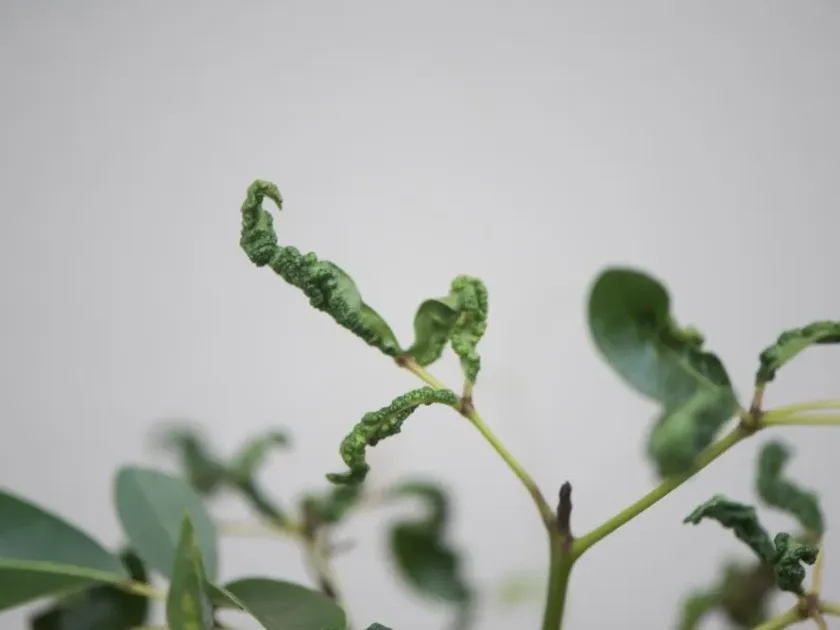
Holopothrips species are known for causing the formation of galls on leaves, which serve as protective habitats and food sources for the insect colonies.
By feeding on the mesophyll and epidermal tissues, the thrips disrupt the plant's normal physiological functions, including photosynthesis and water regulation.
Severe infestations lead to curling, yellowing, and premature leaf drop, which can significantly weaken the plant and reduce overall vigor.
Beyond physical damage, the punctures created by the insects during feeding provide entry points for secondary bacterial and fungal pathogens.
In ornamental and agricultural settings, the aesthetic and yield losses caused by these pests can be substantial if not managed appropriately.
When it appears
The life cycle and activity of Holopothrips are heavily influenced by environmental temperature and moisture conditions during the growing season.
In favorable climates, these insects can complete multiple generations per year, with the speed of development increasing alongside ambient temperatures.
Overwintering typically occurs in the adult stage, with insects seeking refuge in soil debris, crevices in tree bark, or other protected plant material.
Spring migration to young foliage marks the beginning of the active feeding and reproduction cycle, which continues throughout the summer months.
Populations tend to reach their peak density during the hottest parts of the year, especially when host plants are stressed by drought conditions.
Signs of infestation
The most visible sign of infestation is the development of leaf galls or abnormal swellings that distort the shape of the leaves.
Chlorotic spots and necrotic patches may appear on the leaf surface, resulting from the localized destruction of cells by the feeding thrips.
The presence of fine black dots on leaves, which are the insects' fecal deposits, is a reliable indicator that an active colony is nearby.
Significant leaf deformation or stunted growth of new shoots is a frequent symptom in cases where the infestation density is high.
Inspecting the underside of leaves or opening the galls often reveals the presence of adult thrips or larvae hiding within the damaged tissue.
Control measures
Managing Holopothrips requires an integrated approach that focuses on both physical and chemical control methods to minimize population outbreaks.
Pruning and destroying heavily infested leaves or shoots is an essential first step in removing the active population source from the host plant.
Biological control, including the release of predatory mites or specialized insects, can be an effective way to regulate thrips numbers in controlled environments.
Systemic insecticides are often recommended when infestation levels are severe, as they can reach the insects hidden within the galls or leaf folds.
- Regular monitoring of host plants for signs of galling.
- Removal and disposal of infested plant parts to reduce overwintering sites.
- Use of sticky traps to monitor adult flight and population levels.
- Timely application of chemical treatments targeting early larval stages.
Taxonomy
- Latin name
- Holopothrips
- Order
- Thrips
- Family
- Phlaeothripidae
- EPPO code
- HOLPSP
Discussion
No discussions yet — be the first.