
African black beetle
Heteroligus meles
Description
How to identify
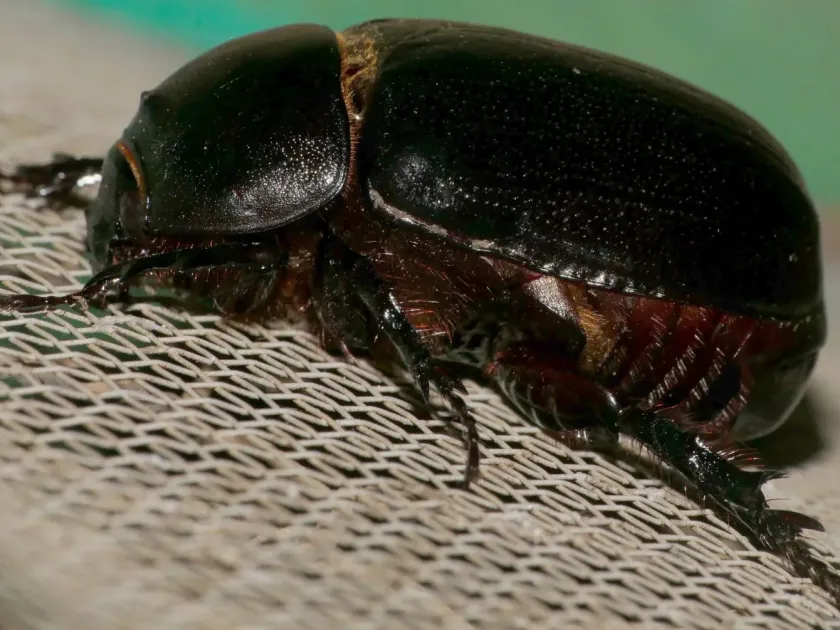
The African black beetle (Heteroligus meles) is a member of the Scarabaeidae family, known for its significant impact on tuber crops. Adult beetles are sturdy, shiny black insects measuring roughly 20–25 mm in length.
They possess heavily sclerotized bodies and strong, spiny legs designed for burrowing through soil and organic matter. Their mouthparts are highly effective at penetrating tough plant tissues.
Larvae, commonly referred to as grubs, are C-shaped, creamy white in color, and have a distinct brown head. They are primarily soil-dwellers found in moist, organic-rich environments.
The life cycle of the beetle is closely tied to humidity levels and the availability of organic debris, which provides necessary conditions for the survival of the larvae.
As nocturnal fliers, adult beetles are capable of dispersing across large areas, making them difficult to manage without coordinated efforts across farming communities.
What it damages
Adult beetles are the primary cause of damage, specifically targeting tuberous crops like yams (Dioscorea spp.). They bore deep tunnels into tubers, significantly reducing their nutritional value and commercial marketability.
Besides yams, the beetle impacts crops like sugarcane by feeding on young stems and root bases. Such feeding often leads to stunted growth, wilting, and, in severe cases, plant death.
Tunneling by adults creates entry points for various soil-borne pathogens, leading to rapid decay and rot of the tubers both in the field and during post-harvest storage.
Larval feeding on organic matter is generally harmless; however, high densities of grubs can inadvertently damage the root systems of agricultural crops, further weakening the plants.
Economic losses are often compounded by the secondary infection of tubers, which renders harvested produce unsuitable for either consumption or sale.
When it appears
Activity is highly synchronized with the onset of the rainy season. Adult beetles emerge from their resting sites to feed and mate, often coinciding with the prime planting or growing phases of yam crops.
The reproductive phase is moisture-dependent, with eggs being laid in damp soils rich in organic matter, which supports the development of the next generation of grubs.
During the dry season, the beetles typically enter a period of inactivity, burrowing deep into the soil to escape desiccation until the return of favorable weather.
The most critical window for crop protection is the period when adults emerge in high numbers, as this is when they inflict the most damage to tuber development.
Monitoring local rainfall patterns is a vital strategy for farmers to anticipate peaks in beetle activity and implement timely protection measures.
Signs of infestation
The most telltale sign of an infestation is the presence of deep, cylindrical boreholes in harvested tubers, often filled with frass or soil particles.
Plants affected by adult feeding may exhibit signs of stress, including yellowing leaves, wilting, or a lack of vigor, which reflects damage to the root or stem base.
One might observe entry and exit holes around the base of the plant in the soil, which serve as corridors for the beetles to access the underground tuber tissues.
Secondary infections around the boreholes are common; tubers may show patches of dark rot, which often spreads quickly throughout the entire tuber if not addressed.
Increased mortality of young plants in the field is another indicator of a heavy infestation, often caused by adults feeding on the succulent stem tissue near the soil surface.
Control measures
Cultural control is the most effective approach; this includes deep ploughing of fields, which exposes grubs and eggs to predators like birds and desiccates them under the sun.
Crop rotation helps break the life cycle by removing the host plants (yams) from the area, preventing the local population of the beetle from becoming established.
Light traps are highly effective at capturing adult beetles during their peak flight periods, which helps in reducing the overall breeding population in the surrounding area.
Where necessary, soil-applied insecticides can provide temporary relief, though they must be used sparingly to prevent negative impacts on soil health and the environment.
- Regular inspection of crops during the rainy season;
- Removing crop debris to eliminate breeding sites;
- Early harvesting to minimize exposure to beetle populations;
- Biological management through the encouragement of natural insect predators.
Taxonomy
- Latin name
- Heteroligus meles
- Order
- Coleoptera (beetles)
- Family
- Scarabaeidae
- EPPO code
- HETGCL
Discussion
No discussions yet — be the first.